

Partnering with academic and artistic institutions such as USC’s Max Kade Institute and Villa Aurora for programs like this month’s Voices of Vienna, empowers Music Restored: The Ziering-Conlon Center for Exiled and Suppressed Composers to reach larger audiences, engage experts, and enhance efforts to lift the voices of composers whose work was nearly lost to history.
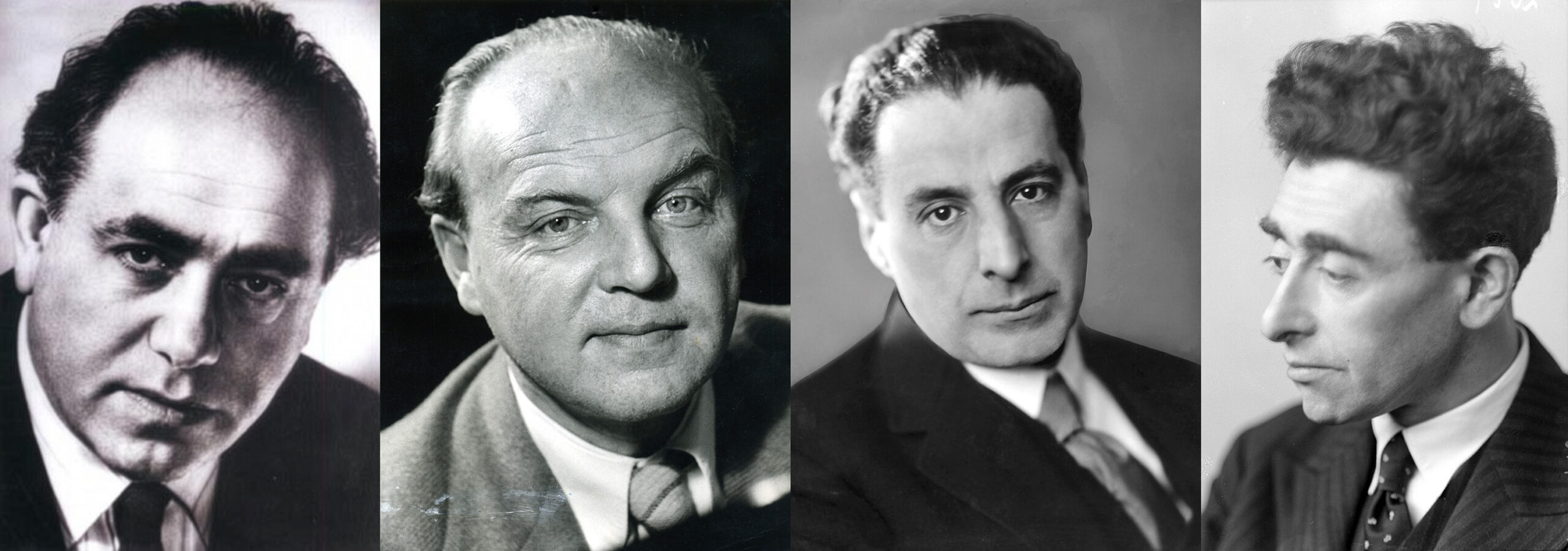
Declared “degenerate” by the Nazi party as it gained political momentum during the 1930s and 1940s, many artists sought safety by fleeing their home countries. For some, that journey took them to multiple locations while trying to stay ahead of the encroaching Nazi forces. Hugo Kauder, Eric Zeisl, Ernst Toch, and Ernst Krenek, four composers who had called Vienna, Austria, home and were enjoying success with their artistic endeavors, eventually landed in the United States as exiles. Reestablishing themselves wasn’t easy, and as time passed, their works could have been lost to history. Music Restored: The Ziering-Conlon Center for Exiled and Suppressed Composers, however, remains committed to breathing new life into the legacies of these and other composers whose careers and lives were drastically changed or silenced by the Third Reich.
In 2013, Colburn joined Music Restored’s Artistic Director James Conlon in his mission to introduce musicians, students, and audiences to the composers whose names and works were very nearly eliminated from the classical music canon. With the support of Los Angeles philanthropist Marilyn Ziering, the Ziering-Conlon Initiative for Recovered Voices was established and modeled in large part on Los Angeles Opera’s groundbreaking Recovered Voices project. This newly formed collaboration with Colburn contributed to creating additional resources and generating greater awareness through multiple channels: original video series, recordings, lectures, and more.
In 2025, the organization adopted the name, Music Restored: The Ziering-Conlon Center for Exiled and Suppressed Composers, in recognition of its expanded presence with additional performances, a new website that includes and builds upon the OREL Foundation—founded by Conlon and Michael Beckerman, current dean of the University of California, Los Angeles Herb Alpert School of Music, which became one of the world’s most valued websites on music suppressed by the Nazis—and new associations with other organizations committed to preserving and promoting the arts, literature, and other creative works by individuals who were affected during this period in history.
“Once upon a time, it seemed so critical to resurrect and present such works that we hardly had time for either deep analyses of the compositions themselves or the development of multiple interpretive strands around them. Today’s festivals and concerts presented by Music Restored give us another opportunity to discover these works…and puzzle out as we did earlier, what they mean for our time,“ says Beckerman.
For the 2026–27 season, Music Restored has scheduled performances at Colburn and the Royal Conservatory of Music in Toronto, but first, it hosts Voices of Vienna. The three-day program, October 28–30, features events with Villa Aurora: Remembering the Exiles and the Max Kade Institute for Austrian-German-Swiss Studies at the University of Southern California, Dornsife, in addition to a performance at Colburn’s Thayer Hall.
“I’m excited about Music Restored collaborating with these organizations that also have been diligently striving to study and shine a light on the contributions of composers, artists, writers, and others whose lives and careers were drastically affected by the Nazi policies of the 20th century,” says Adam Millstein, program director for Music Restored. “Voices of Vienna highlights four composers—Kauder, Zeisl, Toch, and Krenek—who began their careers in Vienna, but the conditions in Europe during the ’30s and ’40s forced them into exile. This program delves into their stories and brings their works to life.”
Villa Aurora: Remembering the Exiles
Villa Aurora Artist Residence, Pacific Palisades, California
October 28, 2026, 7:30 pm
Almost two years ago, an unprecedented wildfire ripped through the Pacific Palisades community in Southern California. Villa Aurora, a Spanish Colonial Revival-style house—purchased in 1943, by German exiles Lion and Marta Feuchtwanger who regularly hosted salons for other German-speaking emigres, including Thomas and Heinrich Mann, Hanns Eisler, and Toch—serves as an artist residence for writers, filmmakers, visual artists, and composers was spared with minimal damage. Still, the Friends of Villa Aurora, a German-based nonprofit, closed the residence for restoration. This summer, Villa Aurora once again opened its doors, and this month, it will host a Music Restored panel discussion and performance as part of its Remembering The Exiles program that honors European artists and intellectuals who found a new home in Southern California.
Joy Calico, chair of the Department of Musicology at the University of California, Los Angeles Herb Alpert School of Music, and Barbara von Bechtolsheim, executive director of the Hugo Kauder Society, along with Millstein will share their extensive knowledge of the time period, the artists, and why their music remains relevant in the 21st century.
Max Kade Institute for Austrian-German-Swiss Studies
University of Southern California, Dornsife
October 29, 2026, 7 pm
Located near the University of Southern California campus in Los Angeles, the Max Kade Institute for Austrian-German-Swiss Studies is part of USC Dornsife College of Letters, Arts, and Sciences. The institute often presents lectures, conferences, and performances, with a main focus on exile studies as well as contemporary German and European affairs. Once again, von Bechtolsheim and Millstein will lead discussions on the composers, intermingled with performances of excerpts from several of their compositions.
Thayer Hall at Colburn
October 30, 2026, 6 pm Pre-concert discussion; 7 pm Concert
Voices of Vienna concludes with a performance of the full repertoire in Colburn’s Thayer Hall. Before the musicians take the stage, Millstein, von Bechtolsheim, and Alex Ross, writer for The New Yorker, will hold a pre-concert discussion with audience members about the composers, the evening’s musical selections, and Music Restored’s ongoing efforts to highlight exiled and suppressed artists.
Music Restored: The Ziering-Conlon Center for Exiled and Suppressed Composers is made possible through the generous support of Marilyn Ziering, alongside the many donors who are inspired by this incredibly important work at Colburn School.
This concert is made possible by Erica Clark in recognition of the extraordinary Music Restored initiative, and the equally extraordinary musicians who bring it to life.
Unique Perspectives and Unique Opportunities
Each Voices of Vienna event features performances by Millstein, pianist and Colburn School faculty member Dominic Cheli, and Colburn Conservatory of Music students. This summer, the Conservatory’s Chamber Music Honors string quartet was selected to perform for Music Restored and were provided with a list of composers to be highlighted. They then had the artistic freedom to choose which musical work to perform, and opted for Kauder’s String Quartet No. 2 in G Major. Not only new to them, but the composition very likely is new to most everyone. In their research, the students only found one recording to listen to as a reference.
“I’ve been wanting to integrate Music Restored into the Chamber Music program at Colburn, and this is the first time we’ve been able to get it off the ground,” says Jonathan Brown, Colburn chamber music and viola faculty member and quartet coach. “I deliberately did not want to choose the piece for them, and I was thrilled they chose a piece that was not on my list of favorites, and wasn’t even on my radar at all.
“I think it’s a particular challenge for a quartet, especially a young quartet, to present a piece that almost 99.9% of the audience has never heard,” he adds. “Because Kauder’s language is unfamiliar to many audience members, it’s especially important the quartet be very clear in its presentation of the piece.”
“I think it’s astonishing how such well-written pieces have never come to see the light of day, especially because of how they were silenced,” says quartet member Michael Oliveira (violin). “I’m really glad we’re able to put this piece on the map for more people to enjoy.
“There is so much amazing music during this period [of the 20th century] and really good composers that don’t get played as often, so I think it’s important to have this music played more and more, as well as learning the history behind the composers’ lives, the pieces, and where and when they were composed,” says Oliveira.
Both he and Brown are excited the quartet will be performing before multiple audiences in different settings.
“Well, my first reaction is I’m jealous, because I would like to play in those places,” admits Brown. “I think it’s fantastic they will perform at Colburn and in an academic setting and at Villa Aurora, which was such an important center for Europeans, especially German and Austrian emigres. But more than that, I’m thrilled the students will perform the quartet three times back-to-back because they’ll get a taste of what it is actually like to be performing professionally as a string quartet.”
“Playing at Villa Aurora is definitely going to be one of the most special [experiences] because of its history and connecting with people like Barbara von Bechtolsheim who is an expert on Hugo Kauder,” says Oliveira. “But I believe we will be able to do the piece and composer justice.”
Click here to find out more details on Voices of Vienna.