Exiled Austrian and German Musicians in Great Britain

With Hitler’s election on January 30, 1933, most of the political opposition optimistically assumed that things would proceed through established constitutional and democratic processes. An unpopular government would last only until it was voted out again. Checks and balances meant that there was no immediate danger to most Communists, Social Democrats or even Jews, although anyone who had read Hitler’s Mein Kampf suspected that he might be ruthless enough to rid himself of the constitution and rule by decree. Such suspicions were confirmed in less than a month, with the burning of the Reichstag and the beginning of numerous draconian measures. One of these was the dismissal of all Jews from publicly funded bodies.1

As music in Germany was largely financed by federal and state cultural budgets, and as Jews had gravitated towards music in surprising numbers over the decades since the enacting of the Constitution of 1871, thousands of Jewish musicians suddenly found themselves without work. Few thought immediately of emigration, and most had families to support with children attending local schools. The prescient among them may have decided that as long as Hitler was in charge, Germany was closed to all Jewish music teachers and performers, and they may have considered moving to another country in which German was spoken—Austria, for instance, or the German regions of Czechoslovakia and Switzerland. Those who felt confident with French, the most common second language taught in German schools, moved to Paris if they could. Few would have seen England as an obvious first option. Even at that late date, Britain remained cut off from the continent, isolated with and occupied by its slowly diminishing empire. Burma and Singapore seemed closer to the British than Berlin and Munich. Since the end of the war, in 1918, Britain had not only excluded itself to a large extent from artistic developments on the continent: it had also fallen out of love with its own Germanic heritage. England’s ruling Hanoverians had diplomatically changed their name from Saxe-Coburg-Gotha to Windsor, and aspiring British musicians who before the war would have headed towards Leipzig’s Conservatory, founded by Mendelssohn, now looked instead to Paris.

The official reaction to Hitler’s election and subsequent power grab was hardly alarmist in neighboring countries. Many political leaders abroad were no doubt sympathetic to the drastic means that they believed to be necessary in limiting the influence of Jews and Communists, who appeared in both the domestic and foreign media as the natural opposition to Hitler’s “revolution”. It was posited that the opponents were driven by craven self-interest to resist the measures imposed by the Nazis to get Germany back onto its feet. Anti-Semitism was by no means unique to Germany, although in Germany more than any other country, Jews had made great strides within all of the professions, such as medicine, science, the arts and academia. In Britain, the Jewish community was largely made up of refugees, who had arrived following Russian pogroms in the late nineteenth and early twentieth century. Many had changed their names to sound British; some formed part of London’s East End community, others settled in the working-class districts of Manchester, Liverpool and Glasgow. There were, of course, Jewish families that had long been involved in banking and trading, but in general, British Jews had not overwhelmed the arts and liberal professions to the same degree as in Germany. The reasons had to do with the cost of education, the machinations of London’s clubs and a defiantly exclusive class system. An official quota system was therefore not required. The issue of who was acceptable and who was not was entirely self-regulating.

Nevertheless, England still offered one great attraction: access to a safer world beyond Europe. Most German musicians who opted for England from 1933 to 1935 saw it merely as a stepping-stone to the United States, the most desirable destination for anyone aspiring to a new life away from the deep-seated bigotry of the continent. A few who had earlier connections opted for England as a safe place from which to wait out the Hitler years. Most reckoned on a speedy resolution; few believed that a new war would be unleashed. The presumed safety of England, protected by the channel, was not a factor in their thinking, and in the early years of Nazi rule most assumed that they would return to their homes in Germany within a few years.

German and British views of each other
One notion was well-known to German and, later, Austrian musicians who took the plunge to come to England: it was the “country without music”. Most were acquainted with Oscar Schmitz’s Das Land ohne Musik, a polemic published in Munich in 1914 that outlined in some detail how the English lacked a self-produced school of serious music.
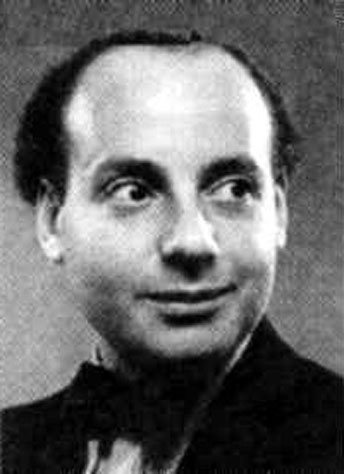
Example 1

Berthold Goldschmidt
Berthold Goldschmidt was one of the very few who took a purely musical decision to come to England, based on the fact that Adrian Boult had conducted Alban Berg’s Wozzeck in 1934. As Goldschmidt had been involved as rehearsal pianist and assistant conductor to Erich Kleiber for the Berlin premiere in 1925, he felt encouraged by the fact that the BBC had even gone so far as to broadcast Boult’s performance. In addition, Carl Ebert, his former boss from Berlin’s Charlottenburg Opera, had landed in Glyndebourne and implied that he might have work for Goldschmidt.

If Schmitz overstated his case somewhat in the run-up to the First World War, he was not alone in his opinions. Even Ralph Vaughn Williams was moved to write the following, in 1942:

‘The problem of home grown music has lately become acute owing to the friendly invasion of these shores by an army of distinguished German and Austrian musicians. The Germans and Austrians have a great musical tradition behind them. In some ways they are musically more developed than we, and therein lies the danger. The question is not who has the best music, but what is going to be the best for us. Our visitors, with the great names of Bach, Beethoven, Mozart and Brahms behind them, are apt to think that all music that counts must come from their countries. And not only the actual music itself, but the whole method and outlook of musical performance and appreciation. We must be careful that, faced with this overwhelming mass of ‘men and material’, we do not all become little Austrians and Germans. In that case either we shall make no music for ourselves at all, or such as we do make, will be just a mechanical imitation of foreign models. In either case, the music which we make will have no vitality of its own’2

It’s equally worth noting that Vaughan Williams does not extend his admiration of German music beyond Brahms, and indeed, following the First World War, Thomas Armstrong, a friend and protégé of Vaughan Williams, stated, in his position as Director of the Royal Academy of Music, that ‘we had to get rid of Brahms!’ He went on to explain that German Romantic influence was stifling English music.3
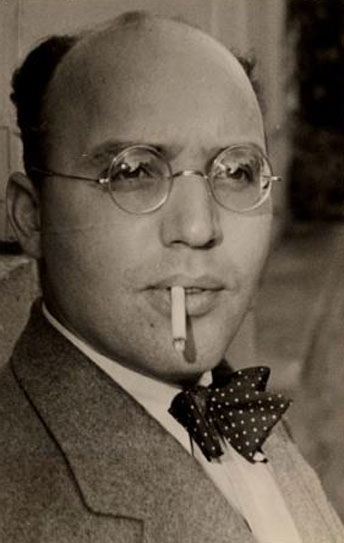
Example 2

Kurt Weill
But if German Romanticism was stifling English music, German Modernism was seen as far worse.
The Saturday Review of 6 July 1935 described the music of Kurt Weill’s operetta ‘A Kingdom for a Cow’ as ‘a hotchpotch of various styles […] it landed nowhere.’ Frank Howes went even further in his book, A Key to the Art of Music:

‘‘Before [The Seven Deadly Sins] was over I had found my first sympathy with Hitler’s political actions; but I do not in point of fact approve of authoritarian politics, and nothing that happened in the first year of National Socialism encouraged me to have a better opinion of it. Imagine my astonishment, then, when a year later, hearing a very competent diseuse sing three songs by Weill, two from ” The Three-halfpenny Opera,” I once more found myself admitting that Hitler had done well to try and eradicate from German life the kind of mentality reflected in these songs.4

The Musical Times is less shocking in its review of what it calls ‘The Three Farthing Opera’ but writes the following condescending review:

‘Bert Brecht the librettist, and Kurt Weill the composer, have done a queer thing. The one has lifted and altered Gay’s plot, the other has thrown away the well-loved tunes and substituted his own post-war jazzy inanities. It is all very crude and painful. But (to be fair) they know nothing of Gay and [Sir Nigel] Playfair in Germany.’5

It did not bode well for new music coming from Germany and Austria, though there was the occasional bright spot, such as Sir Henry Wood scheduling Ernst Toch’s Second Piano Concerto for a Prom concert on 20 August 1934.


Your browser doesn’t support HTML5 audio. Here is a link to the audio instead.


Musical Example 1.  Toch piano concerto no. 2 Diane Andersen Philharmonisches Staatsorchester, Halle, Cond. Hans Rotmann (opening only)

As to be expected, the reviews of the work were tepid at best. It was also around this time that Benjamin Britten intended to spend a year in Vienna studying with Alban Berg, only to be dissuaded by parents and teachers eager to protect him from the decadence of Central European influences.

Nevertheless, there were concerted efforts made by the NSDAP (National Socialist Workers’ Party of Germany’ – the official name of the Nazi Party)to promote British music in Germany, though the most that was managed was a concert in relatively provincial Wiesbaden in 1936 of composers such as Bax, Elgar, Holst and a few others, conducted by Carl Schuricht. 1936 would also see the first German tour by a British orchestra since 1912: the London Symphony Orchestra conducted by Sir Thomas Beecham. Another high-point, in 1938, was Ralph Vaughan Williams’ acceptance of Hamburg’s Shakespeare Medal, an award that was turned down by Neville Chamberlain owing to the appalling treatment of Jews in Nazi Germany.  At the same time, Michael Bell, writing for the Observer, would comment on the positive side of musical life in ‘the New Germany’ while mentioning that ‘naturally’ Jews were excluded, as they were not German.6 To a post-Holocaust generation, such confused ambivalence must seem willfully blind at best or murderously bigoted at worst.

Exit UK!
Events would soon overtake questions of where to go. If Austrian Jews working in Germany tended to return to Vienna in 1933, others such as Ernst Toch and Arnold Schoenberg went straight to Paris. To many, it was clear that Germany’s annexation of Austria was inevitable. As early as 1919, the Austrian parliament had passed a measure to be absorbed by its larger neighbor.  Its enactment was blocked by the Americans and the French. When an Austrian became German Chancellor in 1933, it must have seemed clear that annexation could only be a question of time. The attempted Nazi coup and the assassination of Austria’s dictator, Dollfuss, in 1934 sent another signal to the politically prescient that it would be wise to leave. When the annexation finally occurred, in March 1938, it was accepted by most of the world as an inevitability that should have been permitted when proposed twenty years previously. The anti-Semitic pogroms that the annexation unleashed, however, astonished Foreign Offices around the world. With the criminalization of the Nazi Party (as well as the criminalization of the Communist Party) by Austria’s right wing dictatorship in 1933, the suppressed rage of a large minority of Austrians exploded.7 The photos of elderly Jews scrubbing sidewalks, along with stories of terrible brutality, galvanized Great Britain into requiring entry visas. In addition, it was made mandatory that they be acquired prior to departure. With even more deadly rampages against the Jewish population in November 1938, it was clear that the world stood on the brink of a major refugee crisis. Worse, most of the refugees were Jewish, and there were already sizeable anti-Semitic contingents in Britain, Canada and the United States.

Quite apart from the political turmoil on the continent, British musicians were not in a position to welcome better-qualified performers. They were aware of the superior training in Germany and Austria, and the financial crisis that had produced a Hitler in Germany had not left Britain immune to economic problems. The advent of sound cinema had closed down countless orchestras and left many musicians on the street.
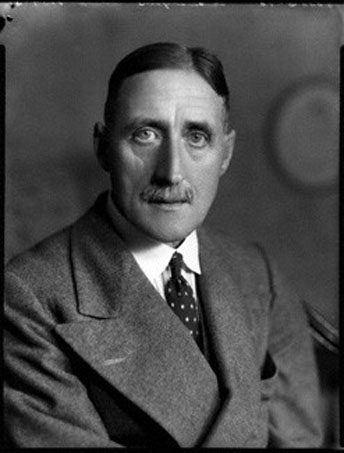
Example 3

Photo of George Dyson
As early as 1931, the Incorporated Society of Musicians (I.S.M.) under their chairman, Sir George Dyson, issued a manifesto in which it demanded restrictions on foreign musicians.  8Though there was considerable public antagonism to such insular views, in the editorial and letter columns of the press, the composers Cyril Scott and Arnold Bax went even further than the I.S.M. in their musical xenophobia.9

The BBC and Ministry of Labor issued the expected lip-service promises to the I.S.M. yet went on to intensify their invitations to German musicians after 1933. The Berlin Philharmonic became an established part of the London season until 1938, and the Dresden Opera took up residence at Covent Garden during the summer months of 1936. Though not yet part of Germany, Austria’s many top orchestras and choirs also put in annual appearances. Much to the annoyance of the I.S.M., the public and press welcomed such high standards of technical excellence.

By 1934, the I.S.M. had sharpened its message, and in its house journal, Professor W. Gillies Whittaker made the following astute observation:

The music profession is at the present time faced with a very serious situation on account of political and racial expulsions from Germany. Numbers of refugees are seeking a means of earning a livelihood in Britain. A turn of the wheel in Austria may produce a similar upheaval there, and there will be another invasion of our coasts.
Be it said from the outset that our sympathies are entirely with these unfortunate beings… Our nation has always been in the forefront of helping distressed peoples. But we must face facts. Can we absorb these musicians without dislocating our profession?10

A year later, the I.S.M. could claim success in curtailing the influx of musicians, limiting their opportunities and shortening their ability to remain in Great Britain; the organization openly referred to Jews as predominating amongst recent arrivals and described the ‘enervating influence such foreigners would have exerted upon native musical art.’11With the annexation of Austria, a new push was made against the influx of new arrivals, and it is interesting to see that the Society adopted the editorial position of warning its members not to help individual Austrian musicians without consulting the organization’s executive committee12.  The I.S.M. eventually set up a Refugee Musicians’ Aid Committee in an attempt to support musicians who were in transit to other shores; indeed, they saw it as their duty to enable such transit rather than having refugee musicians remain in Britain.

The 1940 policy of internment of all ‘enemy aliens’ relieved the issue temporarily. Most refugee musicians were eventually released – they were considered to be of no danger to the war effort – and the I.S.M. renewed its efforts to curtail their ability to take up employment in any British institution.13 The society accepted, however, the compromise of refugee organizations mounting their own concerts and events. The grievances of the I.S.M. were not without foundation. The fact that refugees were largely Jewish had been downplayed, though not, as shown above, unremarked upon. It gave the distorted impression of a country at war with Germany while taking in Germans who were filling the places of British orchestral players and teachers who had been called up for active service. The Ministry of Labour tried to address these issues. From 1943, the I.S.M. focused its attention on the question of foreign music teachers. There had in fact been disturbing cases of enemy aliens deprived of legal work, offering local children instruction on piano, violin or cello. Some of these cases were followed up with alarming threats of deportation or arrest. Towards the end of the war, the stance had softened somewhat, and with the defeat of Hitler and confirmation of the Nazis’ terrible crimes, the I.S.M. appeared to have accepted the fact that German and Austrian musicians were in Britain to stay.

Music outlets and opportunities in wartime


Although the I.S.M. was defiant in its resistance to foreign musicians encroaching on British terrain, it was only partially successful. The tenor Richard Tauber could not be stopped from performing. Like Pavarotti in more recent times, his popularity extended well beyond opera audiences. The pianist Artur Schnabel, on the other hand, after spending 1933-1939 in Great Britain, while teaching summers in Tremezzo on the Italian/Swiss border, decided that it would be easier to perform in England if he lived somewhere else. In 1939, he and his family immigrated to the United States. But beyond such famous artists as Tauber and Schnabel, a vast assortment of musicians and performers of diverse talents and degrees of status were seeking work. Many were young students, while others were work-a-day voice coaches or orchestrators/arrangers for stage and cinema. There were also approximately seventy composers, of varying levels of prominence, who arrived with the intention of leaving for the United States as soon as possible. Wilhelm Grosz made it to America in time to compose the hit song Along the Santa Fe Trail, which was considered, but not used for the film The Santa Fe Trail, featuring Ronald Reagan, whereas the former Schoenberg pupil Karl Rankl remained stuck in London at the outbreak of war. Paradoxically, Grosz died shortly after arriving in America, whereas Rankl went on to head the re-launched Royal Opera House at Covent Garden, from 1945.

From 1939, the Soviet Union had started to exert its own “soft power,” in the guise of non-political refugee organizations that helped address the daily problems encountered by discombobulated émigrés. They offered language courses, guidance in finding employment, help in tracing relatives and acquiring affidavits and visas. Over time, the organizations branched out to offer a cultural program that included concerts, cabaret, theatre, readings and recitals. With Austrians being considered Germans since 1938, the decision was taken by local Communists, receiving guidance from Moscow, to open up separate Austrian Centers, thus openly refusing to acknowledge the legality of the Nazi ‘Annexation’.

The anti-Nazi propaganda, central to the activities of both the German and Austrian refugee centers, came to an abrupt halt almost as soon as the various organization were founded, with the Hitler-Stalin Pact in 1939. Even British intelligence organizations were wary of overt anti-German campaigns emanating from refugee centers, and recent published research underlines the degree and nature of MI5’s infiltration of refugee organizations.14The outbreak of war would cause further conflicts of interest, as the centers were still not encouraged to agitate against the Third Reich as long as the Hitler-Stalin Pact remained.
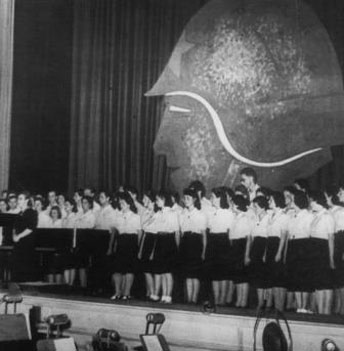
Example 4

Photo of Free Austria Soviet Friendship Concert
This obviously changed dramatically in 1941, with Hitler’s invasion of the Soviet Union, resulting in a redoubling of activities and outward displays of loyalty to the Soviet allies. In the same year, the painter Oskar Kokoschka, the sculptor Anna Mahler, the writer Elias Canetti, the violinist Arnold Rosé (former concertmaster of the Vienna Philharmonic), the composer Hans Gál, the musicologist Otto Erich Deutsch, and many others signed the following document, which announced the Soviet-led ‘Free Austria Movement’

Due to the aggressive annexation of Austria on March 11, 1938 and the resulting referendum held under the shadow of terror and manipulated by Nazi cheats; supported by the rights of self-determination as proclaimed by the Atlantic Charter in its guarantee of a new world order; and in respect of the fact that Austrians today remain in bitter conflict with the foreign occupation of Nazi Fascism, the enemy of mankind, freedom, democracy and justice; the Austrians now residing in Great Britain see as their duty to support the freedom fight of the Austrian people and support the victory of Great Britain and the Soviet Union as well as her allies, with all of their available power. For that reason, the undersigned names of individuals and organizations have set upon themselves the following tasks:
1) The retraction of legal recognition by the British government of the violent annexation of Austria
2) The guarantee of right of self-determination for the Austrian people as stated in the Atlantic Charter
3) To mobilize all Austrians living in Great Britain into its own civil defense militia, and to mobilize them in the production of all that is necessary to guarantee the defeat of Nazism by Great Britain and her allies. For this, it is also necessary to remove the status of ‘enemy aliens’ from all Austrians living in Great Britain as well as to strengthen and encourage Austrians still living in their homeland in their own acts of resistance.
The following organizations have signed the petition: The Association of Austrian Social Democrats; The Austrian Centre; Austrian Communists in Great Britain; The Austrian Democratic Union; The Austrian league; The Austrian Office; the Austrian Women’s Voluntary Workers; Austrian Youth Association; Council of Austrians; Kommendes Österreich and Young Austria.

Some background about the Austrian situation is necessary. As early as 1933 and 1934, while Hitler was purging Germany of Socialists and Communists, the right-wing Fatherland’s Front of the dictator Engelbert Dollfuss was doing the same thing in pre-Nazi Austria; most political refugees headed to France. With the fall of France in 1940, they then headed towards Great Britain. This meant that in 1938, when Hitler annexed Austria to the Reich, most of the powerful left-wing political resistance had been neutralized by Dollfuss several years earlier. Indeed, many non-Jewish Austrian Socialists actually believed that the annexation was the “lesser of two evils”: however bad Hitler was, he could not be worse than Dollfuss, or at least so they believed. In addition, they were convinced that Hitler’s policies would ultimately be ineffective and result in his inevitable downfall. This would leave Austria as part of a strengthened, Social Democratic Germany, as had been hoped in 1919, and would save it from the hand-to-mouth existence it had experienced ever since.

The Austrian Centre would play an important role in the specific story of exile for Austrian musicians living in the United Kingdom. Established on March 16, 1939, the Center had an executive committee that consisted of Anna Mahler, Oskar Kokoschka, and Sigmund Freud, who was its honorary president until his death in September of that year. The official opening took place in London’s Paddington district and was attended by Lord Hailley, numerous Austrians and 150 British friends. Patrons were the Lord Bishop of Chichester and parliamentarian Captain V. Cazalet. The Center was housed in a shabby building in Westbourne Terrace; it provided a library with English as well as German books, language classes, a debating club and a weekly newspaper, Der Zeitspiegel. A short time later, it would also become the home of the monthly Austrian newspaper Oesterreichische Nachrichten, with its own publishing company, Free Austria Books, as well as the Free Austria Pen Organization. There was also an employment agency, a lobbying group and an Austrian Self-Help Organization.15The Austrian Centre also included The Circle of Music Lovers; Georg Knepler, who, as a young pianist in Vienna, had accompanied Karl Kraus’s readings of Offenbach, relates the following:

Later, as emigration became a serious issue around 1938, someone founded an Austrian refugee organization where I could work. It was called ”the Austrian Centre,” and during its best years, around 1938 to 1940, it must have had 3,500 members. Most were middle class and non-political people who had to leave because of their Jewish origins.
They were mostly elderly people and politically, assuming that they had a view, it was [fairly evenly] mixed with everything from monarchists to communists. It was founded to make people’s lives easier – I have no idea where they found the money, but there were many people in England who wanted to help. We were able to rent two small houses in London’s Paddington district, where we put a restaurant, a café, a theater and a lecture hall. It wasn’t luxurious, but it was cozy, and people were able to make contact with one another. It made emigration bearable for many. The theater had some excellent actors and the musician wasn’t bad, that was me!16

One of its main propaganda functions, however, was to underline, for the British, the difference between Austrians and Germans. The British government, despite initial disappointment over the Nazi annexation of Austria, ultimately viewed it as legal, and therefore ceased to view Austrians as separate from Germans. The so-called Moscow Declaration of 1943 – the declaration of a separate, independent Austria – did little to alter this perception. Thus, the Austrian Centre’s events were always carefully identified as specifically Austrian, even when they involved nothing more than music, eating, dancing and drinking. The German groups could never allow themselves the luxury of calling themselves “German.” In order to avoid antagonizing their British hosts, they referred to their own events simply as “continental.”17

Competition between the two cultural organizations was evident in their musical activities as on other occasions. Demographic factors, as implied in Knepler’s statement (above), were also significant. In the aftermath of the horrific pogroms unleashed against Jews following the Austrian annexation, Great Britain and other countries barricaded themselves against waves of Jewish refugees by insisting that all would-be émigrés obtain entry visas prior to their departure. Those without foreign sponsorship or bank accounts, or a ticket to another destination, were simply denied entry. The result was that an older, wealthier and more professional class of people arrived from Austria than had been the case when refugees had begun arriving from Nazi Germany five years earlier. “Sponsorship”, always gratefully accepted, resulted in former doctors, lawyers, accountants, musicians, actors, journalists, and their wives and husbands, working as domestics. An entry visa to take a promised job as gardener, nanny or house cleaner would save the lives of many thousands of Austrian professionals and their families. Lord Plymouth, undersecretary for the Foreign Office informed the House of Lords on December 14, 1938, that Great Britain had to date taken in 11,000 refugees. With the annexation of Austria and the fall of Czechoslovakia, the number rose in the following months to over 70,000.18

Another demographic difference existed between Austrian and German Jews themselves. Austrian Jews had seen music as a legitimate career option that would provide security and acceptance. This was because Vienna, historically, had placed music far higher than other cultural disciplines. Although few of them came to the UK, prominent Austrian composers of opera and other serious music included Arnold Schoenberg, Alexander Zemlinsky, Franz Schreker, Erich Korngold, Egon Wellesz, Hans Gál, Ernst Toch and Hanns Eisler, whereas Germany’s most prominent banned composers of serious music were Kurt Weill and the half-Jewish but Catholic-born and -raised Walter Braunfels. (It should be mentioned, however, that many of the just-named Austrian-born musicians were working in Germany until Hitler’s appointment as Reich’s Chancellor.) The prominence of Austrian Jewish performers revealed a similar discrepancy. All of this meant that in British public awareness, the Austrian Centre could lead where the German Cultural League could only follow. Indeed, both Peter Stadlen and Georg Knepler, in separate interviews, mentioned that Mahler enthusiasm in post-war London was a result of Hans Gál’s four-hand arrangements of the symphonies, performed by the German pianists Franz Osborn and Berthold Goldschmidt at Austrian Centre concerts. Austrian dominance in musical matters played well to British audiences, which continued to accept Austrian composers while banning their German counterparts. In reality, the competition was friendly, and Germans, Poles, Czechs and other Central European refugees performed at Austrian concerts, just as Austrians and the same assortment of refugees from other countries performed for the German Cultural League.
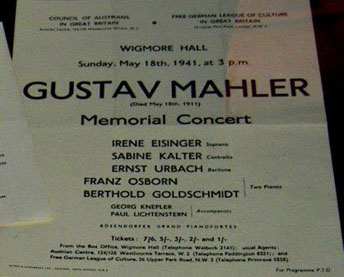
Example 5

Program Photo of Osborn and Goldschmidt

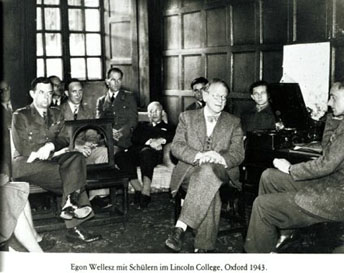
Within the various Austrian organizations, distinctive music groups began to form. One of them, in 1939, was the “Musicians’ Group of the Austrian Circle,” which put on performances by Arnold and Alma Rosé (this was presumably one of Alma’s last public performances before she fell into the hands of the Nazis in Holland). More significant was the “Refugee Musicians Committee,” later called the “Austrian Music Group,” which enjoyed the patronage of Myra Hess, Ralph Vaughan Williams and Adrian Boult and would form the basis for today’s Anglo-Austrian Music Society. The organization was founded by the Austrian pianist Ferdinand Rauter and a number of other musicians, including Hans Gál and Egon Wellesz.
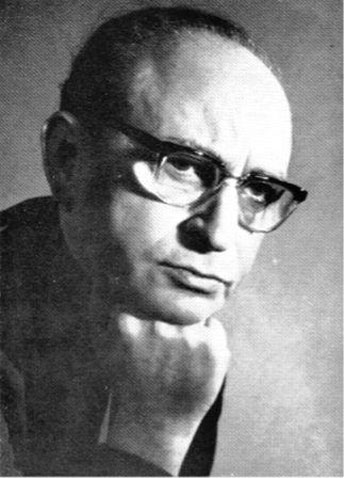
Example 6

Photo Max Rostal
Ferdinand Rauter describes the founding as having sprung from a wish to help the many still interned musicians. He was especially concerned for violist Peter Schidlof, violinist Norbert Brainin (both of whom would form part of the Amadeus Quartet) and the young pianist Paul Hamburger. To get them out of internment camps he needed political help, also to obtain work permits and permanent visas for them. After accompanying both Schidlof and Brainin at their auditions for Max Rostal, he secured funds so that they could continue their studies. Rostal, for his part, would not accept money for teaching them. Nevertheless, the experience highlighted the plight of the many refugee musicians trying to work in the United Kingdom. Attempts to form a dedicated refugee orchestra came to nothing, despite help from Karl Rankl. It was then decided that it would be most useful if Austrian musicians could form their own society. On the 31st of March 1940, the Austrian Cultural Committee was founded, with Rauter as director, Dr. Hermann Ullrich as secretary, and Georg Knepler as Rauter’s assistant. This new committee was called the Austrian Musicians Group. The first concert, a celebration of the Vienna Philharmonic’s centenary, took place at the Wigmore Hall on May 28, 1942 and included chamber works performed by the Philharmonic’s former concertmaster Arnold Rosé, Rauter and a number of others. The society was introduced at the concert by Sir John Christie, the founder of Glyndebourne Opera, and himself responsible for helping countless refugee musicians.19

In Rauter’s later explanation, he stressed that politics soured relations between the Austrian Musicians Group and the Free Austrian Movement. At some point, it became clear that a distancing of politics, especially from Soviet influence, was necessary to secure the long-term help that Austrian musicians needed from their British hosts. New contacts were established to secure finances outside the Free Austrian Movement. Social evenings were created, and in time, enough support was found to enable the Austrian Musician Group to be re-named the Anglo-Austrian Music Society (AAMS). Instrumental was the help of Sir John Forsdyke, director of the British Museum, who was married to Dea Gombrich, wife of the Austrian art historian Ernst Gombrich. Rauter’s arguments that political distance was necessary from Soviet influence are weakened, however, by the active participation in the founding of the AAMS by such well-known Communists as Georg Knepler and Hermann Ullrich.20 Another platform for refugee performers was Dame Myra Hess’s series of National Gallery Concerts. Both she and John Christie continued to engage Austrian and German musicians in the teeth of strong opposition and lobbying from the I.S.M. Indeed, the efforts of Christie and Hess overlapped as Glyndebourne, which had started as a vanity project for Christie’s wife, became a net into which the entire musical team of Berlin’s Charlottenburg Opera had fallen: conductor Fritz Busch, administrator Rudolf Bing and director Carl Ebert, along with a host of singers and coaches. What had started as a summer diversion, so that his wife could sing Mozart operas in a converted barn, turned into a major musical event that soon became a high point in the London season.
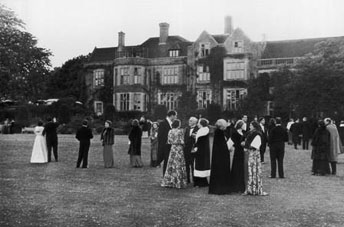
Example 8

Photo Glyndebourne in the 1930s’

Performances ceased with the start of the war, which was precisely the point at which Myra Hess began her series of lunchtime concerts in the cavernous, emptied halls of London’s National Gallery; its priceless art collection been moved to safety. The Gallery’s director, Kenneth Clark, referred to a ‘cultural blackout’ with the declaration of war.  Myra Hess approached Clark with the view that cultural events provided the ‘spiritual nourishment’ necessary for a country at war. With this in mind, she proposed using the National Gallery for lunchtime concerts in order not to violate the blackout regulations that had closed London’s theaters, cinemas, opera houses and concert halls. Performers who could not work elsewhere managed to perform occasionally under Hess’s auspices. Howard Ferguson was largely responsible for planning; inevitably, the material that best suited the venue was chamber music or works for chamber orchestra. Mainstream classics were central to planning, and Hess herself performed Beethoven, Mozart and Bach.

Example 9

Photo Myra Hess

The BBC also started to provide work opportunities for refugees, although much German music was replaced with music from France and Russia, in addition to British works. But refugees such as Berthold Goldschmidt were able to work for the BBC’s propaganda broadcasts beamed towards Nazi Europe; his programs included works by Mendelssohn and Mahler along with any number of other banned, more contemporary composers.  From 1943, the BBC, following the Moscow declaration, opened a special Austrian division that broadcast directly to Austria and underlined its independence from Greater Germany. The BBC also seemed to avoid implementing the otherwise corporation-wide ban on Austro-German musicians by having them perform for their foreign language services. In some rare cases, such as that of Louis Kentner, they were taken up by the entire service. Indeed, Kentner managed to elude the ban on Austrian and German musicians by virtue of his Hungarian citizenship, although he was born in Silesia, which at the time (1905) was part of the Austro-Hungarian Empire. Indeed, Austrian birth before the break-up of the Habsburg monarchy would not inhibit those who had later taken Czech, Polish or Hungarian citizenship. German was still spoken widely in all of these countries and many who may have come across as totally Austro-German managed to evade proscriptive I.S.M. measures by virtue of a Czech or Hungarian passport.

The BBC would also rescue the occasional musicologist, such as Karl Geiringer. In 1935, three years before Hitler’s annexation of Austria, Geiringer had written to the BBC from Vienna and had persuaded the company to perform two Scarlatti cantatas that he had discovered. When forced out of Austria in 1938, he was able to use his BBC contacts to facilitate his emigration, although he was unable to procure steady employment. Ernst Hermann Meyer, who would later become the head of East Germany’s Composers’ Union, was also a valued musicologist who, in contrast to Geiringer, managed to find work at the BBC in a series of Home Service broadcasts on the history of Chamber Music.21
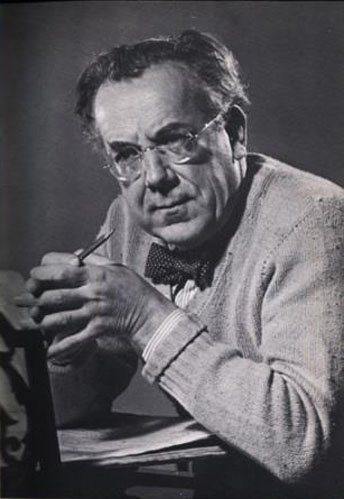
Example 10

Photo Karl Rankl
The situation of the Austrian conductor Karl Rankl, however, perfectly underlines the complexity of nationalities and the difficulties faced by British broadcasting in the implementation of its ban on German (including Austrian) composers and musicians. This was in addition to the official injunction brought about by the I.S.M. on the employment of refugee musicians from Germany and Austria. At the time of the Munich Accord, Rankl was conductor at Prague’s German [opera] Theater, where he had just conducted Ernst Krenek’s anti-Fascist twelve-tone opera, Charles V. As it was obvious that the rest of Czechoslovakia would soon follow the Sudetenland into the expanding Nazi Empire, the theater was closed and all German speakers, whether Czechs or foreigners, found themselves endangered by their Czech-speaking compatriots. Rankl, who was not Jewish but had been active in the Communist Party, could not return to Austria, which the Nazis had annexed five months earlier. Krenek, along with Arnold Schoenberg, wrote letters of recommendation to Adrian Boult, then the BBC’s chief conductor, and eventually managed to assert enough pressure on the BBC that Rankl was invited to England for ”exploratory talks”. These talks came to nothing, as in Geiringer’s case, but served the useful purpose of saving Rankl’s life by bringing him to England. Nevertheless, when a later proposal to perform a symphony composed by Rankl was put forward, the answer from the BBC’s controller, K.A. Wright, made the dilemma clear: ”. . . .Rankl is in the unfortunate position of being a German Czech and he is therefore ignored by the national Czechs with whom we deal. Even the leading Czech musicians in London either profess complete ignorance of Rankl’s name, in spite of all he did at the German Czech Opera in Prague and in Vienna for people like Alban Berg, or at best shrug their shoulders and say they have never heard of him.”22 As we shall see, this would not be the end of Rankl’s problems in Great Britain.


Your browser doesn’t support HTML5 audio. Here is a link to the audio instead.


Musical Example 2.  ‘They’ from Rankl’s song cycle ‘War’ – Karl Rankl They from the song-cycle ‘War’ sung by baritone Christian Immler with Erik Levi on piano

Opportunities in Peace-time
Suspicion of Austro-German musicians did not abate with the end of the war. In 1945, countless émigrés who had obtained British citizenship were unable to gain visas to return to their former homelands, now under occupation and divided into French, British, Soviet and American sectors. The countries were destroyed, there was little infrastructure left, and the horrors of the attempted genocide against the Jews was such that they were hardly even mentioned. To have died in a concentration camp was almost a mercy compared with the means by which others had survived. It was not something to talk about, and, understandably, Austrians and Germans living in Great Britain showed little appetite for returning. The rebuilding process meant that former Nazis or passionate Nazi sympathizers had remained in their positions unless they had been personally responsible for criminal acts. Even when they were clearly implicated, as in the case of Prof. Erich Schenk, they often had sufficient connections to be let off. Schenk even went on to become Chancellor of Vienna’s University, yet he was accused of having acquired the valuable library of musicologist Guido Adler during the Nazi years by having Adler’s daughter murdered at the Maly Trostinets extermination camp. In spite of this, he was later honored for “having saved the valuable collection for the fatherland”.23Such sobering realities made a return difficult for most former refugees to consider. In letters to Hans Gál from Alfred Einstein and Georg Szell, the anger against the ease with which Nazi colleagues reentered professional life was palpable: “How could I shake hands with a former colleague who goes on to tell me that ‘now that it’s all over, I can say that I never really believed any of that nonsense?’” Einstein asks Gál, in explaining why he refused to return to Salzburg to accept the Mozart Medal.  24
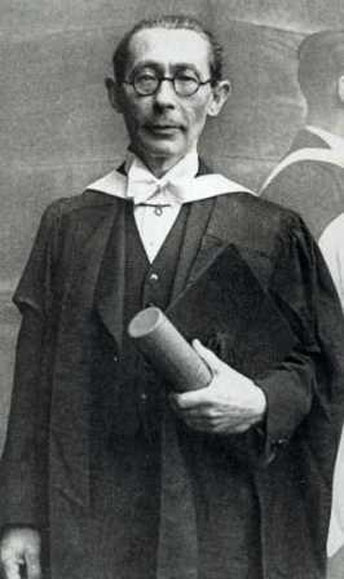
Example 11

Photo Hans Gál in Edinburgh

Where to Start or How to Start? (Part II)

Work Recommendations

Seldom have I been asked to list works that I think might win over audiences on a single hearing. For one thing, much if not most great music demands at least a second hearing, and often many more, before its full message gets through. But we can't always assume that a second hearing will be available to repertoire that is more often regarded with suspicion than with curiosity. I've been asked to schedule and plan programs and festivals, but rarely has anyone asked me what works I believe will silence the doubters after a single performance. Until now, I have tried to strike a balance between the familiar and unfamiliar, and I have been able to rely on the good will of listeners whose curiosity was known to outweigh their suspicions.

The nature of Central European music from the late 19th to the mid-20th century forces me to make some very broad generalizations that must be kept in mind as I go through my list. Music from Austria and Germany was often meant for participation, meaning there is a lot of music for small ensembles and Lieder. I differentiate even further by separating these small ensemble categories into “chamber music” and “Hausmusik.” Chamber music is for the listener – in other words, for performance in front of audiences; Hausmusik is for the performer at home with other musicians who simply enjoy making music together. With Hausmusik, playing the music is the central task; with chamber music, listening is the main factor. I have therefore not listed anything I count as Hausmusik.

It is ironic that the composers whom Hitler banned as un-German saw themselves as quintessentially German and thus composed a large amount of Hausmusik as part of a thoroughly German tradition of performing at home with family and friends. Of course, the German tradition was most exemplified by the genres it considered its own creations: symphonies, quartets and instrumental sonatas along with art-songs, operas and chamber music. The fact that German anti-Semites declared Jews to be non-German made German Jews all the more determined to be more German than the Germans, and some of them fanatically pursued this course even in exile. When one looks at the names of the foundation-shaking avant-garde composers of the early 20th century, there are astonishingly few Jews, with the exception of Arnold Schoenberg. And even Schoenberg proclaimed his twelve-tone system to be the guarantor of the future supremacy of German music. In other words, German Jewish composers tended to stick to the German compositional rule-book, and those who broke the rules did so in order to preserve German musical predominance. It is no coincidence that all of this Germanic posturing came predominantly from Austrian Jewish composers, but that is too complex a story to deal with here.

In listing the works that I consider to have the capacity to make first-time listeners drop their jaws in disbelief and wonderment, I have proceeded by genre: quartets, other chamber music, solo instrumental, orchestral, orchestral-vocal, opera and Lied, and I have mentioned only four or five pieces in each category that I consider to be winners – although I have allowed myself the luxury of also referring to other works that are certainly worth investigating.

Quartets

Over the past four years, I have participated in the programming of an annual series of concerts given by the Aron Quartet at Vienna's Laudon Palace. Each summer, we take a specific theme of “banned” music and feature representative works within a program of repertoire by non-banned, established-name composers. This helps to form a musical context. Many quartets written in exile often have a unique, “samizdat” quality and contain biographical references. Before coming to the subjects of exile and composers murdered at Auschwitz, I would like to highlight two works written in Vienna: Arnold Schoenberg's Second Quartet (1908) and Hans Gál's First Quartet (1916). Schoenberg, despite being the elder of the two composers, wrote more adventurous music than Gál. His Second Quartet uniquely embodies fin-de-siècle Vienna. There are soprano solos in the third and fourth movements, and few other works can guarantee the sort of shivers created by Stefan George's lines, “Ich fühle Luft von anderem Planeten” (“I feel air from another planet”). In general, the work demands a good deal of the listener, but the rapture of the poetry combined with Schoenberg's gentle gliding over vestiges of tonality envelops us with the sensuality of Vienna's “gay apocalypse.”

Schoenberg's teacher Alexander Zemlinsky was for a short period a pupil of Brahms, and Brahms's circle included Joseph Fuchs, who taught nearly every significant Austrian composer of the period from Hugo Wolf, Gustav Mahler, Zemlinsky and Franz Schreker right up to the precocious youngsters Ernst Toch and Erich Korngold. Brahms's austere classicism and contained passion were dominant features of Vienna's musical landscape. Early works by Fuchs's pupils Schreker and Toch sound so Brahmsian that little of the future uniqueness of either composer can be deduced from them. For that reason, my second choice is a work by Gál, who, although influenced by Brahms, did not study with Fuchs but rather with another Brahms associate – indeed, Brahms's musical executor – Eusebius Mandyczewski. Gál was able to develop his own identity from an early age, and his First Quartet was premiered by the celebrated Rosé Quartet when he was 26 years old. (Arnold Rosé, Mahler's brother-in-law, was concertmaster of the Vienna Philharmonic and the quartet's first violin.) The Rosé Quartet went on to premiere Gál's Second Quartet, a work that was quickly taken up by the Kolisch Quartet, led by Schoenberg's future brother-in-law, Rudolf Kolisch. Unlike Schoenberg's work, Gál's remains firmly on the cusp of the new century while looking back into the old. It has a Schubertian tunefulness but remains engagingly individual by means of what may be described as militant conventionality.

My third choice is Pavel Haas's Second Quartet, composed in 1926 and evocatively subtitled “From the Monkey Mountains.” Despite its exotic name, it actually refers to a hilly region of Haas's native Moravia. Haas is a major composer who is now enjoying an overdue revival in his native Czech Republic, and the quartet proves, if proof is needed, that the composers who could find the strength to write under the inhuman conditions of a concentration camp had even more important works to their credit, many of which still await discovery. Haas's Study for String Orchestra, composed and performed in Theresienstadt, is certainly impressive, but it seems almost pale next to his Second Quartet, the slow movement of which is one of the most poignantly beautiful works in the literature. The impressionistic tones he paints are dark and far removed from the British and French pastoral composers we're more familiar with. Along with his teacher Janáček, Haas created a distinctively Central European and often jagged-edged musical environment. There is even an optional percussion part for the quartet’s final movement.
My fourth and final quartet describes, in musical terms, the despair of having to grab a half-packed suitcase and leave in the middle of the night. Berthold Goldschmidt's nerve-jangling Second Quartet, composed in 1936 after his arrival in England, offers a frantic opening that autobiographically recalls the escape from Germany and arrival in a country with an promise of work that was not fulfilled and a fear of possible deportation: he had been led to believe that Carl Ebert would be able to find him employment at Glyndebourne, but the job didn't materialize and Goldschmidt, in common with many other refugees, had to try to find a means of survival. The quartet keeps listeners on the edge of their seats.

Other Chamber Music

Appropriately enough, given its title, Franz Schreker's 1909 chamber work, Der Wind, scored for violin, clarinet in A, horn in F, cello and piano, is guaranteed to blow the listener away. It was composed for the Wiesenthal Sisters – dancers who were Vienna's answer to Isadora Duncan – and it was inspired by a poem by Greta Wiesenthal. Although it lasts a mere ten minutes, it magically transports the listener to the same sort of sunlit glade that we “hear” in Debussy's Afternoon of a Faun, although in Schreker's Central European sound-world (possibly the Vienna Woods). Der Wind demonstrates the degree to which French Impressionism influenced a generation of Viennese composers, and Schreker – who, in his day, was often referred to as a magician of musical color – was able to create a kaleidoscope of moods and images. Schoenberg reacted much earlier than Schreker to the influence of French Impressionism, most notably with his Sextet Verklärte Nacht, or Transfigured Night (1899), which was inspired by Richard Dehmel's poem of the same name. In its original version it is the perfect companion piece to program with Korngold's Sextet op. 10 (1916), but the version I wish to recommend is an arrangement for piano trio by Schoenberg's pupil Eduard Steuermann. As a composer, Steuermann was accorded considerable respect by his colleagues, if not always by the public; today his works are largely forgotten, but he remains known as the pianist who was the most idiomatic exponent of the so-called Second Viennese School.

Steuermann's arrangement of Verklärte Nacht offers a greater variety of textures than Schoenberg's original. Many of the musical ideas are given greater prominence, and the piano adds a percussive, rhythmic foundation that tightens the piece architecturally, so that its mood is less impressionistic and creates a very different effect. By coincidence, this version, too, is almost perfectly coupled with another Korngold work: the Piano Trio op. 1, written in 1910, when the composer was only thirteen years old.

My next choice is the Quintet in F-sharp Major (1944) by Walter Braunfels. For Braunfels, as for Gál, “modern” did not necessarily mean dissonant or atonal, but merely “recent.” They were not particularly upset if critics thought that their music sounded as if it had come from the previous century. Like Gál's quartet, Braunfels's quintet wins its audience over from the very first bar. Unlike Gál's quartet, however, it is a work of “inner exile” and presents the musical reaction of a very profound thinker who must have been devastated to see such friends as the philosopher Martin Heidegger welcome National Socialism. It is a work of great beauty but also of dashed dreams, though never without hope. Braunfels was racially well outside the tolerance levels of the Nuremberg Laws, and it is a miracle that he survived the war undetected in a small village on the shores of Lake Constance. His mood is reflected in the quintet's dark passages, but the work's sheer beauty never allows that darkness to dominate. That it is harmonically conventional does not detract from its position as a (still) virtually undiscovered masterpiece. But Braunfels will not remain virtually undiscovered for long: in Germany, his music is being resurrected at a colossal pace through performances at many major venues, and his opera Die Vögel was recently performed by Los Angeles Opera. The quintet will surely find a secure place in the repertoire.

Far less known than Braunfels's music is the music of Hugo Kauder – a real discovery. I was present at a performance of Kauder's Trio for viola, oboe and piano (1916) at the Jewish Museum in Vienna in 2010, and I wondered how such an original and unusual composer could have remained so obscure among music lovers. His considerable output includes a number of quartets and sonatas for wind instruments. I was surprised to learn that there is a Hugo Kauder Society in the United States, and I would encourage any interested chamber music player to contact it for material (http://www.hugokauder.org). Kauder, like Pavel Haas, was a Moravian; unlike Haas (but like Mahler), he was a German-speaking Moravian, and his music has little of Haas's craggy pastoralism. Indeed, there were moments in the concert when I felt that Kauder was closer to Delius than to any Central European composer I could think of. In the 1920s and '30s Kauder was a frequent contributor to the progressive music publication Anbruch. He was also Erich Zeisl's teacher, and it was under Kauder's tutelage that Zeisl's musical language became more confidently “modern.” It came as a surprise to discover in Kauder a composer who facilitated and even encouraged an abrasive modernity in others while apparently not regularly practicing it himself.

Other Instrumental Works

When it comes to “killer applications” in this category, I have to admit to being somewhat at a loss. Among the composers under consideration, Erwin Schulhoff and Ernst Toch composed the most brilliantly pianistic works of the period, and Schulhoff's Jazz Etudes and Toch's Der Jongleur are real winners. But I can’t say that they make the strongest case for the repertoire as a whole. Ullmann's piano sonatas are impressive, and Gideon Klein's unfinished Sonata is a masterpiece – as is Klein's String Trio, which was written in Theresienstadt. If forced to choose a single work, I would have to pick the Klein sonata – a worthy companion to Berg's Sonata (1911).
As mentioned above, I would suggest that woodwind players get to know the works of Hugo Kauder. His Sonata for piano and clarinet or oboe and Sonata for piano and horn are irresistible.

I recommend one of Hans Gál's sonatas for piano and violin to performers who may be looking for a work that will come across strongly in concert. The First Sonata, a youthfully extroverted work that galvanizes an audience from its opening bars, reminds me of Hugo Wolf's music; the Second, which dates from 1933, is more melancholic and introverted, possibly as a musical response to the shock of being relieved of his position as head of Mainz's Music Academy. Having produced recordings of both works, I cannot decide which one I prefer, and therefore suggest that interested performers have a look at both.

There are attractive cello sonatas by Weigl, Toch and Gál, but my final two recommended works in this category are by Egon Wellesz. The brief Prelude for viola op. 112 is Wellesz's last work. It began life as a sketch for a concerto that was never completed, but its few, difficult bars are instantly and movingly communicative. Given the date of composition (1920) of Wellesz's Sonata for solo cello op. 30, it cannot really be considered a companion work to the viola Prelude, although it, too, is rather short. Nevertheless, it takes a special kind of genius to write instantly engaging music for solo string instruments, and this work is immediately appealing without ever patronizing its audience with gratuitous “easy listening” material. Both the cello sonata and the viola prelude are surprisingly charismatic works, perfect for chamber music programs that need strong fillers.

Orchestral

I doubt that many would argue that the one work in this genre that grabs an audience by the throat every time it's performed is Franz Schreker's Vorspiel zu einem Drama (1914), a stand-alone version of the overture to his opera Die Gezeichneten. It is now starting to gain its much-deserved toe-hold in the repertoire, and it demonstrates why Schreker was considered a wizard of tonal coloring. Perhaps the description by his pupil Ernst Krenek, to the effect that Schreker was to music what Gustav Klimt was to painting (Krenek did not mean this as a compliment), sums the situation up. Vorspiel zu einem Drama is not only the musical equivalent of Klimt's famous portrayal of The Kiss: it seems to take the narrative of the painting and expand its full erotic potential.

To remain in Vienna's Jugendstil world for its pure beauty and opium-den sensuality one could, without hesitation, recommend Webern's Im Sommerwind or Zemlinsky's Die Seejungfrau. And if shorter works are called for, I would suggest the Prelude and Interlude of Zemlinsky's opera Es war einmal.

A pupil of Schreker – though one who, like Krenek, had little time for his teacher's opulent late-Romanticism – was Karol Rathaus, born in Tarnopol, which today is part of Poland but belonged to Austria until 1919. Few composers could assimilate musical styles as easily as Rathaus, who was described in contemporary accounts as one of the most naturally brilliant musicians to enter Schreker's Viennese composition class. His output varied between colorful theater music, such as the “Jewish Dance” movement from his Uriel Acosta suite (which can be guaranteed to bring the house down and makes a wonderful encore), and highly expressive modernism. The opera Fremde Erde was well received in its day, as was the ballet Der letzte Pierrot. However, it is Rathaus's Third Symphony that I believe, is most convincing on several levels. This dizzying work, composed in America, leaves the audience sonically charged. Although its dissonances fly by fast and furiously, its abrasive modernism is never cacophonic. The work remains tonal and is never less than exhilarating. As an orchestral show-piece, it can be placed next to works by Stravinsky or Bartók without apologies.

I also highly recommend the first four of Wellesz's nine symphonies. Like Toch and Korngold, Wellesz felt an urge to write a symphony only after years in exile. No musical form so clearly embodied the Austro-German tradition, and in Wellesz's first four symphonies there is a poignant nostalgia that becomes almost unbearably painful in the slow movements. I once described the Adagio of the Fourth Symphony as Elgar's Nimrod variation colliding with Hindemith. Each symphony lasts just under half an hour; Wellesz's obvious models were the symphonies of Bruckner, but he tightens and roughs up the forms and the musical language. There is something deliberately derivative in these first symphonies, yet it does not spring from a lack of imagination; it is willfully employed as an homage to the composer's musical past and a desire to reconnect with it. Given the fact that the First Symphony's premiere was presented by the Berlin Philharmonic and Sergiu Celibidache, its credentials could hardly be better. Start with Wellesz's first four symphonies, but don't be afraid of the remaining five, which are highly expressive works that make greater demands on the listener. The extraordinary thing about Wellesz's atonal and free-tonal works is that they are so clearly structured that one rarely feels at sea. Even his most difficult works require only a second hearing before one is able to follow their musical narrative. Wellesz has a way of gradually getting under one's skin. It takes time, but there are great treats in store for those who allow their ears to grow accustomed to his unique musical language.

If an orchestral curtain-raiser is called for, one might consider Goldschmidt's Passacaglia, which was premiered by Erich Kleiber in Berlin in 1925. It lasts seven minutes and emerges from the pianissimo of a shimmering tam-tam to a full orchestral fortissimo. This impressive piece makes us understand Kleiber's continued support for Goldschmidt. A work that makes a very different effect but works equally well is Boris Blacher's Concertante Music for Orchestra. Blacher is a fascinating figure. Born in China in 1903, the same year as Goldschmidt, he was the offspring of German-Russian bankers and was raised equally fluent in Mandarin, English, Italian, German and Russian. The Nazi discovery of one Jewish grandparent meant that his music was withdrawn relatively late in the day. Their classification of his music as “degenerate” came despite his success with both musicians and the public – indeed, there were many within the regime who had hoped to make him the poster-boy of new music in Germany – a view that would explain why the 1937 premiere of his Concertante Music for Orchestra was given by the Berlin Philharmonic under Carl Schuricht. Unlike Goldschmidt's Passacaglia, which builds and builds, the ten-minute-long, three-movement Concertante Music starts off as a typical neo-classical Concerto Grosso, which recalls Hindemith's Kammermusik. Only in the final moments – and seemingly out of nowhere – do the violins start to weave a lyrically energizing subject in and out of the highly rhythmic counterpoint provided by the rest of the orchestra. This work can raise the hairs on the back of the neck!

Concertos

The most obvious choice is Korngold's violin concerto, but – since I can't seem to escape my own Viennese background – I would like to mention that a recent pleasant surprise has been getting to know Karl Weigl's Violin Concerto (1928). Like Zemlinsky and Schreker, with whom he is often compared, Weigl could create works of finely spun gold. In this concerto each instrument has its own musical role to carry out, and this creates a tapestry that sparkles and shimmers. The work certainly has impressionistic colors, but it is so Viennese that there is nothing even remotely Gallic about it. Erich Zeisl's Piano Concerto (1951) produces a similar effect, although it was written 23 years later and Zeisl was a full generation younger than Weigl. Both works have a distinctively Viennese sheen, although Zeisl's is the more obviously modern. Toch's First Piano Concerto (1926) is outstanding – a largely forgotten masterpiece that has yet to re-establish its rightful place. Like much of Toch's other music, this is a high-energy score, and it was performed by many of the greatest names of the day. As curator of the Toch exhibition at the Jewish Museum in Vienna, I had to choose among stacks of programs, and I selected the one with Walter Gieseking, Wilhelm Furtwängler and the Berlin Philharmonic. The work is riveting; it gallops chromatically up and down the keyboard, leaving the audience jumping to its feet at its conclusion. It was the work that made Toch's reputation during Germany's interwar Weimar Republic years. In 1930, the New York Times published a picture of Toch and Hindemith as part of a full-page story entitled “The Faces of New Music in Germany.&#148 Considering Toch's extraordinary success and the high esteem in which the world held him until his departure from Germany in 1933, I suspect that his absence from today's concert programs exemplifies what I wrote earlier: his prolific body of post-war American works was performed, possibly more out of loyalty than conviction, by his many Austro-German friends in charge of American orchestras; following the passing of that generation, audiences who knew only Toch's American works were not convinced that his Weimar Republic output was worth investigating.

There are some fine cello concertos by Toch, Zeisl, Weigl, Goldschmidt and Gál, but the one that moves even the most blasé audience is Julius Bürger's Cello Concerto. The date of its composition is given as 1932, but the second movement carries the inscription “To my mother, shot in her 82nd year while on transport to Auschwitz,” which means either that the inscription was added later or that the movement was composed and/or modified later. Its effect is devastating. Indeed, it is more effective than any other “Holocaust work” I know. It has a melancholic, liturgical feel, without anger – a profound sadness without bitterness, resignation but with hope. This movement has been played on a number of occasions as a stand-alone work, and as such it is impressive, but Gary Hoffman – in a performance I heard in Taipei last year – managed to bring the outer movements into an organic and coherent relationship with the central slow movement that made the entire concerto worth hearing.

Orchestral Vocal

Bürger, as a young Schreker pupil eager to please his teacher, composed two orchestral songs that out-Schrekered the master himself. The texts of Bürger's Stille der Nacht and Legende are by Gottfried Keller and Christian Morgenstern, respectively, and are written for large orchestra and bass-baritone. Each song lasts approximately eleven to twelve minutes. Like Schreker's Vorspiel zu einem Drama, they are guaranteed to tingle even the most ossified spine.

Moving on to another orchestral song-cycle, this time by Schreker's Berlin pupil Goldschmidt, we find ourselves in the midst of a quite different musical landscape. Though Goldschmidt, like Krenek and Rathaus, had little sympathy for Schreker's Klimtian qualities, he applied some of Schreker's tonal magic to a series of six orchestral songs for tenor or soprano. Goldschmidt's 1958 cycle, Mediterranean Songs (which, with its Greek references, should perhaps have been called Aegean Songs), is a highly evocative work. I don't believe I'm overselling it if I say that it is at the very least equal to Britten's Les Illuminations and Our Hunting Fathers. The comparison with Britten is not random. Britten came to rely on the advice of Erwin Stein, a Schoenberg pupil, and this gave a continental edge to his angular British pastoralism. Goldschmidt developed in the opposite direction. He acquired the softening touches of pastoralism after coming to the United Kingdom from Germany. The Mediterranean Songs are impressive on every level, and it is particularly astounding that a non-native speaker could deal so sensitively with some of the English language's most evocative poetry. The songs are set to texts by Lord Byron, James Stephens, Lawrence Durrell, Bernard Spencer, James Elroy Flecker and Shelley – a Goldschmidt favorite. The lyrical writing is masterly, and the use of orchestral colors creates a surprising environment tempered, perhaps, by its Germanic meticulousness. The cycle lasts approximately 22 minutes.

Schreker's compositional career was divided between his Viennese years, up to 1920, and his Berlin years, from 1920 until his stroke in 1933 and death in 1934. As he matured, the opulent, Klimtian style of his Viennese period gave way to a much sparer approach. “New Objectivity” was the watch-word of New Music's youthful practitioners, and Schreker's idiosyncratic response to this development was ridiculed by younger composers, who continued to see him as an unreformed 19th-century Romantic. Yet despite the sneers and jeers of his own pupils, the contained emotion of his settings of two poems from Walt Whitman's Leaves of Grass must rate among his best Berlin works. They date from 1923 and 1927. The orchestration is spare, yet Schreker's brilliance in conjuring up memories, recalling forgotten dreams or simply evoking non-musical sensations through the juxtaposition of only a few instruments placed strategically under the vocal line remains unsurpassed. His orchestral song cycle, Vom ewigen Leben, needs to be sung by a pure, child-like soprano. It seems to indicate that his response to “New Objectivity” was to focus on aspects of purity and innocence rather than removing expression.

Opera

I didn't originally intend to list operas. Opera productions are expensive, require years of preparation and are dependent on many factors within any given ensemble. They can't be put on easily even within a university's music department, although any music department could and should look at Viktor Ullmann's Kaiser von Atlantis, if only for the didactic process of examining the textual and musical variants. As I have written elsewhere, this opera and the chamber works of Gideon Klein remain, in my opinion, the most eloquent works to have emerged from the camps.

Los Angeles audiences have had the opportunity to hear a number of important operas thanks to LA Opera's “Recovered Voices” series – the brainchild of Music Director James Conlon. Many of the operas that have already been featured or are planned for the future would certainly be on my list of sure-fire winners: Braunfels's Die Vögel, Korngold's Die tote Stadt, Zemlinsky's Der Zwerg and Schreker's Die Gezeichneten were often heard in German and Austrian opera houses in their day and have lost none of their ability to enchant or intoxicate.

I predict that Korngold's entire operatic output will eventually gain the popularity it deserves. His two mature operas, however, demand sensitive musicians and directors: Das Wunder der Heliane (The Miracle of Heliane; 1927) is a work of such gigantic dimensions and has such an apparently awful story line that it is usually dismissed as toe-curling, Hollywood-inspired rubbish. Michael Tanner in his review for the British Spectator as recently as November 28, 2007, wrote the following about a concert performance of the work: “It is, of course, profoundly unfashionable to subject operas to moral judgment, but I find this corrupt, at the least decadent and fully meriting the description ‘degenerate’, which has had to be abandoned since the Nazis used it as a category.” Another wrote that he needed to shut himself into a darkened room for three hours after having heard it. These comments came from critics who seemed to have no issues with the obvious model for Heliane – Strauss's Die Frau ohne Schatten. Heliane, like Frau, is not meant to be taken at face value. If it were, it would come across as the overblown religious ecstasy of a fanatical convert. Like Strauss's opera, it takes the subjects of sex and love and tries to place them within a broader human context. On a deeper level, it explores the malevolence spawned by impotence and the sanctity of the sexual act when it is an act of love. It also looks at the eternal issues of power and fear being toppled by freedom, tolerance and joy. Given the political systems that were engulfing Europe at the time, it was not irrelevant. Korngold achieves all of this in a musical language that is by no means rehashed Hollywood; for that matter, Hollywood scores did not exist in 1927. The music anticipates and exceeds what Korngold and other film composers would achieve a decade later. Korngold's Die Kathrin, from the mid-1930s, is an altogether different type of work. The almost operetta-like music delights from start to finish, and the unapologetic sentimentality of the libretto was made even more implausible than it was originally meant to be thanks to changes imposed as a result of political tensions. It would cost little to return to the original story: a French soldier in Germany's occupied Saarland is abruptly posted away from his pregnant German girlfriend. Renée Fleming has recorded some of the arias, and the entire opera is full of highly appealing music. Its premiere was halted by the Nazis, and its reception immediately after the war was colored by the horrors of the intervening years.

Although Korngold's most obvious influence was Puccini, it is hard to believe that he could ever have composed works such as Die tote Stadt without the wide popularity of Schreker's Der Ferne Klang (The Distant Sound; 1912). Together with Strauss's Salome, Schreker's opera must be the most bracingly sensual work of the early part of the century; surprisingly, it has not yet made its way to Los Angeles, but it did have its first American staging at the Bard Festival in the summer of 2010. Would I place it beside Salome and Elektra? The answer is yes, and thanks to its contemporary setting – as opposed to the biblical and mythological settings of the Strauss works – audiences of the day agreed. Together with Rosenkavalier, its senior by only a year, it dominated Austro-German stages right through the 1920s. Another opera I believe could win over even the severest doubters is Zemlinsky's Es war einmal (Once Upon a Time), a fairy-tale piece that Mahler accepted for performance at Vienna's Imperial Opera in 1900, with Zemlinsky conducting. Some musicologists have even suggested that Mahler might have had a hand in some of the orchestration. In any case, the music is enchanting and the opera is only a little longer than Der Zwerg.

Lieder

I have left the most complex area until last.
It would be possible to write at least an additional twenty pages on Lieder, as every composer Hitler threw out of Germany, Austria, Moravia or Bohemia wrote art-songs; it was almost part of the job description. Anyone who has persevered this far in my essay will realize that my tastes in this repertoire lean towards the Viennese – and the truth is that every one of the important Judgendstil composers wrote beautiful and accessible songs for every voice type. We can start with Schreker, Zemlinsky and Korngold and continue on through Gál, Wellesz and Zeisl: for me to pick one cycle over another depends only on what mood I'm in. Today I could suggest that mezzo-sopranos look at Schreker's Mutterlieder, or the posthumously published songs of Zemlinsky, which cover every vocal register, or the theater songs of Weill and Eisler and the witty cabaret songs by Friedrich Holländer and Mischa Spoliansky. Tomorrow, I might mention Korngold's gorgeous songs, many of which – such as Liebesbriefchen or Sommer from his Einfache Lieder op. 9, or Sterbelied and Mond, so gehst Du wieder auf from his Abschiedslieder op. 14 – are always winners. For English speakers who prefer not to sing in German, there are even some English songs by Korngold, one of the most beautiful of which is Tomorrow. These songs exist in orchestral arrangements as well as for voice and piano. Wilhelm Grosz, another noted Viennese composer and Schreker pupil, won international recognition much later for hit-songs such as “The Santa Fe Trail,” “Red Sails in the Sunset,” “Isle of Capri” and “When Budapest was Young” – some of them published under the pseudonym Hugh Williams. In 1930 Grosz's Bänkel und Balladen op. 31, a hybrid of cabaret and art-song, represented “crossover” avant la letter.

I shall end by referring readers to my article on the 91-year-old Walter Arlen. Arlen is a recent discovery, a composer who, through the process of internalizing the experience of exile, has composed a number of songs that win listeners over from the very first hearing. Some of them, such as his settings of texts from the Song of Songs, are simple and moving; others, such as his Poet in Exile, which was performed in New York in 2009, are more angular and expressive; but all are exquisitely crafted in a distinctive musical language. Arlen's music dates from the final backwash of the Third Reich, and it resonates with us today by reminding us that the fall of the “Thousand-Year Reich” took place barely a lifetime ago.

Note: This article is accompanied by a chart. To view the chart in pdf format, click here.

Published April 2011

Where to Start or How to Start? (Part I)

Part I

“I find the subject fascinating, but I just don't know where to start” is a sentence every one of us has heard countless times. Of course there is no single answer and each person making this point will have his or her own preconceptions and requirements. If one is speaking to a string quartet, it hardly makes sense to rattle off lists of Lieder, and operas by suppressed composers probably won't be of much use to a pianist planning a recital program. Yet there must be some means of peering into this dense forest of opportunities and seeing more than just the trees while being wary of the gullies and crevices lurking in the underbrush.

“Where” to start should not be treated as the principal question; it should come after posing the problem of “how” to start — which, in turn, can be raised only after the “why” is resolved. There is rarely if ever a single fail-safe answer that works for everyone who wishes to know more. The repertoire is like a thick wood, but as one works through the issues it becomes possible to identify some of the trees, avoid the gullies and make worthwhile choices.

In my experience, the first thing that needs to be established is the basis of a musician's interest. There are no legitimate or illegitimate reasons, but there are perhaps motivations that could either enhance an existing project or leave the performer painted into a musical corner. In talking about “music banned by the Nazis,” I always point out that the word “music” comes before “banned” or “Nazis.” At the Jewish Museum in Vienna, where I was music curator for eight years, we avoided anything that might look like a Nazi exhibition. People frequently suggested exhibitions about the suppression of this or the banning of that. We weren't a Holocaust museum; we preferred to mount exhibitions about Viennese musical life, whether it took place in Austria, elsewhere in Europe or, later, in enforced exile abroad. We didn't pussy-foot around the issue of why exile was enforced, but in examining this field it is too easy to concentrate on the perpetrators and forget the music.

The most obvious examples of this are the many well-intentioned projects that are set up to examine music in various types of Nazi camps — or indeed in any camp, including detention camps run by the French, Swiss and British. Gideon Klein undoubtedly composed his best works in Theresienstadt, but whether or not the other composers interned there did so is debatable. Hans Krása is a far more significant composer than his children's opera, Brundibar, would suggest, yet the fascination with the camps means that this is the work we most often hear. Similarly, I don't believe that Hans Gál would wish to have his reputation rest on his “Huyton” Suite, which was composed while he was in a British detention camp. There is nothing wrong with mounting projects centered on music from the camps, depending on what the organizers are trying to communicate. Is it a message of human resilience in the face of Nazi brutality? (Heads usually nod vigorously at this suggestion.) If so, is this message more important than the one that may be communicated by far better works that the composer wrote before detention? Some first-class works certainly came out of the camps: Viktor Ullmann's Der Kaiser von Atlantis, for instance, continues to astound in every way because it offers a supreme message that seems to transcend mortality, demonstrates bravery in the face of certain annihilation and contains profoundly great music. If one opts for the texts preferred by Ullmann over those argued for by his librettist, Peter Kien, then one has a work of such astonishing humanity that it soars above the earthbound evils of the Third Reich. But miracles such as Kaiser von Atlantis are infrequent.

Nothing galvanizes the mind as much as clarifying the intentions behind a project: is it to be about Nazis or is it to be about the composers? Few works allow for both, and setting off on a project about the Holocaust, with the assumption that some great music will be heard, is usually the first of the “heffalump” traps that well-intentioned musicians often stumble into. My rule of thumb remains: position the composers' music above their ”story.”

But my example regarding projects based on “music from the camps” is only meant to demonstrate the unintended consequences of presenting a composer's music because it has an interesting tale to tell. Before arriving at these tales, it's important to try to cut through some thick underbrush.

We inevitably have to start with the Nazis and look at whom they banned and why – and there is no easy or even coherent answer to this issue. For every avant-garde composer banned, another enjoyed the support of the regime. Trying to revive certain types of Modernist music from the Nazi years can be a difficult undertaking, because some audience members may think, “Hitler didn't like it, but then, I'm not keen on it either.” This is perhaps not the message that should be conveyed, and the truth remains that for nearly twenty years well-intentioned European programmers filled concerts with lots of difficult music, gleeful in the knowledge that it would have irritated their anti-Semitic, Nazi-supporting elders. Surely, therefore, in setting up programming concepts, the safest and most efficient policy is to start with works by Jewish composers, whether or not they were representatives of the avant-garde. Yet even this obvious criterion raises the question of the many nineteenth-century composers of Jewish origin who were also banned by the Nazis: Mendelssohn, Meyerbeer and Mahler, for instance, or a number of semi-forgotten figures such as Joseph Joachim, Karel Goldmark, Anton Rubinstein and Ignaz Brüll. Much of Hitler's work was done long before his arrival by Wagner's henchmen — many themselves Jewish — who removed from programming the composers Wagner disparaged. Meyerbeer was a central figure in the nineteenth century, yet his Robert der Teufel – the single most frequently performed opera in Vienna prior to 1900 – was gone from local opera houses by 1920. Another forgotten gem from the past can be gleaned from a notice in Vienna's newspaper, Neue freie Presse, in which Franz Schalk celebrated the fiftieth anniversary of Ignaz Brüll's opera Das goldene Kreuz, a work that by 1926 had enjoyed over a hundred local performances. The issues involved in revising these works are less evident. This music will not jangle any nerves with unresolved dissonances or departures from tonality; but it hasn't survived the test of time, either.

The situation becomes clearer if we limit our investigation to composers who were active during the Nazi period. Arnold Schoenberg and Erich Wolfgang Korngold are now familiar names, and they present the fascinating contradiction of a forward-looking, more radical older composer (Schoenberg) and a musically nostalgic, conservative younger one (Korngold). Sandwiched between them are some of the glories of fin-de-siècle Vienna's, “gay apocalypse” (a translation of the writer Hermann Broch's term, “die fröhliche Apokalypse.”

Alexander Zemlinksy, Franz Schreker and the non-Jewish Alban Berg and Anton Webern, not to mention the lesser-known composers Egon Wellesz and Hans Gál – or Karl Weigl who fits comfortably between Schreker and Zemlinsky – were strikingly individual voices of the younger generation.

In Germany, the permutations of musical movements and developments included “New Objectivity,” “Machine Music” and “Applied Music.” There was experimentation with jazz and rag-time. Events, gossip and advertisements from the daily papers were brashly chosen as subjects for operatic treatment, in preference to the traditional stories from Renaissance Italy or mythology. Indeed, the music of composers banned simply for being of Jewish extraction runs the gamut from post-Romanticism to Modernism and thus offers endless programming possibilities. With such choices available, one wonders what conceivable “heffalump traps” there could be, and where one should start.

The most obvious one is the re-ghettoization of Jewish composers. Mirror-imaging Nazi policies in order to resurrect the composers they banned may be inevitable, but taking them from one ghetto and plunking them into another can be a real danger.
If one wishes to enter a special plea on behalf of German Jewish composers before the Nazi takeover, a good place to start is in the area of light music. In both Berlin and Vienna, Jews had a virtual monopoly on light music, including operetta. Ralph Benatzky, composer of ”The White Horse Inn,” said in his memoirs that only he and Franz Lehár were non-Jews, and as for librettists, he couldn't recall a single one who wasn't Jewish. This is a bit of an exaggeration – he leaves out the composers Robert Stolz and Willi Kollo – but it proves the point that the biggest gap left by Hitler's ban was in the field of popular music. Much of it had to be falsely attributed to other composers, because removing it would have caused public dissatisfaction.

A less obvious trap, but one that more and more people seem to be falling into, is the side-lining of “composers of conscience” — those non-Jewish composers who would have nothing to do with the Nazi regime and who gave up successful careers at home to live in exile. Ernst Krenek, Karl Rankl, Adolf Busch, Ralph Benatzky, Béla Bartók, Bohuslav Martinů and Friedrich Hartmann are among those who took risky political stands, yet today they are often relegated to a secondary category. Some were married to Jewish women, while others were prominent communists, socialists or, in the cases of Friedrich Hartmann, Ernst Krenek and (attention, fans of The Sound of Music) Baron von Trapp, supporters of the pre-1938 anti-Nazi Austro-Fascist dictatorship. Egon Wellesz, who could never bring himself to mention his own Jewishness (he and his wife viewed Judaism solely as a religious confession; both were devout Catholics), relates in his memoirs that he left Austria in 1938 because he was “a monarchist” and, like Krenek and Hartmann, a supporter of the Austro-Fascist regime. Regardless of their reasons for leaving, significant composers should not be excluded from programming merely because they were not persecuted under the Nuremberg laws. Perhaps there is a peculiar sort of reverse justice at play, since at the time, leaving Germany as a political refugee was considered more honorable than leaving it as a Jew. When Germany annexed Czechoslovakia, the British government went so far as to give priority to political refugees over Jews.

As the Nazi period fades into the distant past, it is becoming possible to look objectively at a third group of composers to whom programmers rarely allow so much as a nod. This group may also be described as “composers of conscience,” although they chose to stay within the Third Reich's borders. Karl Amadeus Hartmann, for instance, took an uncompromising stand against the Nazis and became an inspiring and nearly unique figure among German composers of the day. Yet it mustn't be forgotten that he was in a privileged position that was not shared by many of his colleagues. “He was supported throughout the Nazi tyranny by his in-laws, during which he did not allow any of his works to be performed in Nazi Germany” with the single exception of music for a staging of Macbeth. On this subject, I was fortunate to have been able to gather the thoughts of the composer Berthold Goldschmidt (1903—1996) during the final years of his life. He, more than most, had suffered not only the injustices of persecution by the Nazis but also the prejudices he found in exile. A remarkably well-balanced person who lacked bitterness, Goldschmidt often pointed out that not only his friends but also his enemies were all dead. On only two occasions did I see him react angrily at remarks made by others: one concerned Wilhelm Furtwängler, against whom he could barely contain himself: “He conducted Beethoven's Ninth Symphony in front of the Nazi flag!” The other concerned composers whom I presumed to be Nazis or at the very least sympathetic to the regime. “Every non-Jew who managed to get out of Germany meant one less visa for the Jews who needed to get out,” Goldschmidt said. “If you weren't a Jew or a member of a banned political party and had a family to support, why would you risk all to leave? It was best to stay and keep your head as far down as possible.” After the war, many of these composers, such as Heinz Tiessen and Max Butting, were labeled as opportunists or Mitläufer (fellow travelers). Goldschmidt used to dismiss such claims with a loud harrumph. Even Max von Schillings was no Nazi, according to him. “For goodness sake, he died in 1933, before Franz Schreker, whom he removed from the Prussian Academy of Arts. He was desperately tormented and few people helped me as much as he. It was the stress placed on him by the new regime that undoubtedly killed him.” Von Schillings' track record was more checkered than Goldschmidt was willing to admit, but the story highlights the great ambiguity of the situations of composers who chose not to leave. In some cases, this ambiguity transcends the existing boundaries of acceptability. One need only look to the cases of Eduard Erdmann or Felix Petyrik, both extremely fine composers who actually went so far as to join the Nazi Party despite the fact that many of their own compositions were black-listed. Anton Webern and Josef Matthias Hauer also found their works banned and yet voiced sympathy for the regime. In the cases of Petyrik and Erdmann, party membership was required in order to continue performing and teaching. They, along with Tiessen and many others, were sidelined after 1945, and their reputations never recovered.

This inevitably brings us to the subject of exile — another theme that programmers love to explore and that offers many fascinating possibilities. It too, however, is not without booby-traps and pitfalls. And with this matter, as with the chronicle of music written in the concentration camps, the story is so dramatic that it can reduce the musical significance of a composer's work to secondary status. Indeed, the danger is even greater in this case, because the changes that came about in many composers' works were more subtle and subjective. Are Kurt Weill's American musicals less important than his pre-Nazi-era German collaborations with Georg Kaiser and Bertolt Brecht? Is Korngold's Hollywood music weaker than his 1920 opera, Die tote Stadt? Many composers simply stopped composing after they went into exile: in Britain, for instance, Goldschmidt, Karl Rankl and Arthur Willner continued to work as musicians but not as composers. Others, such as Wellesz, Korngold and Ernst Toch, embraced, with varying degrees of success, the quintessentially Viennese form of the symphony as a cultural expression of solidarity with a past from which they felt physically but not intellectually or emotionally disconnected.

Others became assimilated in their new homelands — especially the United States – to such an extent that popular music in the 1950s without Jewish refugees would be impossible to imagine. Apart from Weill, who wrote numerous successful Broadway musicals, one could point to Wilhelm Grosz and his country-western hit, The Santa Fe Trail, or Fritz Spielmann, who composed many hit songs from the 1950s and 1960s, such as Girls Girls Girls. Elsewhere, Joseph Kosma, in partnership with Jacques Prévert, became the father of post-war French chanson, and in Brazil Hans-Joachim Koellreutter taught composition to Antonio Carlos Jobim, the father of the bossa nova.

The story of Central European refugees as the source of a considerable amount of international post-war popular music has been insufficiently explored. But exile is a highly delicate subject and is most often a chronicle of decline. As the curator of an exhibition on Toch, I became convinced that the creative surge that followed his Hollywood studio years only rarely resulted in works that matched the brilliance of his output during the decade and a half before the war. The “lack of echo,” as Krenek wrote, would mean that exiled composers either traded in their former identities, as happened with Kosma and Weill, or tried to reconnect to their pre-exile incarnations while being unable to make allowances for different times, changing tastes and a general sea-change in cultural ideals. When Adorno said that there could be no poetry after Auschwitz, he unwittingly torpedoed many composers who were trying to refloat their pre-war identities. Some began to re-examine their Jewishness and tried to create a musical identity that was ethnically or at least culturally Jewish without being liturgical. Others relied on the support of fellow exiles: Toch's post-war successes, for instance, declined with the deaths of exiled conductors such as George Szell, Otto Klemperer, William Steinberg and Erich Leinsdorf; today, few American-born performers pay any attention to his music. And confronted with this harsh reality, we end up facing an additional fundamental truth: a German, Austrian, Hungarian or Czech composer does not become a British or American composer simply because he takes British or US citizenship. Ask the archivists of American university libraries: Which researchers are most interested in examining the legacies of exiled composers? The answer, almost invariably, is: European musicologists. As in life, so also in death these composers remain in exile, and their host countries show scant interest in their now forgotten contributions.

Thus, the question of where to start leads inevitably to the question of how to start. And I hope that at least a few guidelines can help. The first rule — I repeat — is that a composer's work takes priority over his personal history. A composer's biography remains the same regardless of which work is chosen for performance, so go for the strongest one. The second principal is to avoid re-ghettoization. Composers didn't think of their works as primarily “Jewish” or “banned,” and it is the responsibility of programmers to re-integrate them into the musical narrative from which they were ejected. Placing works by one of the banned composers with, for example, Brahms or Schubert is preferable to placing them in a program of only banned composers. Third: try not to allow political correctness to influence programming choices. We still perform Wagner, Liszt and Chopin despite their repulsive and well documented anti-Semitic views. Germany and Austria remained major engines of musical creativity in the 20th century; politics and a quest for utopia dragged many of their finest spirits into disrepute. Some simply made the wrong decisions, while a number actively supported Hitler and his murderous policies. Every story must be judged separately. As a performer, one offers a platform to a composer, and what ultimately counts is the quality of the music. The pitfalls of tidy concepts such as “exile” or “music from the camps” must be avoided if we are to rediscover great works that have been lost through the vicissitudes of history.

End Part I

Posted March 2011

Walter Arlen: ‘Things turn out differently’

Like a time capsule, unopened for nearly three quarters of a century, the music of Walter Arlen lay hidden until 2008. Full of emotional issues from a period most of us know only from history, it inevitably leads us to ask: What is the ‘cut-off’ point, at which one can confidently say that Hitler’s direct influence has dissipated from our emotional, cultural and musical lives? How many generations are necessary to bridge the dual states of “refugee” to “all-American” with no emotional ties to a distant country with a language no longer spoken at home. Refugees arriving with young families were astonished to see how quickly their children assimilated. Lawrence Weschler, grandson of the composer Ernst Toch, and the son of Viennese parents, has written of his incomprehension of a grandfather who was neither interested in, nor enthusiastic about baseball. Indeed, for many refugees, it was often their Americanized children and grandchildren who kept them from returning to their former homelands.

On the other hand, Walter Arlen, who was born more or less around the time of Weschler’s parents, became an intriguing mixture of two cultures. Born in 1920, he was 18 when he left Austria for America in March of 1939. His dreams of studying music had been dashed, and he was fortunate to have escaped. Miraculously, his father had been released from Buchenwald days before a visa expired, and could leave for England with Walter’s mother and sister, where they arrived as penniless refugees. From Otto Erich Deutsch’s pronouncement that the five-year-old Walter had absolute pitch, to spending his teen-age years larking about with best friend Paul Hamburger, who would become the accompanist and teacher of a generation of British singers such as Dame Janet Baker, the young Arlen found himself working for a furrier in Chicago in 1939. To the wrecked plans of studying composition, there followed the humiliation of the family’s businesses and homes being appropriated by the Nazis, the suicides of his mother and other close relatives, the concentration camp deaths of friends and family and the separation throughout the war years from his immediate family, who remained at the mercy of London’s bombing raids. After Hitler’s defeat, the family was subjected to the full brunt of Austrian shabbiness in its treatment of Jews trying legally to regain what had been stolen from them: foot-dragging, stone-walling and the bureaucratic bully-boy re-possession of property damaged in the war which refugees living abroad had difficulty paying to have repaired. Destroyed not only were his youthful dreams, but also his memories of a happy childhood in Vienna and at the family’s summer villa near the Hungarian border. The country that had kicked them out showed no remorse, let alone interest, in having them return. Thus unimaginable pain was heaped on top of the humiliations already inflicted.

Photo 1

Photo 1: Walter Arlen hiking in the woods near Sauerbrunn, Austria, in 1935. From left, sister Edith Aptowitzer (changed later to Arlen); cousin Peter Silberstein; grandfather Leopold Dichter, founder of Warenhaus Dichter in Vienna; Walter (Aptowitzer) Arlen.

Through sheer talent, ambition and luck, Arlen was able to make the transition from furrier to musician. For four years he was the pupil and amanuensis of Roy Harris, one of the best known and most frequently performed American composers of the 1930s and 1940s. His musical calligraphy and fastidious inner-ear meant he was able to spot mistakes, correct and transcribe the Harris scores that now reside at the Library of Congress. From Harris he moved to Los Angeles for graduate studies in composition at UCLA and fell in with the remaining group of Austrian and German émigrés. He worked as a critic for The Los Angeles Times, founded, built up and chaired the music department at Loyola Marymount University and began a friendship with Howard Myers who became his devoted companion for the next fifty years. Arlen’s English, both written and spoken, was flawless and showed no trace of his Austrian origins. He and Myers travelled widely and were welcomed into the most important circles of American and international musical life; they were friendly with Igor Stravinsky, Darius Milhaud, Heitor Villa-Lobos, Carlos Chávez and Mario Castelnuovo-Tedesco.

Photo 2

Photo 2: Walter Arlen on a Chicago street in 1940.

Yet beneath the appearance of recovery and cultural assimilation surged frustration and anger over the events of the past. Writing music, which he had done since his earliest years, became a form of therapy. In his “free time” after mornings working at the newspaper, afternoons teaching classes and evenings reviewing concerts, he added songs and piano pieces to the manuscripts he had kept before leaving Vienna. Most were put into desk drawers, but some received private performances by Arlen’s friend, singer Marni Nixon, thanks to encouragement from the likes of Milhaud and Chávez.

A series of chance meetings in 2005 led to a concert of Arlen’s works at Vienna’s Jewish Museum on March 12th 2008, the 70th anniversary of Austria’s annexation by Germany. In attendance were the country’s leading politicians along with various representatives of Exile-Music groups in Austria and Germany. Walter Arlen was interviewed between works and although performances were far from perfect, a strong enough impression was made so that his music was quickly taken up by both German and Austrian institutions. The Austrians brought him back for educational workshops, and the Germans mounted a festival with Arlen as the featured composer. A series of concerts was taken on tour and Arlen’s music started to be heard in numerous cities throughout Europe. Subsequent performances took place in Berlin, Milan, Los Angeles, San Diego and New York. In 2010 the Vienna-based Exile-Music Organization exil.arte paid to have baritone Christian Immler, soprano Rebecca Nelsen and the pianist Danny Driver record a selection of Arlen’s songs on two CDs to be released in 2011 by the Austrian label Gramola.
Walter Arlen is now ninety years old, nearly blind and he has not composed for more than a decade. Many of the songs chosen for recording had never been heard, even by the composer himself. Although he can no longer read a score, his keen ear and crystalline memory proved infallible in spotting wrong notes and incorrectly balanced harmonies. It confirmed the degree that each work had been meticulously crafted and remained indelibly etched onto his memory. The musical language is immediate; most of the songs are poignant and many are painfully intimate. They range from the mystical eroticism of the poetry of St. John of the Cross’ Five Songs of Love and Yearning, to the despair and nostalgia of displacement in the cycle of Czesław Miłosz’s texts, Poet in Exile. There are songs with texts by Robert Frost, Shakespeare, Rilke and Cavafi, among many others. One, the aptly named “Es geht wohl anders” (“Things turn out differently”) was written following Austria’s annexation by Nazi Germany when the composer was still in his teens; others were composed as late as the onset of his blindness in the 1990s.

Photo 3

Photo 3: From left, Walter Arlen, conductor Varujan Kojian and composer Aram Kachaturian at a private home in Beverly Hills in 1974.

Inevitably, another question arises: “What actually constitutes an ‘exile” composer?” Arlen has lived in America since his late teens. His ties to Austria exist today only through his music as he has neither relatives nor possessions in the country of his youth. Yet his music is not that of an American composer — nor is it the work of an Austrian. It is a unique fusion of the two and offers a singular expressive cosmos that is, quite literally, neither here nor there but reaches all who listen to it.


Your browser doesn’t support HTML5 audio. Here is a link to the audio instead.


Audio: ‘Island’ from Poet in Exile Text Czesław Miłosz; Baritone: Christian Immler; pianist: Danny Driver

ISLAND

—Czeslaw Milosz (co-translated by Robert Hass)

Think however you like about this island, its ocean whiteness, grottoes overgrown with vines, under violets, springs.

I’m frightened, for I can hardly remember myself there, in one of those mediterranean civilizations from which one must sail far, through the gloom and rustle of icebergs.

Here a finger points at fields in rows, pear trees, a bridle, the yoke of a water carrier, everything enclosed in crystal, and then I believe that, yes, I once lived there, instructed in those customs and manners.

I pull my coat around me listening to the incoming tide, I rock and lament my foolish ways, but even if I had been wise I would have failed to change my fate.

Lament my foolishness then and later and now, for which I would like so much to be forgiven.

http://www.exilarte.at/editor/ausgabe_composer.php?id_composer=14

January 2011

The Challenges Ahead

It was in the mid–1980s when, as a producer for London Records, I first discussed a short series of works by Alexander Zemlinsky to be recorded with Berlin's Radio Symphony Orchestra and its new music director, Riccardo Chailly. The manager of the orchestra and source of this suggestion was the composer and conductor Peter Ruzicka.

Even as a very young producer, I was aware of Zemlinsky and owned a recording or two picked up during my student years in Vienna. What seems interesting in retrospect is the argument, offered by Chailly, that we should record Zemlinsky because he had taught Schoenberg and was Schoenberg's brother–in–law. At the time, Chailly was keen to present himself as a champion of twentieth–century music and had already been conducting copious quantities of Stravinsky in London. It was therefore not a surprise that he would wish to focus on the Second Viennese School, but it struck me as strange that he should approach it via another composer's relationship with Schoenberg rather than because of anything startling or persuasive about Zemlinsky's music itself.

Ruzicka was more forthcoming: he patiently explained the exotic paths and byways of fin–de–siècle Vienna, which had led to atonality and then to serialism. In his view, it was important to have an understanding of Zemlinsky if one wished to understand Schoenberg. Aha! I thought: If Schoenberg is the fulfillment of all of the twentieth century's musical aspirations, then Zemlinsky was the key to understanding much of his rather user–unfriendly music. I was up for the proposal, and we all agreed that making Zemlinsky recordings was a worthy undertaking. I still wasn't sure what his music was like, and the first couple of recordings — a youthful symphony in B–flat and a tone–poem called Die Seejungfrau (The Mermaid) — sounded remarkably reminiscent of Dvořák. Any thoughts I may have had that this wasn't really what we expected twentieth–century music to sound like (indeed, even Schoenberg's early Pelleas und Melisande, which had shared a premiere with Seejungfrau, sounded more 'modern') were tut–tutted away with the affirmation that Zemlinsky was after all Schoenberg's only teacher and brother–in–law. I had only just turned thirty, and in the mid–1980s it was still possible to lose street–credit amongst musical colleagues if new repertoire did not challenge the listener. This may have been twentieth–century music, but only in the way that Klimt was a twentieth–century painter: It was not the alienating, “red in tooth and claw” avant–garde of a century ago.

Over the following two decades, Chailly became one of Zemlinsky's most persuasive apologists; Ruzicka went on to run the Salzburg festival and feature works by Franz Schreker, Zemlinsky, Erich Korngold and Egon Wellesz; and I produced a series of recordings with the sensationalistic sub–heading, “Entartete Musik” (“Degenerate Music”). Returning to the Zemlinsky recordings today, I'm surprised at how idiomatically Chailly approached the works. He made no attempt, as other specialist conductors were doing with similar repertoire, to view them through the prism of Webern or Darmstadt.

To our great delight and surprise, the recordings were well received, and I could relax and enjoy the music for what it was. Yet the experience triggered a number of questions — questions that still need addressing, as they represent the very problems of perception that constitute our greatest challenges today.

In keeping with my A&R profession, I divide these challenges into the categories of “artist issues” and “repertoire issues.” In some respects, the artist issues are more complex. Good performers are busy people, and no matter how intellectually inquisitive they may be, they rarely have time to inform their performances with historic background. By a lucky coincidence, Chailly had an innate response to Zemlinsky's music, even though it was distant from most of the repertoire that he was conducting at the time. He was recording Zemlinsky before he started to record Mahler; his ability to enter the sound–world of fin–de–siècle Vienna was instinctive.

With respect to music by the “suppressed” composers of the Nazi period, communicating historic information to artists in ways that mean something to them is one of the biggest challenges we face. The fact that this information is still not readily available comes as a shock. Most major European opera houses now mount operas by Zemlinsky, Korngold, occasionally Schreker and, even more occasionally, Walter Braunfels. Yet where once unfamiliar works gain a modicum of familiarity, the problems of perception change: lazy thinking takes over, and the works risk being dismissed for not outshining the glare of the familiar masterworks with which they are inevitably compared. One noted conductor told me, for instance, that the composers banned by the Third Reich “all sound like second–rate Richard Strauss.” The arrogance of such views is difficult to accept, and performers of this sort are rarely willing to hear explanations of why Korngold and Zemlinsky are not Strauss manqué, but fundamentally different.

The often willful inability to hear individuality in voices that sound familiar but aren't immediately recognizable will remain one of our biggest headaches. As a reaction to the Nazis' redefinition of new music in Europe, musicians in post–war Europe defied all that was perceived as safe and secure. Alienating the public was a punishment meted out to the Bildungsbürger, the culturally aspiring middle–classes, for having given space to the aesthetic doctrines set down by the Third Reich. Alienation in itself was perceived, de facto, as anti–fascist. When Andrei Zhdanov, the Soviet Communist Party's Central Committee chairman under Stalin, decreed that Socialist Realism in the arts had to speak to and about the people, the non–Communist West responded with music that was even more abstract than before. The reaction to the manipulative musical values of the Nazis and the cultural legacy that grew out of the Cold War has resulted in a rupture that has left contemporary audiences reluctant to listen to unfamiliar music and unwilling to take the time to understand a work in its historic context. With composers banned by the Third Reich, such as Schreker, Zemlinsky, Korngold, Braunfels and Hans Gál — and even those regularly featured by the Nazis, such as Hans Pfitzner, Franz Schmidt, Emil von Rezniček and Josef Marx — one has an impressive list of twentieth–century composers in the Austro–German tradition who did not see music's progress as an inevitable, inexorable move away from traditional tonality. Yet the fall–out of history has left Richard Strauss as the soul survivor and today's audiences reluctant to explore any further.

It was this last point that frustrated me when I spotted the announcement of Esa–Pekka Salonen's “Vienna, City of Dreams: 1900–1935” series with the Philharmonia Orchestra during the 2008–09 London season. The series offered programs like those that Boulez had conducted in a nearly identical series forty years earlier, but with Zemlinsky now thrown in, probably because of his “Schoenberg connection.”

Schoenberg was a Jewish composer who would have been banned by the Nazis even if he had never written anything more complex than a four–part, tonal harmony exercise. Yet Schoenberg had asked crucial questions about music and art in the dying days of the Austro–Hungarian monarchy, which, for the Viennese of his generation, was the only known social and political order. Yet they saw their order moving inexorably towards war and away from any attempt at guaranteeing peace, security and stability. Their premonitions were not groundless, as the thirty–one years from 1914 to 1945 brought both bloodshed and instability, and during the following forty–four years peace was guaranteed only by keeping Europe divided, locked in the check–mate threat of mutual destruction. Ironically, some of Schoenberg's most devoted disciples were sympathetic to Hitler, and many members of the post–war generation who cited Schoenberg and the Second Viennese School as their musical progenitors were themselves children raised under fascism who, as adults, were seemingly drawn to absolutist views. Yet Schoenberg's contemporary followers and pupils did not always agree with or even understand what he was trying to achieve. Many of them felt that establishing serialism as twelve–tone dogma created a cul–de–sac from which the avant–garde needed to be rescued.

Today we encounter the same problem mentioned above, but from a different angle: musicians facing what they perceive as new repertoire that sounds almost familiar. Confronted with new yet familiar sounding music that is clearly moving away from tonality, artists instinctively refer to the “gold–standard” of Schoenberg and thus assume, for example, that Egon Wellesz and Hanns Eisler must have been less talented Bergs and Weberns, or that Ernst Krenek's twelve–tone opera Karl V was most likely a 'poor man's' Lulu. Few take the time to ponder what these composers did differently and why they felt compelled to modify Schoenberg's ideas. For the listener who demands challenging repertoire, there is still much that remains unexplored. All of these composers, along with several others, did indeed feel that music's progress would inevitably lead away from traditional tonality. Whether their music was the result of haphazard ideas or consisted of scrupulously mapped out serialism or diatonic–sounding serialism — reflecting Eisler's ambition to write “twelve–tone music for the common man” — it becomes apparent that the Second Viennese School offered more than just Arnold Schoenberg, Anton Webern and Alban Berg. In other words, when we listen to the music of Hanns Eisler, Ernst Krenek or Egon Wellesz, the issue should not be how they are similar to Schoenberg but rather in what ways they differ from him.

Our main task, now, is to continue to pose these questions and to formulate and communicate coherent answers. I recently read a well–meaning article about Korngold's Die tote Stadt that breathlessly declared that Korngold “doesn't sound like Puccini meets Strauss, but like his teacher Zemlinsky.” Our challenge is to convey the message that Korngold sounds like Korngold. The public is receptive to such messages only when it stops being afraid of the unknown. Until then, we continue to do the composers banned by Hitler a further disservice by forcing them into musical alliances that they would not recognize.