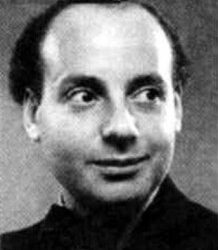
Pavel Haas

Pavel Haas

Pavel Haas was born into a wealthy and prominent Jewish family in the Moravian capital of Brno.  This was a city with a rich cultural life, and it was during Haas’ childhood that Leoš Janáček established himself as a leading figure, both regionally and nationally.  Haas became an important composer of theater and film music, composing music, for example, for Karel Ĉapek’s infamous RUR (Rossum’s Universal Robots).  During this period he worked several times with his brother, Hugo Haas, who became a successful actor in the United States after the war.  The war years severely limited Haas’ professional development, and in 1941 he was sent to Terezín.  Although at first he was too ill and depressed to compose, he later became part of the rich musical life of the camp, writing several works that are considered classics of that time.  He was deported to Auschwitz in mid-October 1944 and immediately killed.

Life

A compositional prodigy, Haas studied at the school of the Philharmonic in Brno until he was drafted into the Austrian army in 1917.  He remained in Brno during that time, and in 1919 he began the serious study of composition at the Brno conservatory, working with Jan Kunc and Vilém Petrželka.  Later (1920-22) he became a part of the master class of the conservatory led by Leoš Janáček.  As one of the only cultural figures in Moravia to have achieved international success, it is impossible to overestimate Janáček’s stature or his influence in Brno and Moravia more broadly.  Although Haas clearly went in his own direction, Leoš Janáček’s effect was profound.

Starting in his early 20’s, Haas was a prolific and versatile composer who drew on the leading trends of the time.  The 1930’s was a great age of Czech cinema, and one of its leading figures was Haas’ brother Hugo.  During this period Pavel Haas wrote several notable scores for both stage and film, and reached his maturity as a composer in the mid-1930’s with such works as the opera The Charlatan, String Quartets 2 and 3, and the Suite for Oboe.  A major work from this period, a large symphony, was left unfinished and completed only after Haas’ death.

When Czech society began to break down under the pressure of the Nazi presence, Haas, like other Jewish composers, took whatever steps he could to protect his interests.  In this case, this included divorcing his wife in order to shield her from anti-Semitic policies.  Haas was deported to Terezín in 1941.

Reports of Haas’ life in Terezín usually include the information that Haas was ill and depressed upon his arrival and only returned to some kind of creative productivity when the energetic and intrepid Gideon Klein put several sheets of blank music paper in front of him and urged him to return to his work.  While in Terezín, Haas wrote several works including, most notably, the Study for Strings, immortalized in a clip from the 1944 Nazi propaganda film created to show the camp as a kind of idyllic spa for Jews.  Here we see the composer sitting nervously and finally taking several stiff bows.  Conducted by Karel Ančerl in the film, this work was successfully revived after the war.  Among his greatest works, composed during his last year in Terezín, are the Four Songs on Chinese Poetry.  A mature composition, written on many different levels, the cycle was performed in a concert in June of 1944.

It was likely clear to any of the more highly placed prisoners that, as soon as the Red Cross visit and the propaganda film had been completed, there would be no reason to protect any of the long-term internees.  By the end of the summer things had begun to change, and huge transports started at the end of September 1944.  On October 16th, Haas was placed in a transport with other Terezín composers Klein, Krása, Ullmann, and Karel Ancerl.  According to Ančerl’s testimony, Haas, along with Ullmann and Krása, was immediately gassed.

Works

From his earliest period, Haas showed an equal affinity for abstract music and music based on text.  The most formative influence on his music was the compositional legacy of Leoš Janáček.  Janáček’s dramatic intensity played a role in Haas’ artistic development, but also his use of short motives and his use of Moravian musical elements.  Haas also had an affinity with Hebrew chant and incorporated these along with neoclassic and jazz idioms.

This integration of Janáček’s style with his own mature voice can be heard most notably in such works as the 1938 Suite for piano, in the String Quartet #3, with its synthesis of local and international musical elements, in the Suite for Oboe and Piano from 1939, and of course in the great dramatic work of his maturity, The Charlatan.  Here we have a compelling combination of surface and depth, immediate charm and subtlety.  These elements also seem to have been present in a powerful blend in Haas’ incomplete symphony, posthumously completed.  For example, in the final variations movement of the 3rd quartet we have Beethovenian depth, Janácek’s aphoristic approach, Moravian rhythms and references to Jewish folk tunes.

This deepening of Haas’ approach continued while the composer was in Terezín, reaching its apotheosis in the Four Songs on Chinese Poetry.  Here there is a kind of ideal, if agonizing and tragic, synthesis.  These songs of love and longing for home seem to capture the mood of Terezín as much as any other compositions.  Set as a series of interior monologues, and making periodic reference to such things as the Czech historical chorale “St. Wenceslaus,” the cycle offers us an affective world poised between life and death, between affirmation and complete despair.

Haas seems to have a kind of personal relationship with the “St. Wenceslaus” melody, a tune used literally hundreds of time by composers in the Czech Lands over the centuries.  It is present in the incomplete symphony, and used several times in the Suite for Oboe and Piano.  The songs from Chinese Poetry also refer to it, obliquely in an especially poignant way.

By Michael Beckerman

Works List

Stage and Theater Music

Sarlatán (The Charlatan) (tragi-comic op, 31934–7, Brno, 2 April 1938

7 scores of incidental theater music

3 film scores


Vocal

6 písní v lidovém tónu [6 Songs in Folk Tone], op.1, S, pf/orch, 1918–19 3 písneĕ [3 Songs], op.2 (J.S. Machar), S/T, pf, 1919–20

Cínské písneĕ [Chinese Songs], op.4 (Chinese poetry), Alto and Piano 1921

Fata Morgana, op.6 (R. Tagore), T, pf qnt, 1923

Vyvolená [The Chosen One], op.8 (J. Wolker), Tenor, flute horn, violin and piano 1927

Karneval [The Carnival], op.9 (D. Chalupa), male chorus, 1928–9

Ps xxix, op.12, Bariton, female chorus, organ, orchestra 1932

7 písní v lidovém tónu [7 Songs in Folk Tone], op.18 (F.L. Čelakovský), voice and piano, 1940

Al s’fod [Do not Lament] (D. Shimoni), male chorus, 1942

4 písneĕ na slova Čcínské poezie [4 Songs on Chinese Poetry] (trans. B. Mathesius), Baritone and piano, 1944


Orchestral

Zesmutnlé scherzo [Melancholy Scherzo], op.5, 1921

Suite from ‘The Charlatan’, op.14, 1936

Sym., 1941, inc. (2 movts)

Study for Strings, 1943

Chamber and Solo Instrumental Music

String Quartet no.1, op.3, 1920

String Quartet no.2, op.7, with jazz band ad lib, 1925

Wind Quintet, op.10, 1929

Suite for Piano, op.13, 1935

String Quartet no.3, op.15, 1938

Suite for Oboe and Piano, 1939

Bibliography

Karas, Joža.  Music in Terezín.  Pendragon Press.

Peduzzi, Lubomir. ‘Haasova “hobojová” suita’ [Haas’s ‘Oboe’ Suite], Hudební rozhledy, xii
(1959), 793–8

_____. ‘Vlastenecká symbolika posledních dĕl Pavla Haase’ [Patriotic symbols
in Haas’s final works], Sborník JAMU, iii (Brno, 1961), 75–93

_____.‘Složeno v Terezín’ [Composed in Terezín], Hudební rozhledy, xxi (1968),
152–3

_____. Pavel Haas: Život a dílo skladatele [Life and work of the composer] (Brno,
1993; Ger. trans., 1996)

_____. O hudbĕ v Terezínském ghettu: soubor kritických statí [Music in the Terezín
ghetto: a collection of critical studies] (Brno, 1999), 58–65, 79–84

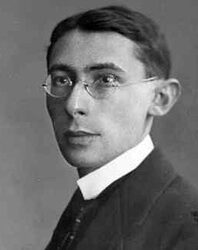
Berthold Goldschmidt

Berthold Goldschmidt

1890-1987

Hans Gál (1890-1987) was a prolific composer, teacher and scholar throughout his long life. At the height of his powers and his popularity, he was forced to leave Germany and Austria, never again able to achieve the cultural significance he had enjoyed during the years of the Weimar Republic. Gál arrived in England just before the war, and his assimilation was postponed when he, like many other Jewish refugees, was imprisoned in several internment camps for enemy aliens. After the war he became a revered figure in Edinburgh’s musical life and continued composing well into his nineties.

Life

Gál was born near Vienna in 1890. Unlike many other composers of the time, he did not really become seriously interested in music until his early teens. Rather, he was a well-rounded child with a broad cultural background. This stood him well in his career, which represents an unusual synthesis of scholarship and creativity.

Attending the New Vienna Conservatory, Gál became a pupil of Richard Robert and also studied music history and theory. His serious efforts at composition began around this time. In 1912 his cantata Von ewiger Freude was completed and performed a year later at the Gesellschaft der Musikfreunde. In the years preceding the war, he wrote a series of works and had his initial successes. In 1915 he won the newly created “State Prize for Composition.”

He was drafted into the army in 1915 and spent time in Serbia and the Polish Carpathians. While he had many tasks to perform he kept up with his composition, sowing the seeds for his first important opera Der Arzt der Sobeide (Sobeide’s Doctor) set in 16th-century Granada. This work, drawing on Spanish musical idioms received rave reviews at the time and launched Gál’s successful career as an opera composer.

The 1920’s was the time of Gál’s rapid rise as a composer and teacher. Awarded the Rothschild Prize in 1919 he was appointed as a lecturer in Music Theory at the University of Vienna. He also worked at the Neue Wiener Buhne where he provided instrumental music for the theater. In 1924 his opera Die Heilige Ente (The Sacred Duck), with a Chinese setting and a libretto by Karl Michael von Levetzow was premiered and was a great success, performed in more than twenty theaters, remaining in the repertoire until 1933. His many contacts at the time with conductors George Szell and Erich Kleiber, and with composers Berg and Webern, went hand-in-hand with his growing popularity as a creative figure in the Weimar Republic. He won a prize for his first published symphony, and his Overture to a Puppet Play became an international hit.

It was during this period that he also began to work as a serious scholar. He was co-editor of the complete works of Brahms, along with Eusebius Mandyczewski, editing ten volumes, and he also edited numerous volumes in other series as well.

In 1929 Gál became Director of the Conservatory in Mainz, a sign of great distinction since he was chosen from more than 100 applicants and supported by such figures as Fritz Busch and Furtwängler. At this point he was a leading figure in German musical life, and his activities as a composer continued to thrive in the genres of chamber music, orchestral music and opera. It was during this period that he completed what was to be his last opera composed on European soil, Die Beiden Klaas (Rich Claus, Poor Claus).

Gál’s standing in the world of German music came to a complete and sudden end in March of 1933 when, shortly after the Nazis occupied Mainz, Gál was summarily fired from his position at the conservatory. Misunderstanding the nature and intentions of the Nazis, Gál tried for more than a year to protest this decision, eventually moving back to Austria. During this period several planned productions of Die Beiden Klaas were aborted because of the political climate, including a performance to be conducted by Bruno Walter at the Vienna State Opera. It was only premiered in England in 1990, on the occasion of what would have been the composer’s 100th birthday.

Gál’s return to Austria was no happy occasion. Political activity in Austria already forecasted the Anschluss of 1938. Gál, like many others, had to scramble to make ends meet, yet continued to compose and occupy himself as an editor. His most ambitious piece of the time was De profundis, a setting of Baroque poems. Composed at a time of despair and scant hope, it was, in the composer’s words dedicated to “the memory of this time, its misery and its victims.” Things, however, would not get better, and by 1938 the Gáls realized they would have to get out. Several family members who stayed behind were either killed or committed suicide.

Intending originally to come to the United States, Gál settled in England with his family. At first his luck was good: he met one of the great figures of English musical life, Sir Donald Tovey, who very much wanted him to become a part of the conservatory in Edinburgh. Shortly after this, though, Tovey had a heart attack, and Gál’s plans did not come to fruition. Gál remained in London and did not move to Edinburgh until war broke out.

In one of the less pleasant moves in the history of the Second World War in Britain, Winston Churchill, like Roosevelt in the United States, decided to imprison many so-called “enemy aliens.” This absurdly created a situation where actual Nazis were imprisoned side by side with Jewish refugees who were fleeing Nazism. Gál was arrested in March of 1940 and kept imprisoned, first in Huyton near Liverpool, and then on the Isle of Man until the fall. While the process was disorienting, unpleasant and sometimes frightening, many musicians and intellectuals were incarcerated, and they quickly set up lectures and concerts. Gál wrote a Huyton Suite for two violins and flute, the only instruments available, and later wrote music for a revue, What a Life based on camp experiences.

Although the moments after the war were filled with uncertainty, Gál finally did receive a position at the University of Edinburgh, and was awarded an honorary doctorate there in 1948. He had also been offered a position at the University of Vienna, but decided he could not uproot once again, though he went back in 1958 to receive the Austrian State Prize. Gál became an essential part of Edinburgh’s musical life, particular with his role in the creation and ongoing success of the Edinburgh Music Festival, under the initial direction of Rudolf Bing.

For the remaining forty years of his life, following the end of the war, Gál was productive as a teacher, scholar and as a composer. It was during this period that he wrote monographs on Brahms, Wagner, Schubert and Verdi. Although he no longer commanded the European stage, as he had during the 1920s, Gál’s compositional activity was unabated, and his music from this period is attractive, innovative and distinctive. Considering the composer’s identification with the music of his native Vienna, and his love for Brahms, Schubert and Johann Strauss, as well as his interest in Early Music, it is fitting that his last listed composition is a Moment Musical for treble recorder composed at age ninety-six the year before his death.

By Michael Beckerman

Works List

Operas

Der Arzt der Sobeide (Sobeide‘s Doctor), Op.4 (1917-1918).

Die Heilige Ente (The Sacred Duck), Op.15 (1920-1921).

Das Lied der Nacht (The Song of the Night), Op.23 (1924-5).

Die Beiden Klaas (Rich Claus, Poor Claus) Op. 42(1932-1933).

Orchestral

Serbische Weisen (Serbian Dances), Op.3 (1916).

Ouvertüre zu einem Puppenspiel (Overture to a puppet play), Op.20 (1923).

Divertimento, Op.22 (1924).

Requiem for Mignon, Op.26 (1922).

Symphony No. 1, Op.30(1927).

Ballet Suite ‘Scaramuccio’ Op.36 (1929).

Der Zauberspiegel (The Magic Mirror), Op.38 (1930).

Burlesque, Op.42b (1932-1933).

A Pickwickian Overture, Op.45 (1939-1944).

Serenade, Op.46 (1937).

Lilliburlero, Op.48 (1945?).

Symphony No. 2, Op.53 (1942-1943).

Caledonian Suite, Op.54 (1949).

Symphony No. 3, Op.62 (1951-1952).

Biedermeier Dances, Op.66 (1954).

Mäander (Meanders), Op.69 (1954-1955).

Lebenskreise (Life Cycles), Op.70 (1955).

Music for String Orchestra, Op.73 (1957).

Idyllikon, Op.70 (1958-1959).

Sinfonietta No. 1, Op.81 (1961).

Sinfonietta No. 2, Op.86 (1966).

Triptych, Op.100 (1970).

Symphony No. 4, Op. 105 (1974).

Capriccio (1973).

Hin und Her (1933).

Promenadenmusik (1926).

Vorspiel zu einer Feier (Prelude to a Pageant) (1965).

Brahms: Hungarian Dances nos. 8 and 9

Gluck: Symphony in G minor (1934).

Haydn: Overture to ‘Armida’ (1939).

Haydn: Symphony in B flat (1938).

Wolf: Corregidor Suite

Beethoven: Three Marches

Handel: Overture to ‘Bérénice’

Handel: Overture to ‘Faramondo’

Divertissement (1939).

Schubert: Two Marches Militaires

Concertos

Concerto for violin and orchestra, Op.39 (1932).

Concertino for piano and string orchestra, Op.43. (1934).

Concertino for violin and string orchestra, Op.52 (1939).

Concertino for organ and string orchestra, Op.55 (1948).

Concerto for piano and orchestra, Op.57 (1948).

Concerto for violoncello and orchestra, Op.67 (1944-1949).

Concertino for treble recorder (flute) and string quartet (string orchestra or piano), Op.82(1961).

Concertino for cello and string orchestra, Op.87 (1966).

Suite for viola/alto saxophone and orchestra (piano), Op.102a/b (1949-1950).

Chamber Music

Heurigen Variations for piano trio, Op.9 (1914).

Five intermezzi for string quartet, Op.10 (1914).

Four chamber pieces for mandolin, violin, viola and liuto, Op.10a (also for mandolin orchestra, op. 10b). (1937).

Quartet for violin, viola, cello and piano, Op.13 (1914?).

String Quartet I, Op.166 (1916).

Piano Trio, Op.18 (1923).

Two religious songs for soprano, organ and gamba/cello, Op.21 (1923).

Divertimento for wind octet, Op.22 (also for orchestra = Op. 22a). (1924).

String Quartet II, Op.35 (1929).

Serenade for string trio, Op.41 (1932).

Nachtmusik (Night Music) for soprano solo, male-voice choir, flute, cello and piano, Op.44 (1933).

Little Suite for two violins and violoncello (piano ad lib.), Op.49a (1947-1948).

Trio for piano, violin (flute, oboe) and violoncello, Op.49b.

Sonatina for 2 mandolins, Op.59a. (1952).

Suite for 3 mandolins, Op.59b (1952).

Improvisation, Variations and Finale on a Theme by Mozart for mandolin, violin, viola and liuto (also mandolin orchestra), Op.60 Also for string quartet = Op. 60b. (1934).

Biedermeier Dances for mandolin orchestra, Op.66 (or mandolin, violin, mandola, guitar, mandoloncello and bass mandolin = Op. 66b). (1954).

Suite for recorder and violin, Op.68a. (1954-1955).

Six two-part inventions for descant and treble recorder, Op.68b.

Divertimento for 2 treble recorders and guitar, Op.68c.

Quartettino for recorder quartet, Op.78.

Divertimento for mandolin and harp or piano (flute, viola and harp), Op.80. (1957).

Trio-Serenade for treble recorder (flute), violin and cello, Op.88 (1966).

Divertimento for bassoon and cello, Op.90(1) (1958).

Divertimento for violin and cello, Op.90(2) (1967).

Divertimento for violin and viola, Op.90(3) (1969).

Huyton Suite for flute and 2 violins, Op.92 (1940).

Serenade for clarinet, violin and cello, Op.93 (1935).

Trio for oboe, violin and viola, Op.94

String Quartet III String quartet, Op.95 (1969).

Sonata for 2 violins and piano, Op.96 (1941).

Trio for violin, clarinet and piano, Op.97 (1950).

Divertimento for 3 recorders, Op.98 (1970).

String Quartet IV String quartet, Op.99 (1970).

Trio for violin, viola d‘amore (viola) and cello, Op.104 (1971).

String quintet, Op.106 (1976-1977).

Quintet for clarinet and string quartet,Op.107 (1977).

Intrata Giocosa for 3 recorders, 2 violins and cello. (1958).

Lyrical Suite to Browning‘s ‘Pippa passes’, for soprano, flute and string quartet (flute, mandolin and string trio). (1934).

Scherzando for two violins and cello.

What a Life for middle voice(s), flute, clarinet, string quartet and piano. (1940).

Handel: Suite of Airs and Dances arr. for strings (various) and piano ad lib.. (1954).

Vocal Works

Von ewiger Freude (Of Eternal Joy) Cantata for four female voices and double female choir, with organ and two harps, Op.1 (1912).

Vom Bäumlein, das andere Blätter hat gewollt (The Tree that

Wanted Different Leaves) for alto solo, six-part female choir and small orchestra, Op.2 (1916).

Phantasien (Fantasias) for alto solo, female choir, clarinet, horn, harp (piano) and string quartet (string orchestra), Op.5 (1919).

Two songs for 4-part male-voice choir a cappella, Op.8 (1914).

Three songs for 3- and 4-part male-voice choir with piano (small orchestra), Op.11 (1910-1911).

Three songs for female choir with piano, Op.12 (1910-1913).

Kinderverse (Children‘s verses) for female choir a cappella, Op.14 (1921?).

Motette (Motet) for mixed choir a cappella, Op.19 (1924).

Two religious songs for soprano, organ and gamba/cello. Op.21 (1923).

Herbstlieder (Autumn Songs) for female choir a cappella, Op.25 (1918-1925).

Requiem for Mignon for baritone, 2 choirs, organ and orchestra, Op.26 (1922).

Epigrams for mixed choir a cappella, Op27. (1926).

Three songs for 3 female voices/female choir with piano, Op.31 (1928).

Five Serious Songs for male-voice choir a cappella, Op.32 (1928).

Five songs for middle voice and piano (+ harp), Op.33 (1917-1921).

Drei Porträtstudien (Three Portrait Studies) for male-voice choir with piano, Op.34 (1929).

Three Songs for mixed choir a cappella, Op.37 (1929/30).

Three Idylls to poems by Wilhelm Busch for 4-part male-voice choir with piano, Op.40 (1934).

Nachtmusik (Night Music) for soprano solo, male-voice choir, flute, cello and piano, Op.44 (1933).

Summer Idylls (Stille Lieder) Four songs for female choir a cappella, Op.47 (1935).

De Profundis Cantata to German barock poems, for four soloists, mixed choir and orchestra, Op.50 (1936-1937).

Four Madrigals for mixed choir (SATB) a cappella, Op.51 (No.1, 2, 3 also for female choir a cappella = Op.51a). (1939).

Four part-songs for mixed voices a cappella, Op.61 (1953?).

Two songs for male-voice choir a cappella, Op.63 (1954).

Lebenskreise (Life Cycles) Symphonic cantata to poems by Hölderlin and Goethe, for 4 soloists, mixed choir and orchestra, Op.70 (1955).

Satirikon Four aphorisms for 4 male voices a cappella, Op.72

Jugendlieder (Songs of Youth) Five songs for female voices a cappella,

Op.75 (1959).

A Clarion Call for double female choir a cappella, Op.76 (1959).

Of a Summer Day Lyrical suite for 3-part female choir with (mezzo)soprano solo and string orchestra, Op.77 (1951).

Spätlese Six songs for male-voice choir a cappella, Op.91 (1966/67).

Quodlibet: ‘Loreley‘ or ‘On the Rhein Steamer‘ for four voices (SATB) a cappella. (1928).

In neue Räume (Into New Rooms) for mixed choir, flute, oboe, two clarinets, bassoon, two horns and strings. (1965).

Lyrical Suite to Browning’s ‘Pippa passes’, for soprano, flute and string quartet (flute, mandolin and string trio). (1934).

Six Women’s Choruses

Six part-songs for mixed voices (SATB). (1939, 1966).

Lyric Poems for mixed voices and piano. (1942).

Three vocal quartets for mixed voices and piano. (1934).

Two Anthems (1) for mixed voices and organ ad lib; (2) for soprano, mixed voices and organ. (1936-1937).

Vom heiligen Ehstand (On the holy marriage state) for soprano and baritone solo with piano. (1928).

What a Life for middle voice(s), flute, clarinet, string quartet and piano. (1940).

Folksongs from the Volksliederbuch für die Jugend arr. by Hans Gál.

Four British folk-songs arr. for mixed choir (SATB) a cappella (English and German).

Handel: 6 Italian Arias arr. for soprano, violin and piano by Hans Gál.

Morgengruss, Lockruf der Mutter Provençale folk-songs arr. for female voices a cappella.

Schütz: Two Dialogues ed. and arr. for mixed voices and piano (organ) by Hans Gál.

Six folk-songs arr. for male chorus (TTBB) a cappella. (1930-1931).

Three German folk-songs arr. for male-voice choir (TTBB).

Three old songs arr. for male-voice choir (TTBB).

Zelter: Bundeslied arr. for 4-part male-voice choir.

Five Provençale folk-songs arr. for female choir (SSA) a cappella by Hans Gál.

Purcell: ‘No, resistance is but vain’ duet for soprano and alto with continuo (or string orchestra) arranged and edited by Hans Gál.

Bibliography

Books

Waldstein, W.: Hans Gál. Eine Studie. Wien: Elisabeth Lafite (Österreichischer Bundesverlag), 1965.


Exhibitions/Catalogues

100 Jahre Mainzer Conservatorium. Peter Cornelius Conservatorium, Mainz, 1982.

Musikalische Dokumentation: Hans Gál. Musiksammlung der Österreichischen Nationalbibliothek. Institut für Österreichische Musikdokumentation, 1987.

Hans Gál zum 100. Geburtstag. Zu einer Austellung im Mainzer Rathaus mit Dokumenten zu seinem Leben und Wirken in Mainz. (Centenary Exhibition). Kulturdezernat der Stadt Mainz, Mainz, 1990.

Haas, Michael and Patka, Marcus G.: Musik des Aufbruchs: Hans Gál und Egon Wellesz. Continental Britons. Mandelbaum Verlag, Vienna 2004. Exhibition at the Jewish Museum, Vienna, 25th Feb-2nd May, 2004. ISBN 3-85476-116-3.

Articles

Anderson, M.J.: ‘Hans Gál’. In British Music Society Journal IX, p.33-44, 1987.

Badura-Skoda, P.: ‘Zum Gedenken an Hans Gál’. In Österreichische Musikzeitschrift, Vol. 43 No.4, 1988, p.177.

Becker, Alexander: ‘Hans Gál’. Der österreichische Komponist Hans Gál im Fokus der Zupfmusik. Part I: Leben und Werk, in ZUPFMUSIKmagazin 4, 2002, p. 159-60. Part II: Das Zusammenwirken in Wien mit Vinzenz Hladky, in Concertino 2003/2, p. 76-78. Part III: Kammermusik mit Mandoline, in Concertino 2003/3. Part IV: Werke für Zupforchester, in Concertino 2004/1.

‘Bemerkenswerte Hans-Gál-Aufführungen’. In Das Podium, Mainzer Liedertafel und Damengesangverein. Mainz, 1958, p.2.

Beyer, J.: ‘In conversation with Dr. Hans Gál’. In Edinburgh Quartet Newsletter. Edinburgh: November, 1985.

de Souza, C.: ‘The Continentals – Second Phase’. In British Opera in Retrospect. The British Music Society, 1986. p.115-116.

‘Dr.Hans Gál OBE.’ In Recorder & Music VI, 11, p.325, 1980.

Fox Gál, E. & Fox, A.: ‘Hans Gál’. In Music & Musicians, August, 1985, p.12-13

Fox Gál, E.: ‘Hans Gál’. In Österreichische Musikzeitschrift, Vol. 43 No. 4, 1988, p.174-176.

Gail H.R.: ‘Das Schaffen Hans Gáls. Eine Skizze zur Gegenwartsmusik’. In Mainzer Journal 277, 28.November, 1932.

Green, P.: ‘Attention please for Dr. Hans Gál … ‘A Contemporary Romantic’’. In Clarinet & Saxophone Vol. XI, 4, p.22-23, 1986.

Green, P.: ‘Hans Gál 1890-1987’. In Clarinet & Saxophone Vol. XIII, 2, 1988, p.8.

Holler, K.-H.: ‘Hans Gál zu Ehren’. In Mitteilungen der Arbeitsgemeinschaft für mittelrheinische Musikgeschichte 25. Mainz, 1972.

Keim, A.M.: ‘‘Der Dom in meinen Zimmer über dem Kamin …”. Zum Tod des Komponisten und Dirigenten Hans Gál’. In Allgemeine Zeitung, Mainz: 14.Oktober, 1987.

Keim, A.M.: ‘Erinnerungen an Hans Gál’. In Mainz, 8, 1988, p.71-73.

Kroll, E.: ‘Vom Schaffen Gál‘s’. In Simrock Jahrbuch 2, p.168-175, 1929

Lang, I.: ‘Hundert Jahre Mainzer Konservatorium’. In Hundert Jahre Mainzer Konservatorium, p.22-32. Mainz, 1982.

Leighton K.: ‘Obituary’. In The Independent, London: 9.October, 1987.

Lewinski, W.-E.von: ‘Ein Komponist und Wissenschaftler. Hans Gál zum 75. Geburtstag’. Allgemeine Zeitung, Mainz: 4.August, 1965.

Lewinski, W.-E.von: ‘Gedenkblatt für Hans Gál. Zum 80.Geburtstag des Komponisten’. Allgemeine Zeitung, Mainz: 8.August, 1970.

Lewinski, W.-E.von: ‘Heiter und hintersinnig. ’Hommage à Hans Gál‘ zum 90.Geburtstag des Komponisten‘. Allgemeine Zeitung, Mainz: 23.September 1980.

Moncrieff, Margaret: ‘Hans Gál (1890-1987). A personal tribute and memoir’. In The British Music Society News, 97, March 2003, pp. 369-74. Also available on the web: http://www.musicweb.uk.net/classrev/2003/Mar03/Gál.htm

Nettl P.: ‘Hans Gál’. In Musikpädagogische Zeitschrift XVI (5), p.1-3, 1926

Nettl P.: ‘Hans Gál.In Neue Musikzeitung XXXXIII, p.91, 1921

‘Obituary’. In The Times, London: 7.October, 1987.

Oehl K.: ‘Ehrung für Hans Gál’. In Das Neue Mainz. Mainz: Municipal Press Office, January 1961.

Oliver, R. ‘Remembering three great musicians’. In Sound Waves 12. The Royal Borough of Kensington & Chelsea Libraries and Arts Service, Winter, 1987.

Oliver, R.: ‘Hans Gál at 95’. In Tempo 155, 1985. p.2-7.

Oliver, R.: ‘Hans Gál, b. 5 August 1890’. In Sound Waves II. The Royal Borough of Kensington & Chelsea Libraries and Arts Service, Juni, 1985

Oliver, R.: ‘Hans Gál. The Compleat Musician’. In Composer 38, 1971, p.5-9.

Petri, L.: ‘Hans Gál – dem 80jährigen’. In Das Neue Mainz. Mainz, August 1970, p.6.

Purser, J.: ‘Hans Gál – a personal appreciation’. In Stretto Vol. 7 No. 4, Winter, 1988, p.24-27.

Rickards, G.: ‘Three emigrés: Gál, Gerhard and Goldschmidt’. http://www.musicweb.uk.net/ggg.htm, 2001 (update 2003).

Schmidtgen O.: ‘Lebenskreise. Symphonische Kantate von Hans Gál’. In Das Podium, Mainzer Liedertafel und Damengesangverein. Mainz, 1956.

Schmidtgen, O.: ‘Hans Gál und sein Werk’. In Das Podium. Mainzer Liedertafel und Damengesangverein. Mainz: August 1960, p.5-7.

Schmidtgen, O.: ‘Hans Gál’. In Österreichische Musikzeitschrift p.1-2, 1957.

Schmidtgen, O.: ‘Hans Gáls neues Klavierwerk’. In Das Podium. Mainzer Liedertafel und Damengesangverein. Mainz: Januar/Februar 1961, p.1-2.

Schmidtgen, O.: ‘Vier Werke von Hans Gál’. In Das Podium. Mainzer Liedertafel und Damengesangverein. Mainz: November 1960.

Schneider, R.: ‘Vier Erstaufführungen von Hans Gál’. In Das Podium. Mainzer Liedertafel und Damengesangverein. Mainz: December 1960.

Schönzeler H.-H.: ‘Hans Gál. The man and his music’. In Music and Musicians International, Januar, 1988, p.22-23.

Seifert, W.: ‘Gespräch mit Hans Gál’. In Zeitschrift für Musikpädagogik 17, März, 1982, p.3-13.

Stefan, P.: ‘Hans Gál. Zur Stunde österreichischer Komponisten’. In Radio Wien 29, p.5, 1929 (Broadcast 21st April, 1933).

Weiskopf, H.: ‘Hans Gál’. In Rheinische Musik- und Theaterzeitung. Köln, 8. April 1930, p.106-108

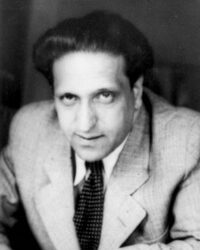
Hans Gal

Hans Gal

1890-1987

Hans Gál (1890-1987) was a prolific composer, teacher and scholar throughout his long life. At the height of his powers and his popularity, he was forced to leave Germany and Austria, never again able to achieve the cultural significance he had enjoyed during the years of the Weimar Republic. Gál arrived in England just before the war, and his assimilation was postponed when he, like many other Jewish refugees, was imprisoned in several internment camps for enemy aliens. After the war he became a revered figure in Edinburgh’s musical life and continued composing well into his nineties.

Life

Gál was born near Vienna in 1890. Unlike many other composers of the time, he did not really become seriously interested in music until his early teens. Rather, he was a well-rounded child with a broad cultural background. This stood him well in his career, which represents an unusual synthesis of scholarship and creativity.

Attending the New Vienna Conservatory, Gál became a pupil of Richard Robert and also studied music history and theory. His serious efforts at composition began around this time. In 1912 his cantata Von ewiger Freude was completed and performed a year later at the Gesellschaft der Musikfreunde. In the years preceding the war, he wrote a series of works and had his initial successes. In 1915 he won the newly created “State Prize for Composition.”

He was drafted into the army in 1915 and spent time in Serbia and the Polish Carpathians. While he had many tasks to perform he kept up with his composition, sowing the seeds for his first important opera Der Arzt der Sobeide (Sobeide’s Doctor) set in 16th-century Granada. This work, drawing on Spanish musical idioms received rave reviews at the time and launched Gál’s successful career as an opera composer.

The 1920’s was the time of Gál’s rapid rise as a composer and teacher. Awarded the Rothschild Prize in 1919 he was appointed as a lecturer in Music Theory at the University of Vienna. He also worked at the Neue Wiener Buhne where he provided instrumental music for the theater. In 1924 his opera Die Heilige Ente (The Sacred Duck), with a Chinese setting and a libretto by Karl Michael von Levetzow was premiered and was a great success, performed in more than twenty theaters, remaining in the repertoire until 1933. His many contacts at the time with conductors George Szell and Erich Kleiber, and with composers Berg and Webern, went hand-in-hand with his growing popularity as a creative figure in the Weimar Republic. He won a prize for his first published symphony, and his Overture to a Puppet Play became an international hit.

It was during this period that he also began to work as a serious scholar. He was co-editor of the complete works of Brahms, along with Eusebius Mandyczewski, editing ten volumes, and he also edited numerous volumes in other series as well.

In 1929 Gál became Director of the Conservatory in Mainz, a sign of great distinction since he was chosen from more than 100 applicants and supported by such figures as Fritz Busch and Furtwängler. At this point he was a leading figure in German musical life, and his activities as a composer continued to thrive in the genres of chamber music, orchestral music and opera. It was during this period that he completed what was to be his last opera composed on European soil, Die Beiden Klaas (Rich Claus, Poor Claus).

Gál’s standing in the world of German music came to a complete and sudden end in March of 1933 when, shortly after the Nazis occupied Mainz, Gál was summarily fired from his position at the conservatory. Misunderstanding the nature and intentions of the Nazis, Gál tried for more than a year to protest this decision, eventually moving back to Austria. During this period several planned productions of Die Beiden Klaas were aborted because of the political climate, including a performance to be conducted by Bruno Walter at the Vienna State Opera. It was only premiered in England in 1990, on the occasion of what would have been the composer’s 100th birthday.

Gál’s return to Austria was no happy occasion. Political activity in Austria already forecasted the Anschluss of 1938. Gál, like many others, had to scramble to make ends meet, yet continued to compose and occupy himself as an editor. His most ambitious piece of the time was De profundis, a setting of Baroque poems. Composed at a time of despair and scant hope, it was, in the composer’s words dedicated to “the memory of this time, its misery and its victims.” Things, however, would not get better, and by 1938 the Gáls realized they would have to get out. Several family members who stayed behind were either killed or committed suicide.

Intending originally to come to the United States, Gál settled in England with his family. At first his luck was good: he met one of the great figures of English musical life, Sir Donald Tovey, who very much wanted him to become a part of the conservatory in Edinburgh. Shortly after this, though, Tovey had a heart attack, and Gál’s plans did not come to fruition. Gál remained in London and did not move to Edinburgh until war broke out.

In one of the less pleasant moves in the history of the Second World War in Britain, Winston Churchill, like Roosevelt in the United States, decided to imprison many so-called “enemy aliens.” This absurdly created a situation where actual Nazis were imprisoned side by side with Jewish refugees who were fleeing Nazism. Gál was arrested in March of 1940 and kept imprisoned, first in Huyton near Liverpool, and then on the Isle of Man until the fall. While the process was disorienting, unpleasant and sometimes frightening, many musicians and intellectuals were incarcerated, and they quickly set up lectures and concerts. Gál wrote a Huyton Suite for two violins and flute, the only instruments available, and later wrote music for a revue, What a Life based on camp experiences.

Although the moments after the war were filled with uncertainty, Gál finally did receive a position at the University of Edinburgh, and was awarded an honorary doctorate there in 1948. He had also been offered a position at the University of Vienna, but decided he could not uproot once again, though he went back in 1958 to receive the Austrian State Prize. Gál became an essential part of Edinburgh’s musical life, particular with his role in the creation and ongoing success of the Edinburgh Music Festival, under the initial direction of Rudolf Bing.

For the remaining forty years of his life, following the end of the war, Gál was productive as a teacher, scholar and as a composer. It was during this period that he wrote monographs on Brahms, Wagner, Schubert and Verdi. Although he no longer commanded the European stage, as he had during the 1920s, Gál’s compositional activity was unabated, and his music from this period is attractive, innovative and distinctive. Considering the composer’s identification with the music of his native Vienna, and his love for Brahms, Schubert and Johann Strauss, as well as his interest in Early Music, it is fitting that his last listed composition is a Moment Musical for treble recorder composed at age ninety-six the year before his death.

By Michael Beckerman

Works List

Operas

Der Arzt der Sobeide (Sobeide‘s Doctor), Op.4 (1917-1918).

Die Heilige Ente (The Sacred Duck), Op.15 (1920-1921).

Das Lied der Nacht (The Song of the Night), Op.23 (1924-5).

Die Beiden Klaas (Rich Claus, Poor Claus) Op. 42(1932-1933).

Orchestral

Serbische Weisen (Serbian Dances), Op.3 (1916).

Ouvertüre zu einem Puppenspiel (Overture to a puppet play), Op.20 (1923).

Divertimento, Op.22 (1924).

Requiem for Mignon, Op.26 (1922).

Symphony No. 1, Op.30(1927).

Ballet Suite ‘Scaramuccio’ Op.36 (1929).

Der Zauberspiegel (The Magic Mirror), Op.38 (1930).

Burlesque, Op.42b (1932-1933).

A Pickwickian Overture, Op.45 (1939-1944).

Serenade, Op.46 (1937).

Lilliburlero, Op.48 (1945?).

Symphony No. 2, Op.53 (1942-1943).

Caledonian Suite, Op.54 (1949).

Symphony No. 3, Op.62 (1951-1952).

Biedermeier Dances, Op.66 (1954).

Mäander (Meanders), Op.69 (1954-1955).

Lebenskreise (Life Cycles), Op.70 (1955).

Music for String Orchestra, Op.73 (1957).

Idyllikon, Op.70 (1958-1959).

Sinfonietta No. 1, Op.81 (1961).

Sinfonietta No. 2, Op.86 (1966).

Triptych, Op.100 (1970).

Symphony No. 4, Op. 105 (1974).

Capriccio (1973).

Hin und Her (1933).

Promenadenmusik (1926).

Vorspiel zu einer Feier (Prelude to a Pageant) (1965).

Brahms: Hungarian Dances nos. 8 and 9

Gluck: Symphony in G minor (1934).

Haydn: Overture to ‘Armida’ (1939).

Haydn: Symphony in B flat (1938).

Wolf: Corregidor Suite

Beethoven: Three Marches

Handel: Overture to ‘Bérénice’

Handel: Overture to ‘Faramondo’

Divertissement (1939).

Schubert: Two Marches Militaires

Concertos

Concerto for violin and orchestra, Op.39 (1932).

Concertino for piano and string orchestra, Op.43. (1934).

Concertino for violin and string orchestra, Op.52 (1939).

Concertino for organ and string orchestra, Op.55 (1948).

Concerto for piano and orchestra, Op.57 (1948).

Concerto for violoncello and orchestra, Op.67 (1944-1949).

Concertino for treble recorder (flute) and string quartet (string orchestra or piano), Op.82(1961).

Concertino for cello and string orchestra, Op.87 (1966).

Suite for viola/alto saxophone and orchestra (piano), Op.102a/b (1949-1950).

Chamber Music

Heurigen Variations for piano trio, Op.9 (1914).

Five intermezzi for string quartet, Op.10 (1914).

Four chamber pieces for mandolin, violin, viola and liuto, Op.10a (also for mandolin orchestra, op. 10b). (1937).

Quartet for violin, viola, cello and piano, Op.13 (1914?).

String Quartet I, Op.166 (1916).

Piano Trio, Op.18 (1923).

Two religious songs for soprano, organ and gamba/cello, Op.21 (1923).

Divertimento for wind octet, Op.22 (also for orchestra = Op. 22a). (1924).

String Quartet II, Op.35 (1929).

Serenade for string trio, Op.41 (1932).

Nachtmusik (Night Music) for soprano solo, male-voice choir, flute, cello and piano, Op.44 (1933).

Little Suite for two violins and violoncello (piano ad lib.), Op.49a (1947-1948).

Trio for piano, violin (flute, oboe) and violoncello, Op.49b.

Sonatina for 2 mandolins, Op.59a. (1952).

Suite for 3 mandolins, Op.59b (1952).

Improvisation, Variations and Finale on a Theme by Mozart for mandolin, violin, viola and liuto (also mandolin orchestra), Op.60 Also for string quartet = Op. 60b. (1934).

Biedermeier Dances for mandolin orchestra, Op.66 (or mandolin, violin, mandola, guitar, mandoloncello and bass mandolin = Op. 66b). (1954).

Suite for recorder and violin, Op.68a. (1954-1955).

Six two-part inventions for descant and treble recorder, Op.68b.

Divertimento for 2 treble recorders and guitar, Op.68c.

Quartettino for recorder quartet, Op.78.

Divertimento for mandolin and harp or piano (flute, viola and harp), Op.80. (1957).

Trio-Serenade for treble recorder (flute), violin and cello, Op.88 (1966).

Divertimento for bassoon and cello, Op.90(1) (1958).

Divertimento for violin and cello, Op.90(2) (1967).

Divertimento for violin and viola, Op.90(3) (1969).

Huyton Suite for flute and 2 violins, Op.92 (1940).

Serenade for clarinet, violin and cello, Op.93 (1935).

Trio for oboe, violin and viola, Op.94

String Quartet III String quartet, Op.95 (1969).

Sonata for 2 violins and piano, Op.96 (1941).

Trio for violin, clarinet and piano, Op.97 (1950).

Divertimento for 3 recorders, Op.98 (1970).

String Quartet IV String quartet, Op.99 (1970).

Trio for violin, viola d‘amore (viola) and cello, Op.104 (1971).

String quintet, Op.106 (1976-1977).

Quintet for clarinet and string quartet,Op.107 (1977).

Intrata Giocosa for 3 recorders, 2 violins and cello. (1958).

Lyrical Suite to Browning‘s ‘Pippa passes’, for soprano, flute and string quartet (flute, mandolin and string trio). (1934).

Scherzando for two violins and cello.

What a Life for middle voice(s), flute, clarinet, string quartet and piano. (1940).

Handel: Suite of Airs and Dances arr. for strings (various) and piano ad lib.. (1954).

Vocal Works

Von ewiger Freude (Of Eternal Joy) Cantata for four female voices and double female choir, with organ and two harps, Op.1 (1912).

Vom Bäumlein, das andere Blätter hat gewollt (The Tree that

Wanted Different Leaves) for alto solo, six-part female choir and small orchestra, Op.2 (1916).

Phantasien (Fantasias) for alto solo, female choir, clarinet, horn, harp (piano) and string quartet (string orchestra), Op.5 (1919).

Two songs for 4-part male-voice choir a cappella, Op.8 (1914).

Three songs for 3- and 4-part male-voice choir with piano (small orchestra), Op.11 (1910-1911).

Three songs for female choir with piano, Op.12 (1910-1913).

Kinderverse (Children‘s verses) for female choir a cappella, Op.14 (1921?).

Motette (Motet) for mixed choir a cappella, Op.19 (1924).

Two religious songs for soprano, organ and gamba/cello. Op.21 (1923).

Herbstlieder (Autumn Songs) for female choir a cappella, Op.25 (1918-1925).

Requiem for Mignon for baritone, 2 choirs, organ and orchestra, Op.26 (1922).

Epigrams for mixed choir a cappella, Op27. (1926).

Three songs for 3 female voices/female choir with piano, Op.31 (1928).

Five Serious Songs for male-voice choir a cappella, Op.32 (1928).

Five songs for middle voice and piano (+ harp), Op.33 (1917-1921).

Drei Porträtstudien (Three Portrait Studies) for male-voice choir with piano, Op.34 (1929).

Three Songs for mixed choir a cappella, Op.37 (1929/30).

Three Idylls to poems by Wilhelm Busch for 4-part male-voice choir with piano, Op.40 (1934).

Nachtmusik (Night Music) for soprano solo, male-voice choir, flute, cello and piano, Op.44 (1933).

Summer Idylls (Stille Lieder) Four songs for female choir a cappella, Op.47 (1935).

De Profundis Cantata to German barock poems, for four soloists, mixed choir and orchestra, Op.50 (1936-1937).

Four Madrigals for mixed choir (SATB) a cappella, Op.51 (No.1, 2, 3 also for female choir a cappella = Op.51a). (1939).

Four part-songs for mixed voices a cappella, Op.61 (1953?).

Two songs for male-voice choir a cappella, Op.63 (1954).

Lebenskreise (Life Cycles) Symphonic cantata to poems by Hölderlin and Goethe, for 4 soloists, mixed choir and orchestra, Op.70 (1955).

Satirikon Four aphorisms for 4 male voices a cappella, Op.72

Jugendlieder (Songs of Youth) Five songs for female voices a cappella,

Op.75 (1959).

A Clarion Call for double female choir a cappella, Op.76 (1959).

Of a Summer Day Lyrical suite for 3-part female choir with (mezzo)soprano solo and string orchestra, Op.77 (1951).

Spätlese Six songs for male-voice choir a cappella, Op.91 (1966/67).

Quodlibet: ‘Loreley‘ or ‘On the Rhein Steamer‘ for four voices (SATB) a cappella. (1928).

In neue Räume (Into New Rooms) for mixed choir, flute, oboe, two clarinets, bassoon, two horns and strings. (1965).

Lyrical Suite to Browning’s ‘Pippa passes’, for soprano, flute and string quartet (flute, mandolin and string trio). (1934).

Six Women’s Choruses

Six part-songs for mixed voices (SATB). (1939, 1966).

Lyric Poems for mixed voices and piano. (1942).

Three vocal quartets for mixed voices and piano. (1934).

Two Anthems (1) for mixed voices and organ ad lib; (2) for soprano, mixed voices and organ. (1936-1937).

Vom heiligen Ehstand (On the holy marriage state) for soprano and baritone solo with piano. (1928).

What a Life for middle voice(s), flute, clarinet, string quartet and piano. (1940).

Folksongs from the Volksliederbuch für die Jugend arr. by Hans Gál.

Four British folk-songs arr. for mixed choir (SATB) a cappella (English and German).

Handel: 6 Italian Arias arr. for soprano, violin and piano by Hans Gál.

Morgengruss, Lockruf der Mutter Provençale folk-songs arr. for female voices a cappella.

Schütz: Two Dialogues ed. and arr. for mixed voices and piano (organ) by Hans Gál.

Six folk-songs arr. for male chorus (TTBB) a cappella. (1930-1931).

Three German folk-songs arr. for male-voice choir (TTBB).

Three old songs arr. for male-voice choir (TTBB).

Zelter: Bundeslied arr. for 4-part male-voice choir.

Five Provençale folk-songs arr. for female choir (SSA) a cappella by Hans Gál.

Purcell: ‘No, resistance is but vain’ duet for soprano and alto with continuo (or string orchestra) arranged and edited by Hans Gál.

Bibliography

Books

Waldstein, W.: Hans Gál. Eine Studie. Wien: Elisabeth Lafite (Österreichischer Bundesverlag), 1965.


Exhibitions/Catalogues

100 Jahre Mainzer Conservatorium. Peter Cornelius Conservatorium, Mainz, 1982.

Musikalische Dokumentation: Hans Gál. Musiksammlung der Österreichischen Nationalbibliothek. Institut für Österreichische Musikdokumentation, 1987.

Hans Gál zum 100. Geburtstag. Zu einer Austellung im Mainzer Rathaus mit Dokumenten zu seinem Leben und Wirken in Mainz. (Centenary Exhibition). Kulturdezernat der Stadt Mainz, Mainz, 1990.

Haas, Michael and Patka, Marcus G.: Musik des Aufbruchs: Hans Gál und Egon Wellesz. Continental Britons. Mandelbaum Verlag, Vienna 2004. Exhibition at the Jewish Museum, Vienna, 25th Feb-2nd May, 2004. ISBN 3-85476-116-3.

Articles

Anderson, M.J.: ‘Hans Gál’. In British Music Society Journal IX, p.33-44, 1987.

Badura-Skoda, P.: ‘Zum Gedenken an Hans Gál’. In Österreichische Musikzeitschrift, Vol. 43 No.4, 1988, p.177.

Becker, Alexander: ‘Hans Gál’. Der österreichische Komponist Hans Gál im Fokus der Zupfmusik. Part I: Leben und Werk, in ZUPFMUSIKmagazin 4, 2002, p. 159-60. Part II: Das Zusammenwirken in Wien mit Vinzenz Hladky, in Concertino 2003/2, p. 76-78. Part III: Kammermusik mit Mandoline, in Concertino 2003/3. Part IV: Werke für Zupforchester, in Concertino 2004/1.

‘Bemerkenswerte Hans-Gál-Aufführungen’. In Das Podium, Mainzer Liedertafel und Damengesangverein. Mainz, 1958, p.2.

Beyer, J.: ‘In conversation with Dr. Hans Gál’. In Edinburgh Quartet Newsletter. Edinburgh: November, 1985.

de Souza, C.: ‘The Continentals – Second Phase’. In British Opera in Retrospect. The British Music Society, 1986. p.115-116.

‘Dr.Hans Gál OBE.’ In Recorder & Music VI, 11, p.325, 1980.

Fox Gál, E. & Fox, A.: ‘Hans Gál’. In Music & Musicians, August, 1985, p.12-13

Fox Gál, E.: ‘Hans Gál’. In Österreichische Musikzeitschrift, Vol. 43 No. 4, 1988, p.174-176.

Gail H.R.: ‘Das Schaffen Hans Gáls. Eine Skizze zur Gegenwartsmusik’. In Mainzer Journal 277, 28.November, 1932.

Green, P.: ‘Attention please for Dr. Hans Gál … ‘A Contemporary Romantic’’. In Clarinet & Saxophone Vol. XI, 4, p.22-23, 1986.

Green, P.: ‘Hans Gál 1890-1987’. In Clarinet & Saxophone Vol. XIII, 2, 1988, p.8.

Holler, K.-H.: ‘Hans Gál zu Ehren’. In Mitteilungen der Arbeitsgemeinschaft für mittelrheinische Musikgeschichte 25. Mainz, 1972.

Keim, A.M.: ‘‘Der Dom in meinen Zimmer über dem Kamin …”. Zum Tod des Komponisten und Dirigenten Hans Gál’. In Allgemeine Zeitung, Mainz: 14.Oktober, 1987.

Keim, A.M.: ‘Erinnerungen an Hans Gál’. In Mainz, 8, 1988, p.71-73.

Kroll, E.: ‘Vom Schaffen Gál‘s’. In Simrock Jahrbuch 2, p.168-175, 1929

Lang, I.: ‘Hundert Jahre Mainzer Konservatorium’. In Hundert Jahre Mainzer Konservatorium, p.22-32. Mainz, 1982.

Leighton K.: ‘Obituary’. In The Independent, London: 9.October, 1987.

Lewinski, W.-E.von: ‘Ein Komponist und Wissenschaftler. Hans Gál zum 75. Geburtstag’. Allgemeine Zeitung, Mainz: 4.August, 1965.

Lewinski, W.-E.von: ‘Gedenkblatt für Hans Gál. Zum 80.Geburtstag des Komponisten’. Allgemeine Zeitung, Mainz: 8.August, 1970.

Lewinski, W.-E.von: ‘Heiter und hintersinnig. ’Hommage à Hans Gál‘ zum 90.Geburtstag des Komponisten‘. Allgemeine Zeitung, Mainz: 23.September 1980.

Moncrieff, Margaret: ‘Hans Gál (1890-1987). A personal tribute and memoir’. In The British Music Society News, 97, March 2003, pp. 369-74. Also available on the web: http://www.musicweb.uk.net/classrev/2003/Mar03/Gál.htm

Nettl P.: ‘Hans Gál’. In Musikpädagogische Zeitschrift XVI (5), p.1-3, 1926

Nettl P.: ‘Hans Gál.In Neue Musikzeitung XXXXIII, p.91, 1921

‘Obituary’. In The Times, London: 7.October, 1987.

Oehl K.: ‘Ehrung für Hans Gál’. In Das Neue Mainz. Mainz: Municipal Press Office, January 1961.

Oliver, R. ‘Remembering three great musicians’. In Sound Waves 12. The Royal Borough of Kensington & Chelsea Libraries and Arts Service, Winter, 1987.

Oliver, R.: ‘Hans Gál at 95’. In Tempo 155, 1985. p.2-7.

Oliver, R.: ‘Hans Gál, b. 5 August 1890’. In Sound Waves II. The Royal Borough of Kensington & Chelsea Libraries and Arts Service, Juni, 1985

Oliver, R.: ‘Hans Gál. The Compleat Musician’. In Composer 38, 1971, p.5-9.

Petri, L.: ‘Hans Gál – dem 80jährigen’. In Das Neue Mainz. Mainz, August 1970, p.6.

Purser, J.: ‘Hans Gál – a personal appreciation’. In Stretto Vol. 7 No. 4, Winter, 1988, p.24-27.

Rickards, G.: ‘Three emigrés: Gál, Gerhard and Goldschmidt’. http://www.musicweb.uk.net/ggg.htm, 2001 (update 2003).

Schmidtgen O.: ‘Lebenskreise. Symphonische Kantate von Hans Gál’. In Das Podium, Mainzer Liedertafel und Damengesangverein. Mainz, 1956.

Schmidtgen, O.: ‘Hans Gál und sein Werk’. In Das Podium. Mainzer Liedertafel und Damengesangverein. Mainz: August 1960, p.5-7.

Schmidtgen, O.: ‘Hans Gál’. In Österreichische Musikzeitschrift p.1-2, 1957.

Schmidtgen, O.: ‘Hans Gáls neues Klavierwerk’. In Das Podium. Mainzer Liedertafel und Damengesangverein. Mainz: Januar/Februar 1961, p.1-2.

Schmidtgen, O.: ‘Vier Werke von Hans Gál’. In Das Podium. Mainzer Liedertafel und Damengesangverein. Mainz: November 1960.

Schneider, R.: ‘Vier Erstaufführungen von Hans Gál’. In Das Podium. Mainzer Liedertafel und Damengesangverein. Mainz: December 1960.

Schönzeler H.-H.: ‘Hans Gál. The man and his music’. In Music and Musicians International, Januar, 1988, p.22-23.

Seifert, W.: ‘Gespräch mit Hans Gál’. In Zeitschrift für Musikpädagogik 17, März, 1982, p.3-13.

Stefan, P.: ‘Hans Gál. Zur Stunde österreichischer Komponisten’. In Radio Wien 29, p.5, 1929 (Broadcast 21st April, 1933).

Weiskopf, H.: ‘Hans Gál’. In Rheinische Musik- und Theaterzeitung. Köln, 8. April 1930, p.106-108