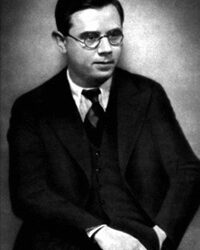
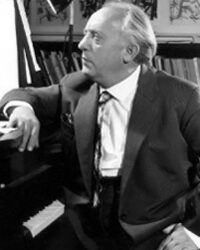
Hans Krasa

Hans Krasa

1899-1944

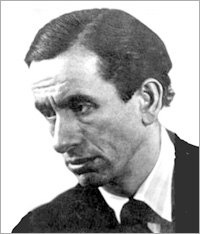
Hans Krása (1899–1944) played an active role in Prague’s multi–ethnic musical life between the wars.  During WWII, Krása was deported to the Terezín concentration camp, where a remarkable musical community flourished among its Jewish prisoners.  On 16 October 1944 he was transported to Auschwitz and perished two days later.  Krása will perhaps best be remembered for his children’s opera Brundibár, performed in Terezín 55 times.  The production of this opera, about children triumphant, in a place where the vast majority of children clearly were not, encapsulated the combination of absurdity, moral triumph and horror associated with this time and place.

Early Years

Krása came from a well–situated family that encouraged his early musical affinity.  His father was a Czech lawyer and his mother a German Jew.  Several of his teenage compositions were performanced by paid musicians at the spas the family visited in his youth.

His primary training in composition was at Prague’s German Music Academy under Alexander Zemlinsky.  Krása’s early aesthetic ideals were guided by Prague’s cultural milieu, where, before 1918, the cult of Mahler played an especially important role.  Vítĕzslav Novák, sometimes considered the Czech exponent of impressionism, was also a strong force. Krása’s works from what can be called his first creative period resulted from these influences.  The sudden arrival in Prague of post–World War I modernisms can also be found, in particular Stravinsky and Les Six, but only in passing.

His graduation project, Four Orchestral Songs, settings of Christian Morgenstern’s Songs from the Gallows, was performed in Prague under Zemlinsky in May 1921. German critics appraised the work highly, and found his style characterized by aspects of the musical grotesque.  But in terms of his anti–Romantic stance, as found in his satire of Romantic musical clichés, Krása did not assume the kind of militancy of Hindemith or certain members of Les Six.  Instead, the grotesque and the aphoristic nature of certain works from this time show his indebtedness to Mahler.  Apart from his Four Orchestral Songs, Krása’s first creative period also includes the String Quartet, Op. 2, the Symphony for Small Orchestra, and the Five Songs for Voice and Piano, Op. 4.

Krása stopped composing for seven years after completing his Five Songs, a period filled in part by work as a répétiteur at Prague’s New German Theater and occasional trips abroad.  He followed Zemlinsky to the Berlin Kroll Opera in 1927.  Although the support of Zemlinsky brought him conducting offers in Berlin, Paris, and Chicago, he could not bring himself to accept a foreign post and returned to Prague, where he had enjoyed a leisurely lifestyle, just as inclined to play chess and discuss literature as to engage in musical projects.  He associated himself with the German intellectuals grouped around the Prager Tagesblatt newspaper and with Czech artists, painters in particular.  Notable about Krása’s circle was its humanistic attitude towards art that rejected chauvinism and its positive attitude towards the Czechoslovak nation.

Mature Years

Krása’s second style period dates from the early 1930’s. The first work from this time is his psalm cantata for mixed chorus and orchestra Die Erde ist des Herrn, performed in Prague by German musicians in spring 1932.  The work shows his new concern for attempting to control the macro whole; it is conceived monumentally, according to the models of certain French composers of the time.  In terms of development, the cantata represented progress in the composer’s ability to establish stylistic definition.  The press, however, received the work unfavorably.

Particularly sharp polemics arose over his opera Verlobung im Traum based on Dostoyevsky’s Uncle’s Dream; its premiere took place at the New German Theater as part of the Maifestspiele on 18 May 1933. The subject of debate concerned the composer’s dramaturgical method, which corresponded to Stravinsky in the admixture of disparate stylistic elements in the form of quotation, i.e. the composition of certain portions “in the spirit” of Rossini, Verdi and the German romantics, and in the alternation of buffo and psychological characterizations.  Although this kind of compositional aesthetic was nothing new, it triggered disfavor with many critics.  Other critics, however, in particular the German ones, were favorable towards Krása’s ability to characterize individual dramatic roles and, in the use of the aforementioned dramaturgical methods, they observed evidence of the composer’s stylistically progressive orientation.  Later that year, the opera won the Czechoslovakian State Prize.

Another work from Krása’s second period is his Chamber Music for Harpsichord and 7 Instruments (1936).  Representing his growing affinity for Czech musicians, he included the work in a program for a special evening of the Mánes musical group, a conglomeration of Czech modernist composers, where works by composers such as Pavel Bořkovec, František Bartoš, Iša Krejčí, and Jaroslav Ježek were performed.  Chamber Music fit in well in the program for its neoclassical finish.  In the press, however, the work triggered contradictory opinions.

Brundibár and Terezín

Krása’s two–act children’s opera Brundibár [The Bumble–Bee], a setting of an Adolf Hoffmeister libretto, was composed in 1938 as a submission to a children’s opera competition sponsored by the Czechoslovak Ministry of Education.  But no winner was announced nor any prize money awarded, undoubtedly due to the complete occupation of the country by Nazi Germany in March, 1939.  In July 1941, rehearsals of the opera began under the conductor Rafael Schächter at Prague’s Jewish–Zionist orphanage HaGibor.  The opera was performed twice in secret, as Jewish cultural activities were already forbidden by that time.  Krása was arrested before hearing the work and deported to Terezín one year later.  Several of his collaborators and the child actors involved in the HaGibor production followed shortly thereafter.

At Terezín, Krása became the head of musical activities of the camp’s so–called Freizeitgestaltung (“leisure time activities”), established by the Nazis once they realized the propaganda value of cultural activity at their “model” concentration camp.  The camp’s precarious conditions and the need for distraction drove musicians to high levels of creativity, forming one of the most vibrant musical schools in occupied Europe.  Among them were Karel Reiner, Karel Ančerl, Pavel Haas, Viktor Ullmann, and Gideon Klein.  During his 26–month internment, Krása composed his String Trio and the Three Songs for Soprano, Clarinet, Viola and Cello, both frequently performed.

Rudolf Freudenfeld, the son of HaGibor’s director, smuggled the piano reduction of Brundibár into the fortress ghetto.  After Krása re–orchestrated the work for the available forces, rehearsals began at the so–called Dresden barracks.  Constantly interrupting rehearsals were the deportation of the child actors to concentration camps in the east, who were replaced by newly arriving children.  After more than two months of rehearsals, the Terezín premiere of Brundibár took place at the Magdeburg barracks on 23 September 1943.  On average, the opera was performed once a week until autumn of 1944, by which time the final transports had left the fortress.

Although Krása had conceived the opera before there was any immediate danger to Jews of Czechoslovak nationality, the Terezín production could be easily interpreted allegorically, with the evil Brundibár representing Hitler.  The surreptitious communication of ideas was helped by the fact that the text, sung in Czech, could not be understood by the SS–guards.  The story concerns the siblings Aninka and Pepíček, whose widowed mother is sick and for whom they must acquire milk.  The penniless children see that the organ–grinder Brundibár earns money with his singing and playing.  The children attempt to join in with a song, and Brundibár chases them away, leading them to desperation.  Coming to their aid are the animals who call together the neighborhood children to sing a lullaby.  The delighted listeners give money to the siblings, which Brundibár then tries to steal.  In the end, Brundibár is overcome by the children and animals, who sing, “Brundibár is beaten, he runs into the distance, strike up the drum, the war has been won.”

On 23 June 1944, the Terezín ghetto was selected by the Nazis for the visit of an International Red Cross commission, who came in response to the growing concerns internationally over the treatment of Jews.  For the visit, the production of Brundibár was hastily moved to the large Sokol Hall outside the ghetto, where the stage designer František Zelenka was given materials for the improvement of the set and costumes.  The embellishment of the production took place overnight.  The opera’s final scene was later captured in the Nazi propaganda film Theresienstadt, more well known under the deceptive title Der Führer schenkt den Juden eine Stadt [The Führer Gives the Jews a City].  Ironically, the scene included in the film was where Brundibár is defeated; the film never made it to the German screens during the war.

By Thomas D. Svatos

Works List

Chamber

Quartetto pour deux Violons, Alto et Violoncello, op. 2 (1923)
Paris, Eschig 1924, CD DECCA, London, Channel Classic, Amsterodam

Five Songs for voice and piano, op. 4 (1925)
Vienna, Universal Edition 1926 , CD Ars Musici, Freiburg, Alea, Praha

Chamber Music for Harpsichord and Seven Instruments (1936).
Bote&Bock, CD Koch Int. Classics, New York

Passacaglia and Fugue for string trio (1943)
Bote&Bock, CD Koch Int. Classics, New York

Three Songs after Rimbaud in Nezval s translation for bariton,
clarinet, viola and violoncello (1943)
Bote&Bock, CD Koch Int. Classics, New York, Ars Musici, Freiburg,
Channel Classics, Amsterodam

String Quartet “Theme and Variations for String Quartet”
Bote&Bock, CD Koch Int. Classics, New York, Ars Musici, Freiburg,
Channel Classics, Amsterodam

Dance for String Trio (1943)
Bote&Bock, CD Koch Int. Classics, New York, Ars Musici, Freiburg,
Channel Classics, Amsterodam, Romantic Robot, London


Orchestral

Four Orchestral Songs to Poems by Christian Morgenstern, op.l
– Orchestergrotesken, (1920), UE

Symphony for Small Orchestra (1923). (The third movement is an alto setting of Rimbaud’s text “The Louse–catchers“ in Max Brod’s translation), UE 1926

Die Erde ist des Herrna, from the Psalter for Soli, Choir and Orchestra (1931), UE 1932

Overture for Small Orchestra (cl., tr., vlni, viole, vcelli, pf.)
Bote&Bock, CD Koch Int. Classics, New York, Abseits Edition Berlin


Opera

Verlobung im Traum. Opera in two acts based on Dostoyevsky’s
story Uncle’s Dream. Libretto by Rudolf Fuchs and Kudolf Thomas
(1928 – 30), UE, CD DECCA

Brundibár, Children’s opera to a libretto by Adolf Hoffmeister

First version (1938). Manuscript

Second version (1943). Manuscript

Romantic Robot, London 1991
Bote&Bock, CD Koch Int. Classics, New York, Cultura & Musica, Bari
Channel Classics, Amsterdam


Music for the Stage

Mládí v hře [Children at Play]. Music for Adolf Hoffmeister’s play (1935) In: Hoffmeister, A.: Hry z avantgardy (The Avant–garde Plays), Prague, Orbis Publishers 1963 (in Czech)


Bibliography


Ĉervinková, Blanka, Hans Krása: život a dílo skladatele [Hans Krása: The Composer’s Life and Works] . Prague: Tempo, 2003.

Dĕjiny české hudební kultury 1890–1945. [The History of Czech Musical Culture 1890–1945] 2 vols., Prague: Academia Praha, 1972, 1981.

Karas, Joža. Music in Terezín: 1941–1945. New York: Beaufort Books, 1985.

Schultz, Ingo. “Hans Krása.” The New Grove Dictionary of Music and Musicians, 2nd Edition, ed. John Tyrrell (London: Maxmillan Publisher Limited, 2001).

Erich Wolfgang Korngold

Erich Wolfgang Korngold

1897-1957

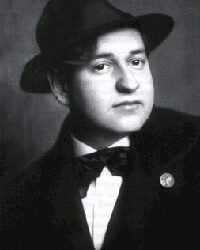
Erich Wolfgang Korngold (1897-1957) was a child prodigy, a remarkable interwar talent in the musical life of German-speaking Europe, and in his later years, one of the most famous figures in Hollywood’s musical establishment. He is remembered today through his many movie scores, but also for his operatic and instrumental music.

Life

Erich Wolfgang Korngold, one of the most celebrated composing prodigies of all time and a pioneer in the development of the classical Hollywood film score, was born in Brünn, Moravia, on May 29, 1897, the second son of Julius Korngold and Josephine Witrofsky. The family moved to Vienna in 1901, and in 1904 Julius succeeded his mentor, Eduard Hanslick, as chief music critic for the highly influential daily publication, Neue Freie Presse, a position he held until 1934.

Korngold’s remarkable talents were evident from the outset. At the age of three, he could beat time with a wooden kitchen spoon; by five, he was picking out tunes from Don Giovanni at the piano and joining his father for informal recitals of two- and four-hand duets, and in his sixth year, he was jotting down musical ideas in a small notebook. A distant relative gave him additional keyboard lessons, but it quickly became apparent to Julius that the boy needed more systematic training, and so he sent him to Robert Fuchs, a composer, conductor, and professor of music at the Vienna Conservatory.

During this period, Korngold learned theory, counterpoint and analysis, and the handful of pieces he turned out at this time are a clear indication of Fuchs’ more traditional approach to teaching. In June 1906, Erich played several of his works for Gustav Mahler, who, upon hearing Gold, a cantata for solo voices, chorus, and piano, promptly declared the boy a genius and recommended that he avoid the rigors of academia altogether and study instead with Alexander Zemlinsky, known throughout the city as a composer and pedagogue, and as the principal conductor at the Wiener Volksoper.

The lessons, which started in mid-1907 and lasted until the summer of 1911, when Zemlinsky left Vienna to assume the Directorship of the Deutsches Landestheater in Prague, provided Korngold with a solid grounding in harmony, form, voice-leading and orchestration, as well as the opportunity to improve his already impressive keyboard skills. In addition to a number of works for solo piano, including two large-scale sonatas, a suite of six character studies based on scenes from Cervantes’ Don Quixote, and seven fairy tale pictures inspired by children’s stories, Erich also wrote his first chamber composition, an ambitious four-movement piano trio. In April 1910, a four-hand arrangement of his ballet Der Schneemann (The Snowman) was presented at a charity gala in Vienna; that October, Felix Weingartner conducted Zemlinsky’s orchestrated version at the Hofoper. The premiere was an unqualified success, and the piece soon appeared on some thirty stages in Austria and Germany.

Before long, many of Europe’s greatest talents were championing Korngold’s music. In April 1910, Bruno Walter, Arnold Rosé, and Friedrich Buxbaum gave the Viennese premiere of the Piano Trio, Op.1; the following year, his Schauspiel-Ouverture, Op.4, received its debut performance in Leipzig, with Arthur Nikisch conducting the Gewandhaus Orchestra, and Artur Schnabel introduced the massive Piano Sonata No.2, Op.2, to Berlin audiences. In the fall of 1913, Schnabel joined Carl Flesch for the premiere of the Sonata in G major for Violin and Piano, Op.6, and the Vienna Philharmonic played the Sinfonietta in B major, Op.5, under the baton of Weingartner.

Korngold completed his first opera, a one-act domestic comedy entitled Der Ring des Polykrates (The Ring of Polycrates), in the spring of 1914. The work was too short for a single evening’s entertainment, so in order to prevent it from being coupled with an unsuitable partner, the composer provided a companion piece, Violanta, a one-act tragedy set in 15th-century Venice and based on a libretto by the playwright and novelist Hans Müller, an acquaintance of Julius’ from Brünn and a frequent contributor to the Neue Freie Presse. Both operas premiered at the Munich Hoftheater in March, 1916, with Bruno Walter conducting; the double bill was repeated less than a month later in Vienna, with Selma Kurz and Alfred Piccaver in Polykrates and Maria Jeritza as the ill-fated heroine in Violanta. In an instant the nineteen-year-old composer had established himself as one of the leading figures in contemporary German opera.

The First World War had relatively little impact on Korngold’s creative endeavors. Although he was drafted into the army in 1916, he escaped active duty when a doctor recognized him and exempted him from service on the front lines. Instead, he maintained the company’s archives, led the regimental band, and gave concerts and recitals of his own music to help raise money for the Austrian War Relief Fund. Two of his finest instrumental compositions, the String Sextet in D major, Op.10, and the incidental music for a production of “Much Ado about Nothing,” date from this period, as does his best-known and most successful work for the stage, Die tote Stadt (The Dead City), a three-act opera based on Bruges-la-Morte by the Belgian symbolist novelist Georges Rodenbach. After simultaneous premieres in Hamburg (where Korngold served as music director) and Cologne on December 4th, 1920, it moved on to even greater success in Vienna the following year, where Maria Jeritza sang the dual roles of Marie and Marietta. In November 1921, Die tote Stadt became the first German opera to be mounted at the Metropolitan Opera after the war.

During the early 1920s, Korngold wrote songs, chamber pieces and, in response to a commission from Austrian virtuoso Paul Wittgenstein, who had lost his right arm in the war, a single-movement concerto for piano left hand and orchestra. His desire to get married and raise a family eventually led him to explore more lucrative artistic ventures. Much to his father’s dismay, he concentrated on adapting and conducting the largely-forgotten operettas of Johann Strauss, Jr.; Korngold’s arrangements and re-orchestrations of Eine Nacht in Venedig (A Night in Venice; 1923) and Cagliostro in Wien (Cagliostro in Vienna; 1927) helped spark renewed interest in Strauss’ music shortly afterwards. Korngold’s fourth, and largest opera, Das Wunder der Heliane (The Miracle of Heliane) occupied him throughout the mid-1920s. Although it enjoyed a moderate success in Hamburg in 1927, Heliane failed to win over audiences in Vienna and Berlin, most of whom expected another Die tote Stadt. Several backstage intrigues and a public row between Julius and supporters of Ernst Krenek’s jazz-infused Jonny spielt auf also damaged the opera’s reputation, but Korngold always regarded Heliane as his masterpiece.

In 1929, Korngold began a long and very productive association with the famed Austrian producer and director Max Reinhardt, who invited him to collaborate on a new production of Die Fledermaus in Berlin. The two men had known each other for several years, and Korngold had previously declined a request from Reinhardt to supply music for a production of Schiller’s “Turandot,” on the grounds that Puccini’s opera of the same name was set to premiere, but this new partnership allowed the composer an opportunity to revisit an operetta he loved greatly. He and Reinhardt teamed up again in 1931 on Die schöne Helena, a German-language version of Offenbach’s La Belle Hélène, for which Korngold composed an overture.

With the Nazi ascendancy in the early 1930s, Reinhardt fled Europe, eventually ending up in California. In 1934, he asked Korngold to Hollywood to take part in a film adaptation of Shakespeare’s “A Midsummer Night’s Dream” for Warner Bros. The worsening political climate in Europe, and the gradual disappearance of a market for his concert and stage works as a result, provided Korngold with an excuse to accept the invitation, and in the fall of that year, he and his wife, Luzi, sailed for the United States. Korngold set about arranging Mendelssohn’s incidental music, incorporating other pieces by the composer into the score, and in some cases, writing new, stylistically appropriate passages to link one cue to the next. He later described how after writing various musical sections out, recording them, and then playing them back on the set, he would “conduct the actor in order to make him speak his lines in the required rhythm,” a novel approach that most certainly stemmed from his years of experience in the theater.

Over the next four years, Korngold traveled regularly between California and Vienna. In addition to writing the scores for Captain BloodAnthony AdverseAnother Dawn, and the Prince and the Pauper, and contributing music to Give us This NightRose of the Rancho, and The Green Pastures, he continued working on his fifth opera, Die Kathrin. In January 1938, executives at Warner Bros. cabled Korngold, offering him the score to The Adventures of Robin Hood. Since Die Kathrin was scheduled to premiere that March, he initially declined, but the director of the State Opera urged him to take the assignment. Shortly after arriving back in Hollywood, Korngold received the news that Chancellor Schuschnigg had met with Hitler at Berchtesgaden; on March 13, the Nazis annexed Austria. The remaining members of his family, including his oldest son, Ernst, his parents, and his in-laws, managed to escape Vienna at the last possible moment. Within two weeks, the Nazis had seized all of his property. Although Julius had rescued a number of manuscripts, the vast majority of the composer’s sketches and autographs were left behind. Luckily, two representatives from the publishing house of Josef Weinberger broke into the Korngold home, retrieved these items, and packaged them up for shipment to America.

Korngold vowed to abstain from writing anything for the concert hall or opera house as long as Hitler, “that monster in Europe,” remained in power, choosing instead to support his family—as well as those displaced by the ravages of war and the organizations devoted to their assistance—through the money he made as a film composer. In a career at Warner Bros. that lasted from 1934 to 1946, he penned a total of eighteen original scores, far fewer than, for instance, fellow composer Max Steiner, who routinely produced at least that many in a single year, and he won two Academy Awards. In his unique contract with the studio, Korngold set strict limits on the number of scores he would write—no more than two in a twelve-month period—and he asked to be able to turn down any project he decided was unsuitable. He also demanded, and was given, the right to reuse any of the music as he saw fit, provided it was not in conjunction with another motion picture, a clause that proved especially beneficial as he sought to revive his career after the war.

Korngold’s influence as a film composer cannot be overemphasized; indeed, he played a significant role in establishing the grammar and syntax of the so-called classical Hollywood film score at precisely the moment when its conventions were being formulated. Along with Steiner, he helped codify the use of clearly identifiable themes for characters, locations and situations, but unlike his colleague, Korngold employed subtle processes of thematic development as a way of drawing attention to relationships between individuals and the dramatic context in which they find themselves. Korngold also refined the practice of placing music just underneath the actor’s speaking voice so that dialogue was always audible, and he specified which instruments would be most effective given that voice’s distinct intonation. Lastly, Korngold’s intimate knowledge of orchestral textures helped standardize the sound of Hollywood film scores. Working with such gifted orchestrators as Hugo Friedhofer and Ray Heindorf, who were able to translate his instructions perfectly, he created a striking aural complement to the visual imagery on the screen, one which greatly influenced a later generation of composers, including John Williams and James Horner.

1945 marked an important turning point in Korngold’s life. His father, who had never been entirely comfortable in Los Angeles, and who had never approved of Erich’s decision to focus exclusively on film composition, died after a lengthy illness. The war in Europe also drew to an end. Korngold himself had grown increasingly disillusioned with Hollywood and with the kinds of pictures he was being given, and he was eager to return to writing music for the concert hall and the stage. In December 1944, he gave his wife the manuscript for a third string quartet; the following year, largely due to requests from Bronislaw Huberman, Korngold began revising a concerto for violin and orchestra that he had started in the late 1930s, a work that Jascha Heifetz would premiere in St. Louis in 1947 and record commercially in 1953. In 1946, he also enlarged a cello concerto he wrote for the film Deception into a larger, single movement piece, and this was performed in Los Angeles and subsequently published as his Op.37.

Like most of his fellow émigrés, Korngold longed for the day when he could return to Europe. The Vienna he and his family finally saw in May 1949 was substantially different from the city they left a little over a decade before. Although reconstruction efforts were well underway, many of the buildings that had been reduced to rubble as a result of the massive Allied bombings in March 1945 were still in ruins, including the Opera House. Family and friends had either left of their own accord or were victims of the Holocaust; a few who stayed even resented Korngold for “sitting out” the war in California. Moreover, a small cadre of Nazi sympathizers continued to occupy key social and cultural positions in Austria and Germany, and they were determined to prevent Jewish exiles from renewing their pre-war lives and careers.

Despite all of this, Korngold remained upbeat about his prospects. In January 1950, Wilhelm Furtwängler gave the premiere of the Symphonic Serenade for Strings, Op.39, and the following month, the composer accompanied mezzo-soprano Rosette Anday in a performance of the Five Songs for middle voice and piano, Op.38. Arrangements were also under way to stage Die Kathrin, and the State Opera had agreed to mount Die tote Stadt. Buoyed by what he thought were positive signs of a belated comeback, Korngold began writing his next major piece, a four-movement symphony.

Unfortunately, this optimism proved to be premature. The production of Die Kathrin, which had been postponed until October due to a strike, was not well received. Critics complained that the opera was old-fashioned and that Korngold’s brand of overt lyricism was no longer relevant. In addition, the planned performance of Die tote Stadt was cancelled because of scheduling problems and artistic differences. Finally, adding insult to injury, a special concert of his music, organized by the Gesellschaft der Musikfreunde in April 1951, was poorly attended, and his former German publishers, B. Schott, Söhne, showed scant interest in reissuing any of the concert or stage works. Once he had been the talk of the town; now, Korngold felt that he had been forgotten. He decided it was time to take his family back to California.

The director William Dieterle contacted Korngold in 1953, asking him about working on a film biography of Richard Wagner that was to be shot in and around Munich. The two had been at Warner Bros. in the 1930s, but Korngold accepted the offer largely out of a sense of responsibility to Wagner’s music, which he feared would be subjected to the worst treatment. The project also gave him an excuse to be in Europe for the Viennese premiere of his Symphony in F-sharp, Op.40, in October 1954. The piece was under-rehearsed and Korngold pleaded that the performance be called off. While critical reaction was generally favorable, the composer was not satisfied. Sadly, he would not live to hear it played again.

In the remaining years of his life, Korngold began working on a second symphony and considered writing another opera, this one based on Franz Grillparzer’s “Das Kloster bei Sendomir”, but neither project was completed. In October 1956, he suffered a major stroke, and he died on November 29, 1957, at the age of sixty.

Over the last three decades, Korngold’s music for the concert hall, the opera house, and the silver screen has experienced a significant renaissance, thanks not only to the tireless efforts of his youngest son,George, who worked as a recording producer up until his death in 1987,but also to the extensive research efforts of Brendan Carroll, the composer’s principal biographer. Almost all of Korngold’s extant instrumental, orchestral and vocal works are available on compact disc, several of his most important pieces are regularly programmed around the world, and his film scores have enjoyed a renewed interest.

By Robert Kingston

Sample Audio Clips (Rhapsody Music Service):

Die tote Stadt – Gluck, das mir verblieb

Finale: Allegro assai vivace

Works List

Film Scores

A Midsummer Night’ Dream. Arrangements of Mendelssohn’ incidental music, with additional original music provided by Korngold (Warner Bros, 1934). Directed by Max Reinhardt and William Dieterle.

Rose of the Rancho (Paramount Pictures, 1935). Two sequences.

Captain Blood (Warner Bros., 1935).

Give Us This Night (Paramount Pictures, 1935-1936).

Anthony Adverse (Warner Bros., 1936). Academy Award for Best Score.

Hearts Divided (Warner Bros., 1936). One scene.

The Green Pastures (Warner Bros., 1936). Two sequences.

Another Dawn (Warner Bros., 1936-1937).

The Prince and the Pauper (Warner Bros., 1937).

The Adventures of Robin Hood (Warner Bros., 1938). Academy Award for Best Score.

Juarez (Warner Bros., 1938-1939).

The Private Lives of Elizabeth and Essex (Warner Bros., 1939).

The Sea Hawk (Warner Bros., 1940).

The Sea Wolf (Warner Bros., 1941).

Kings Row (Warner Bros., 1941).

The Constant Nymph (Warner Bros., 1942).

Devotion (Warner Bros., 1943).

Between Two Worlds (Warner Bros., 1944).

Of Human Bondage (Warner Bros., 1944-1945).

Escape Me Never (Warner Bros., 1946).

Deception (Warner Bros., 1946).

Magic Fire (Republic Pictures, 1954-1955). Music by Richard Wagner, arranged and edited by Korngold.

Orchestral Works

Schauspiel Ouvertü in B major, for large orchestra, Op.4 (July-August 1911; orchestrated August-September 1911). Leipzig, December 14, 1911, Leipzig Gewandhaus Orchestra, Arthur Nikisch, cond.

Sinfonietta in B major, for large orchestra, Op.5 (April 1911-August 1912; orchestrated September 1912). Vienna, November 30, 1913, Vienna Philharmonic Orchestra, Felix Weingartner, cond.

Sursum Corda, symphonic overture for large orchestra, Op.13 (1919). Vienna, January 24, 1920, Vienna Symphony Orchestra, Erich Wolfgang Korngold, cond.

Piano Concerto in C-sharp for the left hand alone, in one movement, Op.17 (1923). Vienna, September 22, 1924, Paul Wittgenstein, Vienna Symphony Orchestra, Erich Wolfgang Korngold, cond.

Baby Serenade, for fourteen wind instruments, banjo, piano, harp, percussion, and string orchestra, Op.24 (1928-1929). Vienna, December 5, 1932, Vienna Symphony Orchestra, Erich Wolfgang Korngold, cond.

Violin Concerto in D major, Op.35 (1937-1939; revised 1945). St. Louis, February 15, 1947, Jascha Heifetz, St, Louis Symphony Orchestra, Vladimir Golschmann, cond.

Concerto in C major for cello and orchestra, in one movement, Op.37 (April-August 1946, written for the film Deception). Los Angeles, December 29, 1946, Eleanor Aller Slatkin, Los Angeles Philharmonic Orchestra, Henry Svedrofsky, cond.

Symphonic Serenade in B-flat major, for string orchestra, Op.39 (1947-1948). Vienna, January 15, 1950, Vienna Philharmonic Orchestra, Wilhelm Furtwangler, cond.

Symphony in F-sharp, for large orchestra, Op.40 (1947-1952). Vienna, October 17, 1954, Vienna Symphony Orchestra, Harold Bryns, cond.

Theme and Variations, for school orchestra, Op.42 (1953). Los Angeles, November 22, 1953, Inglewood Symphony Orchestra, Ernst Gebert, cond.

Straussiana, for school orchestra (1953). Based on works by Johann Strauss, Jr. Los Angeles, November 22, 1953, Inglewood Symphony Orchestra, Ernst Gebert, cond.


Stage Works

Der Schneemann (The Snowman), ballet-pantomime in two scenes for piano (1908-1909; orchestrated by Alexander Zemlinsky, 1910; revised by Korngold in 1913). Libretto by Erich Wolfgang Korngold. Vienna, April 14, 1910 (piano version); Vienna, October 4, 1910 (orchestral version).

Der Ring des Polykrates (The Ring of Polycrates), comic opera in one act, Op.7 (1913-1914; revised in 1919). Libretto by Julius Korngold and Leo Feld to a text by Heinrich Teweles. Munich Court Theater, March 28, 1916, Bruno Walter, cond.

Violanta, tragic opera in one act, Op.8 (1914-1915; orchestrated September 1915-February 1916). Libretto by Hans Mü. Munich Court Theater, March 28, 1916, Bruno Walter, cond.

Die tote Stadt (The Dead City), opera in three acts, Op.12 (1916-1920). Libretto by Julius and Erich Wolfgang Korngold (as “ Schott”), based on Georges Rodenbach’ novel Bruges la morte and other sources. Hamburg, December 4, 1920, Egon Pollak, cond.; Cologne, December 4, 1920, Otto Klemperer, cond.

Das Wunder der Heliane (The Miracle of Heliane), opera in three acts, Op.20 (1923-1927). Libretto by Hans Mü, after a play by Hans Kaltneker. Hamburg, October 7, 1927, Egon Pollak, cond.

Die Kathrin, opera in three acts, Op.28 (1932-1937). Text by Ernst Decsey after the novel Die Magd von Aachen by Heinrich Jacob and other sources. Royal Opera House, Stockholm, October 7, 1939, Nils Grevillius, cond.


Die stumme Serenade
 (The Silent Serenade), comedy with music in two acts and overture, Op.36 (1946-1950). Lyrics by Bert Reisfeld and William Okie (German version by Raoul Auernheimer), after the novel by Victor Clement. Radio Vienna, March 26, 1951; Dortmund, November 10, 1954 (first staged performance).


Incidental Music

Viel Lä um nichts (Much Ado About Nothing), incidental music to the play by William Shakespeare for chamber orchestra, Op.11 (1918-1919). Vienna, May 6, 1920, Vienna Philharmonic Orchestra, Erich Wolfgang Korngold, cond. (a) Orchestral Suite. Vienna, January 24, 1920, Vienna Symphony Orchestra, Erich Wolfgang Korngold, cond. (b) Suite for violin and piano (optional horn). Vienna, May 21, 1920, Rudolf Kolisch, Paul Breisach, Erich Wolfgang Korngold.

Der Vampir: eine discrete Bü fü ein Drama von Hans Mü (The Vampire: Incidental Music for a Play by Hans Mü), for chamber orchestra and organ (1923). Vienna, February 3, 1923. Unpublished.


Chamber Works

Trio in D major, for piano, violin, and cello, Op.1 (December 1909-May 1910). Munich, November 4, 1910, Schwartz Trio.

Sonata in G major, for violin and piano, Op.6 (1912-1913). Berlin, October 21, 1913, Artur Schnabel, Carl Flesch.

String Sextet in D major, Op.10 (1914-1916). Vienna, May 2, 1917, Rosé Quartet.

Quintet in E major, for piano and strings, Op.15 (1921-1922). Hamburg, February 16, 1923, Bandler Quartet, Erich Wolfgang Korngold.

String Quartet No.1 in A major, Op.16 (December 1920-Spring 1923). Vienna, January 8, 1924, Rosé Quartet.

Suite, for two violins, cello, and piano left hand, Op.23 (1930). Vienna, October 21, 1930, Paul Wittgenstein, members of the Rosé Quartet.

String Quartet No.2 in E-flat major, Op.26 (1933). Vienna, March 16, 1934, Rosé Quartet.

String Quartet No.3 in D major, Op.34 (1944-1945). Los Angeles, 1946, Roth Quartet.


Piano Works

Piano Sonata No.1 in D minor (1908-1909). Salzburg, August 3, 1910, Erich Wolfgang Korngold (incomplete).

Don Quixote: Sechs charakteristisch Stü (Don Quixote: Six Characteristic Pieces) (1907 [No.1], 1909). Published privately in 1909.

Piano Sonata No. 2 in E major, Op.2 (July-December 1910). Berlin, October 13, 1911, Artur Schnabel.

Sieben Mä (Seven Fairy Tale Pictures), Op.3 (June-December 1910). Berlin, March 30, 1912, Marta Malatesta. Individual movements performed in Hamburg, March 20, 1912, Erich Wolfgang Korngold and others. (a) Orchestral version (March-May 1911). Karlsbad, June 27, 1911.

Vier kleine Karikaturen (Four Small Caricatures), Op.19 (1926). Liverpool, May 31, 1978, Michael Young.

Geschichten von Strauss (Tales from Strauss), Op.21 (Fantasy on themes by Johann Strauss, Sr., Johann Strauss, Jr., and Eduard Strauss in the style of Rosenthal, Schulz-Eweler, Lehvinne, Moscheles, and Godowsky, adapted and arranged in 1927).

Piano Sonata No.3 in C major, Op.25 (1931). Vienna, March 3, 1932, Paul Weingarten.


Vocal and Choral Works

Sechs einfache Lieder (Seven Easy Songs), Op.9 (1911-1913). Texts by Eichendorff, Edith Honold, Heinrich Kipper, and Siegfried Trebitsch. Frankfurt, February 15, 1912, Hans Vaterhauss and Erich Wolfgang Korngold (nos. 1-3).

Der Sturm (The Storm), for chorus and orchestra (1913). Text by Heinrich Heine. Unpublished.

Kaiserin Zita-Hymne, for solo voice, choir, and piano (1916). Text by Baronin Hedda von Skoda. Vienna, May 9, 1917, Leo Slezak, Erich Wolfgang Korngold. (a) Orchestral version, Vienna, October 12, 1917, Hans Duhan, Vienna Symphony Orchestra, Erich Wolfgang Korngold, cond. Privately published for charity.

Vier Lieder des Abschieds, (Four Songs of Farewell), Op.14 (1915 [No.4]; 1920-1921). Texts by Rosetti, Edith Ronsperger, and Ernst Lothar. Vienna, November 5, 1921, Maria Olszewska, Erich Wolfgang Korngold. (a) Orchestral version. Vienna, January 14, 1923, Rosette Anday, Erich Wolfgang Korngold, Chamber Orchestra of the Vienna State Opera.

Drei Lieder (Three Songs), Op.18 (1924). Texts by Hans Kaltneker. Vienna, March 11, 1926, Rosette Anday, Erich Wolfgang Korngold.

Drei Lieder (Three Songs), Op.22 (1928-1929). Texts by Eleonore van der Straten and Karl Kobald. Vienna, December 9, 1928, Margit Angerer, Erich Wolfgang Korngold (No.1); Vienna, January 1, 1930, Hanna Schwarz, Erich Wolfgang Korngold (No.3).

Unvergü (The Eternal), Op.27 (1933). Song cycle to texts by Eleonore van der Straten. Vienna, October 27, 1937, Desi Halban, Erich Wolfgang Korngold.

Narrenlieder (Songs of the Clown), Op.29 (1937). Six songs with texts from Twelfth Night by William Shakespeare (1937). Los Angeles, June 28, 1941, Nanette Fabray, Erich Wolfgang Korngold.

A Passover Psalm, for solo voice, chorus, and orchestra, Op.30 (1941). Text from the Hagadah. Los Angeles, April 12, 1941, Erich Wolfgang Korngold.

Four Shakespeare Songs, Op.31 (1937-1941). Four songs with texts from Othello and As You Like It. Los Angeles, June 28, 1941, Nanette Fabray, Erich Wolfgang Korngold.

Prayer, for tenor, women’s voices, harp, and organ, Op.32 (1941). Text by Franz Werfel. Los Angeles, October 1, 1941, Erich Wolfgang Korngold.

Tomorrow, tone poem for contralto solo, women’s chorus, and orchestra, Op.33 (1941-1942, for the film The Constant Nymph). Text by Margaret Kennedy. New York, May 10, 1944, Eileen Farrell, Columbia Symphony Orchestra, Erich Wolfgang Korngold, cond.

Five Songs for middle voice and piano, Op.38 (1948). Texts by Richard Dehmel, Eichendorff, Howard Koch, and William Shakespeare. Vienna, February 19, 1950, Rosette Anday, Erich Wolfgang Korngold.

Sonett fü Wien (Sonnet for Vienna), for mezzo-soprano and piano, Op.41 (1953). Text by Hans Kaltneker. Vienna, October 17, 1954, Hildegard Rossel-Majdan, Erich Wolfgang Korngold.

Operetta Arrangements

Eine Nacht in Venedig (A Night in Venice), by Johann Strauss, Jr. (1923). Original libretto by Friederich Zell and Richard Genée, new text by Ernst Marischka. Theater an der Wien, October 25, 1923. Revised version, Vienna State Opera, June 23, 1929, Erich Wolfgang Korngold, cond.

Cagliostro in Wien (Cagliostro in Vienna), by Johann Strauss, Jr. (1926-1927). Original libretto by Friederich Zell and Richard Gené, new text by Dr. Ludwig Herzer. Wiener Burgertheater, April 13, 1927, Erich Wolfgang Korngold, cond.

Rosen aus Florida (Roses from Florida), by Leo Fall (1928). Libretto by Dr. Alfred Maria Willner and Heinz Reichert. Score based on sketches by Fall and new compositions in the style of Fall. Theater and der Wien, February 22, 1929, Erich Wolfgang Korngold, cond.

Die Fledermaus (The Bat), by Johann Strauss, Jr. (1929). Arranged for the production by Max Reinhardt. Libretto by Henri Meilhac and Ludovic Halévy, revised by Carl Haffner and Marcellus Schiffer. Deutsches Theater, Berlin, June 8, 1929, Erich Wolfgang Korngold, cond.

Walzer aus Wien (Waltzes from Vienna), based on the life of Johann Strauss, Jr. (1930). Singspiel in three acts by Dr. Alfred Maria Willner, Heinz Reichert, and Ernst Marischka. Vienna Stadtheater, October 30, 1930, Erich Wolfgang Korngold, cond.

Die schö Helena (La Belle Héè), by Jacques Offenbach (1931). Arranged for the production by Max Reinhardt. Comic opera by Henri Meilhac and Ludovic Halè, based on the Paris version by Egon Friedell and Hanns Sassmann. Theater am Kurfűrstendamm, Berlin, June 15, 1931, Erich Wolfgang Korngold, cond.

Das Lied der Liebe (The Song of Love), based on music by Johann Strauss, Jr. (1931). Original operetta by Dr. Ludwig Herzer. Music by Johann Strauss, Jr., with additions by Korngold. Metropol Theater, Berlin, December 23, 1931, Erich Wolfgang Korngold, cond.

Die geschiedene Frau (The Divorced Woman), by Leo Fall (1932). Original text by Victor Lé, reworked by Lé and Heinz Reichert. Music based on Fall’ operetta with couplets by Max Colpet and additions by Korngold. Theater am Nollendorfplatz, Berlin, February 1, 1933, Erich Wolfgang Korngold, cond.

Rosalinda, American version of the 1929 Reinhardt and Korngold Fledermaus (1942). Arranged for the production by Max Reinhardt. Text by Gottfried Reinhardt and John Meehan, Jr., lyrics by Paul Kerby. 44th Street Theater, New York, October 28, 1942, Erich Wolfgang Korngold, cond.

Helen Goes to Troy, American version of the 1931 Reinhardt and Korngold Die schö Helena (1944). Text by Gottfried Reinhardt. Alvin Theater, New York, April 24, 1944, Erich Wolfgang Korngold, cond.

The Great Waltz, American version of Walzer aus Wien. Adapted for the Los Angeles Civic Light Opera Company. Performances took place in Los Angeles and San Francisco in 1947, 1949, 1953, and 1956.

Bibliography

Balio, Tino. Grand Design. Hollywood as a Modern Business Enterprise, 1930-1939. History of the American Cinema Vol.5. New York: Charles Scribner’ Sons, 1993.

Bazelon, Irwin. Knowing the Score: Notes on Film Music. New York: Van Nostrand Reinhold, 1975.

Beaumont, Anthony. Zemlinsky. Ithaca: Cornell University Press, 2000.

Brown, Royal S. Overtones and Undertones: Reading Film Music. Berkeley, California: University of California Press, 1994.

Burt, George. . Boston: Northeastern University Press, 1994.

Carroll, Brendan. Erich Wolfgang Korngold: His Life and Works. Paisley, Scotland: Wilfion Books, 1983.

__________. The Last Prodigy. A Biography of Erich Wolfgang Korngold. Portland, Oregon: Amadeus Press, 1997.

Crawford, Dorothy Lamb. Evenings On and Off the Roof: Pioneering Concerts in Los Angeles, 1939-1971. Berkeley, Los Angeles: University of California Press, 1995.

Danly, Linda. Hugo Friedhofer: The Best Years of His Life. Scarecrow Filmmakers Series No. 66. Lanham, Maryland, and London: The Scarecrow Press, 1999.

Darby, William, and Du Bois, Jack. American Film Music: Major Composers, Techniques, Trends, 1915-1990. Jefferson, North Carolina: McFarland and Co., 1990.

Duchen, Jessica. Erich Wolfgang Korngold. London: Phaidon Press, 1996.

Flinn, Carol. “ Most Romantic Art of All: Music in the Classical Hollywood Cinema.” Cinema Journal 29, 4 (Summer 1990): 35-50.

Gilliam, Bryan. “ Viennese Opera Composer in Hollywood: Korngold’ Double Exile in America.” In Driven into Paradise: The Musical Migration from Nazi Germany to the United States, ed. Reinhold Brinkmann and Christoph Wolff, 223-242. Berkeley, Los Angeles: University of California Press, 1999.

Gorbman, Claudia. Unheard Melodies: Narrative Film Music. Bloomington, Indiana: Indiana University Press, 1987.

Hoffmann, Rudolf Stefan. Erich Wolfgang Korngold. Vienna: Carl Stephenson Verlag, 1922.

Inside Warner Bros. (1935-1951). Selected, edited, and annotated by Rudy Behlmer. New York, NY, U.S.A.: Viking, 1985.

Kalinak, Kathryn. Settling the Score: Music and the Classical Hollywood Film. Madison, Wisconsin: University of Wisconsin Press, 1992.

Koch, Howard. The Sea Hawk. Wisconsin/Warner Bros. Screenplay Series. Madison, Wis.: Published for the Wisconsin Center for Film nd Theater Research by the University of Wisconsin Press, 1982.

Korngold, Erich Wolfgang. “ Experiences in Film Music.” In Music and Dance in California, ed. Jose Rodriguez, 137-39. Hollywood: Bureau of Musical Research, 1940.

Korngold, Julius. Child Prodigy: Erich Wolfgang’s Years of Childhood. New York: Willard Press, 1945.

__________. Die Korngolds in Wien: Der Musikkritiker und das Wunderkind. Zurich: M & T Verlag, Edition Musik und Theater, 1991.

Korngold, Luzi. Erich Wolfgang Korngold: Ein Lebensbild. Vienna: Verlag Elisabeth Lafite und Ősterreichischer Bundesverlag, 1967.

La Grange, Henry-Louis de. Gustav Mahler. Oxford: Oxford University Press, 1995.

Lek, Robbert van der. Diegetic Music in Opera and Film: A Similarity between Two Genres of Drama Analysed in Works by Erich Wolfgang Korngold. Amsterdam: Rodopi, 1991.

McCarty, Clifford, ed. Film Music I. New York: Garland Publishing, 1989.

Palmer, Christopher. The Composer in Hollywood. London: Marion Boyers, 1990.

Pö, Helmut. Erich Wolfgang Korngold: Aspekte seines Schaffens. Mainz: Schott Musik International, 1998.

Prawy, Marcel. The Vienna Opera. Vienna, Munich, Zurich: Verlag Fritz Molden, 1969.

Prendergast, Roy. Film Music: A Neglected Art. 2nd ed. New York: W.W. Norton, 1992.

Raine, Norman Reilly. The Adventures of Robin Hood. Wisconsin/Warner Bros. Screenplay Series. Madison: Published for the Wisconsin Center for Film and Theater Research by the University of Wisconsin Press, 1979.

Roddick, Nick. A New Deal in Entertainment: Warner Bros. in the 1930s. London: British Film Institute, 1983.

Ryding, Erik, and Pechefsky, Rebecca. Bruno Walter: A World Elsewhere. New Haven: Yale University Press, 2001.

Schatz, Thomas. The Genius of the System: Hollywood Film Making in the Studio Era. New York: Pantheon Books, 1988.

__________. Boom and Bust. The American Cinema in the 1940s. History of American Cinema Vol. 6. New York: Charles Scribner’s Sons, 1997.

Schnabel, Artur. My Life and Music. New York: St. Martin’s Press, [1963].

Simms, Bryan, ed. Schoenberg, Berg, and Webern: A Companion to the Second Viennese School. Westport, Connecticut: Greenwood Press, 1999.

Sperling, Cass Warner, and Millner, Cork. Hollywood Be Thy Name: The Warner Bros. Story. Rocklin, California: Prima Publishing, 1994.

Thomas, Tony. Music for the Movies. 2nd ed. Los Angeles: Silman-James Press, 1997.

Traubner, Richard. Operetta, a Theatrical History. Oxford: Oxford University Press, 1989.

Walter, Bruno. Theme and Variations. New York: Alfred A. Knopf, 1946.

Gideon Klein

Gideon Klein

1919-1945

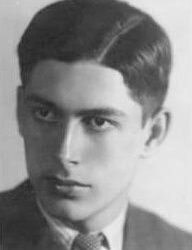
Gideon Klein (1919-1945) was a pianist, composer, writer and educator. In his short life he combined a dizzying array of skills, experiences, musical styles and activity. He arranged Hebrew folk melodies, wrote quarter-tone compositions, served as repetiteur for the infamous production of the Verdi Requiem in Terezín, and was a formidable presence in the musical life of that place.

Michael Flach, who was in Terezín with Klein, created a poetic impression of his presence in this excerpt from “A Concert in the Old School Loft (played by Gideon Klein)”

“And yesterday that man cut all the veins

He opened all the organ pipes

He bribed all birds to make them sing

To make them sing

Even though the verger’s hard fingers harshly sleep on top
of us”

Life

Klein was born in the Moravian town of Přerov in 1919, the youngest of four children. His parents were Czech-speaking Jews and he grew up in a traditional atmosphere. His gifts showed early, and at age 11 he began piano lessons with Růžena Kurzová in Prague; by the time he was twenty he had moved permanently to the city. He began composing in 1934, and continued studying piano with Vilém Kurz. He completed his Master Class in 1939 and continued studying musicology at Charles University and composition with Alois Hába.

These studies took place in difficult and uncertain conditions — by November of 1939 the Czech universities were closed by the Nazis, and Klein was forced to leave the Conservatory by 1940. An attempt to study in London in response to an invitation to study at the Royal Academy of Music was aborted. For the next year Klein tried to continue his activities using the pseudonym Karel Vránek, playing concerts in private homes, and continuing to work as a composer. His own apartment became the site of something very much like a salon, a meeting place for musicians and writers. On December 4th 1941 he was sent to Terezín where he remained for almost three years.

Klein’s time in Terezín is a record of remarkable activity under adverse circumstances. He became an avid educator, on musical and other subjects, and devoted himself to the teaching of the camp’s orphans. He remained active as a performer, serving as pianist for several opera productions and playing in solo recitals such works as Beethoven’s Op.110, Janáček’s Sonata, and Busoni’s transcription of Bach’s Toccata and Fugue in C Major and performing such chamber compositions as the Schubert Trio in Bb, Op.99, and piano quartets by Brahms and Dvořák. He also displayed conspicuous artistic growth as a composer, completing several choral works, a formidable Piano Sonata, a Fantasy and Fugue for String Quartet, and his final work, a Trio for strings, completed a week or so before he was transported to Auschwitz.

Like so many others, his final days, spent at the Fürstengrube concentration camp, are impossible to document. One of the last sightings of Klein is described in Milan Slavický’s excellent biography of the composer. According to a prisoner named Hans Schimmeling, all new arrivals at Fürstengrube were subject to a doctor’s examination. They were forced to wait naked in a room together, guarded by an SS officer. There happened to be a piano in the room, and the SS man asked if anyone played the piano. “The eyewitness was not a musician and did not recognize the piece, yet to this day he remembers Klein’s playing and is convinced that had Klein played something to the guard’s liking (a waltz, a ditty or something of that kind), he could have alleviated his fate and perhaps even saved his life.”

Klein’s legacy was preserved by several musicians, and carried forward primarily by his sister, the remarkable Eliška Kleinová who took great pains to make his music available and encourage a range of performers to take an interest in it. In her goals, and hopefully in her successes she embodies many of the same intentions of the Orel Foundation.

Although there was a flurry of interest in Klein’s music immediately after the war, his legacy and that of his fellow Terezín prisoners did not fare so well under the Communists. Complex conflicts and geo-political alliances created an atmosphere of de facto anti-Semitism in Czechoslovakia under normalization, ranging from the Slánský trials to the more benign but similarly toxic undermining of both religious and cultural forms.


Works

In his short and eventful life Gideon Klein completed approximately twenty-five original works and ten or so arrangements of songs, mostly in Terezín. Milan Slavický divides the composer’s oeuvre into three periods. From 1929-38 we have the development of a self-taught composer, and works ranging from first attempts to more assured utterances. From 1939-41 Klein became more professional since he was attending Alois Hába’s composition class at the Prague Conservatory. It was at this time he experimented with quarter-tone music. The third and most significant period took place while the composer was in Terezín and combined a far-reaching modernity with the quite natural desire to speak to a large audience about the circumstances in which he found himself. It is this latter music that has been most performed.

Until 1990 it was assumed that most of Klein’s youthful compositions had disappeared during the war years. In the words of Milan Slavický “one of Gideon Klein’s friends found a suitcase that had remained unopened since the war—and in this suitcase were almost all Klein’s compositions from the period preceding Terezín. Gideon Klein gave this suitcase to his friend shortly before joining the transport for Terezín…In this respect the newly discovered works reveal Gideon Klein as an experimenting composer of lofty ambitions, in harmony with the most advanced endeavors, thus substantially modifying his image.”

Klein’s compositions are distinguished by a clarity of form, an ongoing interest in contemporary movements such as jazz, neoclassicism, serialism and microtonalism and an abiding interest in contrapuntal design and variation technique. He was also profoundly influenced by his career as a performer, and his exploration of Busoni’s Bach arrangements created a warm synthesis of Bachian intellectual goals and a kind of hyper-expressivity.

By Michael Beckerman

Works List

1. Suite lyrique September-November
1929

2. Small Suite April
1933

3. Composition for a Human Voice, Op.2 August
1934

4. Three Fancies, op.3a August
1934

5. The Stranger, op.3b August
1934

6. Four Small Fancies, op.4 before
January 1935

7. Four Movements, op.5 January-February
1935

8. Blood of Childhood February
1935

9. Four Small Pieces October
1935

10. Four Movements for String Quartet July
1936-September 1938

11. Poplar Tree July
1938

12. Duo for Violin and Viola in the December
1939-February 1940

¼ tone system

13. Divertimento (for 8 wind instruments) June
1939-April 1940

14. Viola Prelude April
1940

15. Three Songs op.1 May-June
1940

16. String Quartet op.2 August
1940-August 1941

17. Duo for Violin and Cello November
1941

18. Madrigal (Villon) June
1942

19. Original Sin December
1942

20. Fantasy and Fugue December
1942-February 1943

21. Piano Sonata June-October
1943

22. Madrigal (Holderlin) December
1943

23. String Trio September-October
1944

Bibliography

Beckerman, Michael. Gideon Klein’s Last Concert.

Beckerman, Michael. “Postcard from Prague, Trio from
Terezín,” in Music and Politics.

Karas, Joža. Music in Terezín 1941-1945. Stuyvesant, New York: Pendragon Press, 1985.

Klein, Hans-Gunter. Gideon Klein-Materialen. Verdrangte Musik 6, 1995.

Peduzzi, Lubomir. Musik im Ghetto
Theresienstadt
. Brno: Barrister and
Principal. 2005

Slavický, Milan. Gideon
Klein: A Fragment of Life and Work. Prague: Helvetica- Tempora
Publishers, 1996.

Discography

Link to comprehensive Klein discography:

http://claudet.club.fr/Terezín/MyKlein.html#1–23

Vitezslava Kapralova

Vitezslava Kapralova

1915-40

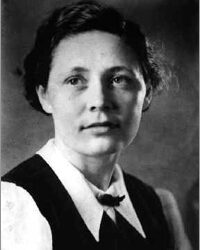
When she died in exile in France at the age of twenty–five, Vítĕzslava Kaprálová (1915–40) was on the threshold of a successful international career as a composer and conductor. During her short life, she composed no fewer than fifty works (many of which were published), conducted orchestras in Prague, London, and Paris, was praised by music critics across Europe, and was awarded the Smetana Award by the Bendřich Smetana Foundation.

On the eve of the Nazi invasion of Czechoslovakia, Kaprálová left her homeland to study with the Czechoslovak composer Bohuslav Martinů in Paris. During the Nazi occupation of Czechoslovakia, she remained in France, continuing her studies with Martinů. During this time, she experimented with a variety of compositional styles ranging from a conservative folk–like idiom to a neo–classicism inspired by Stravinsky, and cultivated a kind of moderism modeled after her teacher, Martinů.

Shortly before the Nazi occupation of France, Kaprálová became terminaly ill.  She was evacuated from Paris to Montpellier by her husband, Jiří Mucha, to whom she had been married only a few months. As Paris fell to Hitler’s forces, Vítĕzslava Kaprálová succumbed to her illness.

Early Life

Born in Brno (Moravia, Czechoslovakia) on January 24, 1915, Vítĕzslava Kaprálová was the only child of composer Václav Kaprál and singer Viktorie Kaprálová. From an early age, following Kaprál’s return from conscripted service in Albania during World War I, Kaprálová studied music with her father, despite his belief that women could not succeed in the male–dominated field of music. By the age of nine, she had completed her first two compositions, “V řísí bájí” (“In the realm of myths”) and “Válka” (“War”), both for solo piano. The following year, another work for piano, “Na dalekou cestu” (“Before the Long Journey”), was published by Oldřich Pazdírek in Hudebni Besidka in Brno. Kaprálová also studied piano at home with her mother.

In 1923, Viktorie and Václav decided to separate; Václav traveled to Paris to continue his music studies. While in Paris, he met Bohuslav Martinů, who became a close friend of the Kaprál family.

In 1930, against the wishes of her father but with the support of her mother, Kaprálová entered the Brno Conservatory where she studied composition with Vilém Petrželka, choral conducting with Vilém Steinman, and orchestral conducting with Zdenĕk Chalabala. In the five years she spent at the Brno Conservatory she composed more than fifteen works for various solo instruments and ensembles, including her first ten pieces to be given opus numbers.

Her years at the Brno Conservatory were marked by a number of firsts for Kaprálová that played a marked role in her budding career. During these years, she experienced Martinů’s music for the first time; a performance of Martinů’s second piano concerto by Rudolf Firkušný greatly affected Kaprálová. She also received the first published reviews of her compositions in the area’s newspapers, most of which were filled with praise. Third, in 1935, Kaprálová made her conducting debut leading the Brno Conservatory Orchestra in the premiere performance of the first movement of her Piano Concerto in d minor, her graduation piece.

Prague Conservatory

In 1935, Kaprálová enrolled in the Prague Conservatory. She was accepted into the composition masterclass of Vítĕzslav Novák, a former student of Antonín Dvořák and one of the most highly regarded Czech composers of the day. She also began her studies in conducting with Václav Talich, a popular and distinguished Czech conductor. In Prague, as would have been expected of a talented music student, Kaprálová began composing in earnest.

Her first assignment for Novák’s masterclass proved to be a bit of a struggle for Kaprálová; she found her new composition teacher to be demanding and highly critical of her efforts.  After several revisions, the resulting work, a witty modernist work for piano entitled Grotesque Passacaglia, won first prize in a composition competition and was later published in Three Pieces for Piano, Op. 9.  After that first assignment, Kaprálová began composing quickly, often working on several works at the same time and completing them in rapid succession.  First were the remaining two piano works (Preludium and Crab Canon) for her opus 9, followed by her orchestration of a suite originally composed for piano.  When this Suite en miniature was premiered in Brno, it received a positive review from Czechoslovak musicologist and critic Otakar Šourek.  Also composed during this early period in Prague was a string quartet (opus 8), additional works for solo piano, and some sketches for vocal works.  But perhaps the most significant work begun by Kaprálová was her Military Sinfonietta, which she began sketching early in 1936.  Although Kaprálová composed several other works during her Prague years, the Military Sinfonietta would become one of her best-known works.

While her musical ideas for Military Sinfonietta (opus 11) were coalescing, she continued her studies at the Prague Conservatory.  In January 1936, Kaprálová graduated from Talich’s conducting masterclass and, in May, she passed the state piano teacher certification examination.  During those months, she also composed several works, primarily for small ensembles or voice and piano, and several compositions premiered in Prague and Brno.  Two highlights from the year include the premiere in early October of Kaprálová‘s String Quartet, Op. 8, by the Moravian Quartet in Brno and the radio premiere of her Piano Concerto in d minor, Op. 7, a couple weeks later by the Brno Radio Orchestra with Kaprálová on the podium (Kaprálová had also conducted the premiere of the concerto’s first movement at the Prague Conservatory the year before).  The performances received rave reviews in the Czechoslovak press, particularly from Šourek, who was becoming an important proponent of Kaprálová‘s work.

Perhaps the most important work to come out of Kaprálová‘s time at the Prague Conservatory was her Military Sinfonietta.  A single movement work for large orchestra, Kaprálová completed the composition in February 1937.  The work had several performances that were key to the young composer’s future.  First, the work served as her graduation piece; in June 1937, Kaprálová graduated with distinction from the Prague Conservatory.  Her teacher, Novák, with whom she worked very closely on the composition, was greatly impressed by it and recommended it the Czech National Women’s Council who wanted to include a piece by a Czech female composer at their gala in November.  In honor of that performance, Kaprálová dedicated the work to the Czechoslovak president, Edvard Beneš, who was also patron of the Czech National Women’s Council.  The reference to “military” in the title of the work often proved problematic for the young composer who had completed the work at a time when the future of the young Czechoslovak Republic seemed in jeopardy.  In her analysis of the composition, Kaprálová explained her choice of title: “The composition does not represent a battle cry, but it depicts the psychological need to defend that which is most sacred to the nation.” [quoted from kapralova.org, text translated by Leda Hatrick] The work was also included in the International Society for Contemporary Music Festival in London in 1938 (see below).  At the end of 1938, Kaprálová was also awarded the Smetana Award by the Bendřich Smetana Foundation in Prague for her Military Sinfonietta.

In addition to her activities at the Conservatory, Kaprálová was also involved with the modern music scene in Prague.  Shortly after her arrival in Prague, she joined the Přítomnost Society, an organization dedicated to the creation and performance of contemporary music, which was very active in the capital during the inter–war years.  The musicians of the Přítomnost Society premiered several of Kaprálová’s works.  Works premiered by the Society included Three Pieces for PianoApple from the Lap (cycle of four songs), and April Preludes (for piano).  Kaprálová was also a member of Ochranný svaz autorský, a Czechoslovak composers’ rights organization.

Most of the works Kaprálová composed during her years at the Prague Conservatory, although relatively conservative in nature, do have a modernist bent.  As one might expect from student works, these combine the teachings of Novák with Kaprálová’s attempts to find her own compositional voice.  Her talent as a composer can be heard in the earliest of her compositions and can be seen in her preliminary analyses included with several of the works.  Her development into a modernist composer would take on a new depth as she moved from Prague to Paris to study with Bohuslav Martinů.

With Martinů in Paris

Although Kaprálová was not formally introduced to Martinů until April 1937, Martinů had been a friend of the Kaprál family for several years.  A native of a small village in Bohemia, Martinů studied for a short while at the Prague Conservatory before moving to Paris in 1923.  Although he never lived in the Czech lands again, Martinů was highly regarded as a Czechoslovak composer.  In 1937, Martinů visited Prague to begin preparations with Václav Talich (Kaprálová‘s conducting teacher) for the premiere of his opera, Julietta (an opera which would soon take on a special meaning for Kaprálová and Martinů), at the city’s National Theater the following year.  During that visit, Kaprálová met the much older composer, whose works she had admired for many years.  During that first meeting, Martinů advised Kaprálová that she should continue her studies with him in Paris.  Thus began a relationship that would deeply influence Kaprálová’s musical and personal life for the remainder of her lifetime.

The prospect of traveling to and studying in Paris was an expensive one.  Kaprálová applied to the French government for financial assistance and, with the help of with the help of Otakar Šourek, was awarded a scholarship for one year’s study at L’École Normale de Musique in Paris.  She arrived in Paris late in October 1938 and soon began to study conducting with Charles Munch and composition with Martinů.  During her first weeks in Paris, the young Czech composer was introduced to some of the most well known figures in Paris’s modern music community, including Darius Milhaud and Arthur Honegger.

In November, Kaprálová made a quick trip to Prague to conduct the performance of Military Sinfonietta for the Czech National Women’s Council, which received positive reviews in several publications.  Shortly after her return to Paris, she was informed that the same work had been selected by the International Society for Contemporary Music (ISCM) committee as one of the works to represent Czechoslovak contemporary music at the 1938 festival in London.  The other representatives of Czechoslovak music included Iša Krejčí, Václav Bartoš, and Viktor Ullmann.

Before departing for the festival in London in June, Kaprálová settled into life as a music student in Paris.  She grew close to Martinů, both personally and professionally, as the two shared ideas about their work. During this time, they collaborated on several of each other’s works, both in person and through correspondence; in the collection of Martinů’s papers, there are copies of 33 letters from the teacher to his student.  One of Kaprálová‘s works from this period known to be influenced by her relationship with Martinů is her Partita, a work in three movements for string orchestra and piano.  Begun early in 1938, Kaprálová would revisit and rework the piece several times over the course of her time with Martinů.  Most scholars familiar with the work of both Kaprálová and Martinů agree that this work is by far her strongest imitation of Martinů’s style.  However, what is unclear is whether her imitation of his style was a result of her admiration of him as a composer, her very close and personal relationship with him, the mere fact that she was studying with him and was expected to imitate his style, or a combination of all three.  Nonetheless, Kaprálová’s Partita, with its angular melodic lines and often dissonant harmonies, is one of her most modern works.

Martinů’s works from this period also reflect his close relationship with Kaprálová.  For example, in May 1938, he composed his String Quartet, No. 5, often considered to be a deeply personal work, and dedicated the completed sketch to his student.

International Society for Contemporary Music (ISCM)

In June 1938 Kaprálová, accompanied by her teacher, traveled from Paris to London to participate in the ISCM festival.  In addition to her conducting duties, Kaprálová was also interviewed by the BBC and met with Jan Masaryk, the Czechoslovak ambassador to Great Britain.  But for the young Czech composer and conductor, the highlight of the trip must have been her appearance as conductor, leading the BBC Orchestra in a performance of her Military Sinfonietta at the festival’s opening concert.  Although she was the youngest composer participating in the festival, her performance on the podium and her skills as a composer were widely praised by those in attendance and in published reports of the concert.  Both The Daily Telegraph and La revue musicale printed reviews praising the work and its performance.  In his account of the ICSM festival, British composer Havergal Brian wrote, “The first work played and broadcast at the recent festival, a Military Sinfonietta, by Miss Vítĕzslava Kaprálová of Czechoslovakia proved an amazing piece of orchestral writing: it was also of logical and well balanced design.”

The concert was also sent by shortwave radio to the United States and rebroadcast by Columbia Broadcasting System.  A review of the festival in Time magazine shortly after the broadcast also described Kaprálová‘s work as a composer and conductor in glowing terms: “In its 16 years of existence, the [ICSM] society has now and then turned up a really golden egg. At the festival’s opening concert last week, seven strictly fresh compositions were chipped open, sniffed at. Four attracted considerable critical attention: …4) a Military Symphonietta in one movement by 22-year-old Vítĕzslava Kapr&#225lová, a good-looking Czechoslovakian girl. To Composer Kaprálová, who conducted her own lusty, sprawling composition, went the afternoon’s biggest hand. Dedicated to Czechoslovakia’s President Eduard Beneš, Composer Kaprálová’s Military Symphonietta was not supposed to summon up any aggressive blood. Said she: ‘My Symphonietta is not an appeal for war, but an appeal for a conscious defensive attitude.’”

The performance at the ICSM festival was a testament to Kaprálová’s talent as a conductor and composer.  Although her scholarship to continue studying in Paris with Martinů was in jeopardy, she was on the threshold of becoming a successful and well-known composer and conductor – a feat rarely attained by a young woman in the late 1930s.

Her Final Compositions

Following her success at the ICSM festival, Kaprálová returned to Paris before taking a holiday in home country.  It was a time of uncertainty and unrest in the countries of Eastern Europe.  Hitler had been gaining power in Nazi Germany and was eager to gain control of the Czech Sudetenland.  On September 29, 1938, in an agreement reached as part of the Munich Accord granted those lands to Germany; the Accord marked the beginning of the carving up of Czechoslovakia and the rest of Eastern Europe and opened the door to the full-scale German invasion of the Czech Lands the following year.

While she was in Czechoslovakia, Kaprálová continued composing, completing a couple of pieces that were already in the works and beginning the sketches of a few others.  In July, with the help of Martinů, she worked on the orchestration for her song Waving Farewell for solo voice and orchestra, a project begun earlier that year.  In September, she completed the sketches for Ilena, a work which began as a ballad and morphed into a cantata for mixed chorus and orchestra, and began orchestrating the work the following month; unfortunately the work remained unfinished.  In both works Kaprálová continued to search for her “voice,” using what she learned from her time at the Prague Conservatory together with what Martinů had taught her, combined with what she believed her compositional voice to be.

In October 1938, Kaprálová received a letter from Alfred Kalmus of Universal Edition (London) asking about the status of an orchestral work based on Czech folk songs that he, on behalf of the publishing house, had commissioned from her.  Although the original letter requesting the commission is lost, it appears that Kaprálová immediately began working on the commission when she received Kalmus’ second letter.  In just more than a fortnight she finished sketching the suite, which she titled Suita Rustica, and had completed the work by November 10, less than a month after receiving Kalmus’s letter.  Unfortunately, for reasons that still remain unclear, Kalmus and Universal Edition rejected the orchestral suite.  Nonetheless, Suita Rustica, with its use of traditional Czech folk songs in a conservative yet forward-looking style, remains one of Kaprálová’s most popular works, and is considered by many to be one of her finest works.

Kaprálová‘s future studies in Paris were far from certain.  Before the ICSM festival, her scholarship to study with Martinů and at L’École Normale de Musique had expired.  In order to resume her studies in Western Europe, Kaprálová needed once again to secure funding from the French government.  After a series of correspondence between representatives of the French and Czechoslovak ministries of culture, Otakar Šourek, Martinů, and even Czechoslovak author Karel Ĉapek, Kaprálová was finally able to return to Paris in late November 1938, just over a month after Edvard Beneš, the Czechoslovak president, was forced to into exile.  With the political situation in Czechoslovakia rapidly deteriorating, Kaprálová left her homeland for the last time, returning to Paris to resume her studies and her life with Martinů.

Her return to Paris marked the beginning of a busy time in Kaprálová’s life.  Professionally, as she resumed her studies, she began composing at a frenetic pace, beginning several new works in many different genres and, under the guidance of Martinů, revising old works, most notably the Partita.  Of the many new works begun during this period, several were never finished.  Nonetheless, the works from this period represent her most mature works, and indicate her ability to work across genres and styles.  These compositions also chart the development of Kaprálová’s personal voice.  Works begun and/or completed during the time (1939) include: In Memoriam of Karel Ĉapek (who died at the end of 1938) for violin and piano (later renamed Elegy); Concertino for ViolinClarinet and Orchestra, Op. 21 (unfinished); V zemi české / In the Czech Land, for voice and piano; the song cycle Zpívano do dálky / Sung into the Distance, Op. 22 [including Píseň tvé nepřítomnosti / A Song of Your AbsencePolohlasem / Under One’s Breath]; Sonatina for Violin and Piano [unfinished]; Můj milý človĕče / My Dear One [from Seconds, Op. 18].  As the political situation under Nazi occupation in the Czech lands continued to worsen, Kaprálová was inspired to compose works that expressed her feelings of loss for her homeland.  Some of these works, often dedicated to her parents, were recorded in Western Europe and rebroadcast in Czechoslovakia.

Due to the deteriorating political conditions across Europe and particularly in Paris, Kaprálová also began looking for ways to continue her studies in the United States.  She wrote letters making inquiries and asking for financial assistance.  She also applied to the Juilliard School in New York.  However, none of these attempts proved to be fruitful.

On a personal level, the beginning of 1939 saw the relationship between Kaprálová and her teacher deepen.  The two worked closely together on their respective compositions.  Martinů gave Kaprálová a piano sketch of his opera Julietta; the opera had previously been meaningful to both of them and the sketch confirmed its importance, and perhaps Martinů’s romantic feelings, for Kaprálová.  By June, Kaprálová wrote to her parents that she and Martinů were making plans to live together.  However, those plans never came to pass.

Around the same time, Kaprálová met Jiří Mucha, the son of the Czech art–nouveau painter Alphonse Mucha, in Paris.  Being of similar age and with similar interest in the events happening in their common homeland, the two began to spend time together.  Kaprálová soon began to realize that a future with Martinů was not in her best interest.  As World War II spread across the European continent at the end of 1939, the political unrest grew in Paris and across France.  Martinů and his de facto wife, Charlotte, started to make plans to leave France, and Martinů and Kaprálová began to spend less time together as she became involved with Mucha.  Although Mucha enlisted in the French army, the two continued their relationship.

On April 23, 1940, Kaprálová and Mucha were married in Paris.  A week later, the first signs of the illness that would take Kaprálová’s life were documented.  Although she managed to maintain her musical activities in Paris, continuing to compose, publishing articles, and directing the newly formed Czech women’s choir in Paris, the illness rapidly took its toll.  She was in and out of the hospital for several weeks and on May 20 was evacuated by her husband from the increasingly stressful conditions in Paris to a hospital in Montpellier.  The day before her evacuation, Kaprálová saw her mentor and teacher, Martinů, for the last time. On June 14, the German’s occupied Paris.  Two days later, on June 16, 1940, with her husband by her side, Vítĕzslava Kaprálová died.

Kaprálová’s Posthumous Legacy

Most likely due the conditions of war–torn Europe and the presence of the Iron Curtain, Kaprálová was largely forgotten by the music community in France and in Czechoslovakia.  Several of the works she completed at the end of her life were premiered in the years immediately following the war; however, Kaprálová and her works were soon lost in the shadows of history.  Any mention of the young Czechoslovak composer was limited to a footnote in the studies of Martinů‘s life and music; usually these footnotes referred to her only as Martinů’s young mistress and made no mention of her ability as a composer, conductor and musician.

Starting in the last two decades of the twentieth century, interest in Kaprálová began to re–emerge.  In 1988, Jiří Mucha published a memoir of his life with Kaprálová; the following decade saw the publication of a fictional account of Kaprálová’s relationship with Martinů.  Scholarly interest in Kaprálová and her music received a healthy boost from the work of Karla Hartl and the Kaprálová Society.  Several of Kaprálová‘s works were also performed and recorded by musicians around the world.  Perhaps Kaprálová, a promising composer and musician and young victim of World War II, is now once again on her way to becoming an important part of the early Czechoslovak modernist movement.

By Clare Thornley

Works List

Orchestral

Piano concerto in D–minor, op. 7 (Piano and orchestra; 1934–35); Suite en miniature (Chamber orchestra; 1935); Sad Evening (Voice and orchestra; 1936) Military Sinfonietta, op. 11 (Symphony orchestra; 1936–37); Waving farewell for voice and orchestra (1938); Suita rustica, op. 19 (1938); Incidental music (1940)


Chamber

Legend, op. 3a (Violin and piano; 1932); Burlesque, op. 3b (Violin and piano; 1932); January (Voice, piano, flute, two violins, and violoncello; 1933); String quartet, op. 8 (1935–36); Trio for oboe, clarinet and bassoon (1937–38); Elegy. Violin and piano (1939); Melodrama “ A Karel čapek” (Violin, piano, and reciter; 1939); Sonatina for violin and piano (1939); Partita, op. 20 (Piano and string orchestra; 1938–39); Concertino for violin, clarinet, and orchestra, op. 21 (1939); Pré lude de Noël (Chamber orchestra; 1939); Tales of a small flute (Flute and piano; 1940); Military march (Chamber orchestra; 1940); Deux ritournelles pour violoncelle et piano, op. 25. (1940)


Solo Piano

Some of my very first compositions (1924–28); Sketch book (1929–33); First school works (1930–31); Five compositions for piano, op. 1 (1931–32); Funeral march, op. 2. (1932); Sonata appassionata, op. 6 (1933); Two bouquets of flowers: Miniatures for piano (1935); Three pieces for piano, op. 9 (1935); Spring on the meadows (1936); Little song (1936); Ostinato fox (1937); Three small piano pieces for children (1937); April preludes, op. 13 (1937); Christmas wishes (1937); Variations sur le Carillon de l’Eglise St–Etienne du Mont, op. 16 (1938); Occasional compositions (1938); Two dances for piano, op. 23 (1940); Festive fanfare (1940)


Choral

To mother (Children‘s choir; 1928); Ilena, op. 15 (Soli, mixed chorus, orchestra, and reciter; 1937–38); Two choruses, op. 17 (Women‘s choir; 1936–37); Hymn of the volunteer nurses of the Czechoslovak Red Cross (Two voices and piano; 1938)


Vocal (solo voice with piano accompaniment)

Songs (1930–32?); Two songs, op. 4 (1932); Sparks from ashes, op. 5 (1932–33); Apple from the lap, op. 10. (1934–36); Forever, op. 12 (1936–37); Waving farewell, op. 14 (1937); Carol (1937); Seconds, op. 18 (1936–39); Song of the workers of the Lord (1939); Sung into the distance, op. 22 (1939); Christmas carol (1939); Letter (1940)

Bibliography

Selected Bibliography (for a complete bibliography, please see kapralova.org)

Timothy Cheek. “Navždy (Forever) Kaprálová: Reevaluating Czech composer Vítĕzslava Kaprálová through her thirty songs.” The Kaprálová Society Journal 2 (Fall 2005): 1-6

Zdenka E. Fischmann. “Vítĕzslava Kaprálová.” In Essays on Czech Music, 65-69. Eastern European Monographs 610. New York: Columbia University Press, 2002.

Erika Froňková. “Vítĕzslava Kaprálová’s Last Concertino.“ Czech Music 4 (2001): 6-7. Reprinted under the title “Last Concertino” in The Kaprálová Society Newsletter 1 (Spring 2004): 1-2.

Eugene Gates and Karla Hartl. “Vítĕzslava Kaprálová: A Remarkable Voice in 20th-Century Czech Music.” Tempo (New Series) 213 (July 2000): 23-25, 30.

Karla Hartl. “In Search of a Voice: The Story of Vítĕzslava Kaprálová.” IAWM Journal 2 (Fall 2003):1-6. Reprinted in The Kaprálová Society Newsletter 1 (Fall 2003): 1-5.

Karla Hartl. “Kaprálová’s correspondence with Otakar Šourek.” The Kaprálová Society Journal 1 (Spring 2005): 4-6.

Karla Hartl. “Vítĕzslava Kaprálová. An Annotated Catalogue of her Works.” IAWM Journal 2 (Fall 2003):7-12. Reprinted in The Kaprálová Society Journal 1 (Fall 2003): 5-11.

Karla Hartl. “Vítĕzslava Kaprálová. A Life Chronology. Part I.” The Kaprálová Society Journal 1 (Spring 2004): 9-11.

Karla Hartl. “Vítĕzslava Kaprálová. A Life Chronology. Part II.” The Kaprálová Society Journal1 (Spring 2005): 6, 10-11.

Karla Hartl. “Vítĕzslava Kaprálová. A Life Chronology. Part III.” The Kaprálová Society Journal1 (Spring 2006): 6-11.

Karla Hartl. “Vítĕzslava Kaprálová. A Life Chronology. Part IV.” The Kaprálová Society Journal 1 (Spring 2007): 6-11.

Michael Henderson. “Bohuslav Martinů and Vítĕzslava Kaprálová.” Czech Music 20 (1997/1998): 71-84. An abbreviated and revised version of the article was published in: Michael Beckerman, ed. Martinů’s Mysterious Accident. Essays in Memory of Michael Henderson. Hillsdale, NY: Pendragon Press, 2007, pp. 55-59.

Alan Houtchens. “Love’s Labour’s Lost: Martinů, Kaprálová and Hitler.” In The Maynooth International Musicological Conference 1995, 127-132. Irish Musical Studies 4. Blackrock, Co. Dublin: Irish Academic Press, 1996.

Jiří Mucha. Podivné Lásky (Strange Loves). Prague: Mladá Fronta, 1988.

Jindřich Uher. Ona a Martinů (Martinů and Her). Prague: Ĉeský Spisovatel, 1995. [fiction]

Websites

www.kapralova.org

Jaroslav Jezek

Jaroslav Jezek

Karl Amadeus Hartmann, composer and organizer of Munich’s postwar contemporary music series Musica Viva, has received much attention in association with notions of inner emigration. Emerging in the postwar correspondence between Thomas Mann and Frank Thiess, the term “inner emigration” refers to those artists that remained in Third Reich Germany but did not publish or participate in party events, whether for political or aesthetic reasons. As inner emigration scholar Michael Philipp suggests in his social history of the phenomenon, the concept remains highly elusive. Distinctions between collaboration and so-called “aesthetic resistance” are often permeated by a politically charged postwar ideology that occludes the complexity involved in each artist’s case. The following article chronicles Hartmann’s life and output and will also survey the literature that presents Hartmann as the inner emigration composer par excellence.

Early Life

Karl Amadeus Hartmann was born in Munich in 1905 as the youngest of four sons within an artistically inclined lower-middle-class family. His father Friedrich Richard (1866-1925) was a professional painter, and his mother Getrud (né Schwamm, 1874-1935) expressed a keen interest in literature and music. His brother Adolf (1900-1971) also became an accomplished painter and his artistic connections, especially at the Munich Juryfreien exhibitions, were critical in shaping the young Karl Amadeus.

Karl Amadeus showed musical talent from an early age and, despite dropping out of school, Hartmann later enrolled in Munich’s Akademie der Tonkunst and studied composition with the Reger disciple Joseph Haas. During the troubled, yet artistically dynamic years of the Weimar Republic, Hartmann remained largely an inconspicuous trombonist for the Munich opera. Yet, he also became involved with the prestigious Juryfreien exhibitions beginning in 1928, for which he served as an organizer, composer and conductor. It was during these years that Hartmann’s leftist political and aesthetic convictions were formed. [The talented and multifaceted conductor Hermann Scherchen became an outstanding influence on Hartmann’s subsequent career as a composer and artistic director.]

In these early years Hartmann wrote mainly in the avant-garde idiom of the great composers of the time (Hindemith, Stravinsky, Milhaud, Orff and Krenek). Despite later studying with Anton Webern, Hartmann distanced himself from the Second Viennese School. Instead, as demonstrated in the Jazz-Toccata und Fuge (1928) and the Tanzsuite (1931), Hartmann adopted jazz sonorities and rhythms, and his dense layering of percussive, polymetrical textures made the post-1933 reception of his music in Germany problematic. Furthermore, these early works frequently incorporated explicit messages of communism and did not shy from images of violent revolution. Thus, Hartmann composed two a-cappella chorales to Communist texts by Johannes Becher and Karl Marx and also a series of highly parodic Kurzopern entitled Wachsfigurenkabinett. Yet, as the latter operatic sketches attest, satire and radicalism were fashionable and could be manipulated to explore a number of coloristic musical effects.

Inner Emigration Years

After Hitler’s 1933 seizure of power, the Bavarian Radio cancelled its intended premiere of Hartmann’s Burleske Musik, fearing the scandal that avant-garde idiom would create, and although he was too insignificant to be directly attacked by National Socialist sympathizers, he was nonetheless forced into a marginalized position. Not in the financial position to emigrate to Switzerland (like many of his colleagues), Hartmann was compelled to remain in Third Reich Germany, supported by his wife’s family. As Michael Kater points out, although Hartmann ignored all Reichsmusikkammer letters requesting participation in official duties and for proof of his “Aryan identity,” he was by default an RMK member. During this time, whether for political, social or artistic reasons, Hartmann neither published nor solicited performances of his works within Nazi Germany.

Instead, Hartmann directed his creative energies abroad, toward international festivals and competitions. Between the years 1933 and 1945, Hartmann appeared at several international contemporary music festivals with a declaration of independence from Third Reich Germany. This included performances of his orchestral work Miserae and of his First String Quartet at the annual IGNM festivals in Prague and London in 1935 and 1938 respectively. Both premieres were positively received abroad, lending the impression that contemporary music continued in Germany However, the Prague premiere resulted in a confrontation with National Socialist authorities and, as Kater argues, the fact that Hartmann was able to participate three years later in London suggests that Hartmann did have administrative connections. Other international recognition included the Emil Hertzka Stiftung for the choral work Anno ’48 Friede, the 1936 Le Carillon prize, performances of his Symphonie L’oeuvre and the Concerto funèbre at the 1939 International Exhibitions in Belgium and Switzerland, and also broadcasts via the Belgian Radio in Brussels.

Works of this time period, usually referred to as “inner emigration works,” often incorporate both explicit and indirect references to music that was either forbidden or discredited by the Nazi party. Thus, in his dissertation on Hartmann’s opera Simplicius Simplicissimus, Rüdiger Behschnitt refers to the viola melody in the overture’s Adagio section as being Jewish in origin. Moreover, as exemplified by the second movement of Symphonie L’oeuvre (which is based on an anti-war Chinese song by Confucius), the use of extra-musical sources and often autobiographically related texts serve to comment on surrounding political and social realities. This is complemented by dedications and inscriptions that were unambiguously subversive, like the dedication of Sinfoniae Drammaticae “China fights” to the Russian author Sergej Tretjakov and the Chinese independence-fighter Den Shi-Hua.  Further, as Hartmann scholar Andreas Jaschinski articulates, the use of extended slow symphonic movements serve as elaborate lamentations; and, to contrast this, Hartmann adopts quick, ostinato-driven movements that build up into chaotic climaxes, in turn satirically undermining their own monumentality.

Significantly, many of these inner emigration compositions were later reworked into postwar publications. Yet, in conformity with postwar ideological demands and emerging Cold War politics, these re-workings frequently neutralized initial political messages of socialist revolution. For example, the “China fights” dedication was replaced with an inscription to the Munich music critic Antonio Mingotti. Similarly, Hartmann denied the symphony’s programmatic content and its revolutionary character, instead asserting that the composition was merely a simple musical exercise on an eight-measure Chinese melody.

Hence, unlike many opportunistic composers during the immediate postwar period who selectively reinterpreted their works as exhibiting hidden messages of aesthetic resistance, Hartmann deemphasized and (as in the case of Sinfoniae Drammaticae) even erased those features that might be associated with political subversion and communist activity. This resulted in what some have considered to be a more subdued form of socialism, one that propounded an ethos of tolerance, love for humanity and “commitment” against all tyranny.  Here, Hartmann’s revised tone may be contextualized vis-à-vis his subsequent employment by the American military occupation, an environment that precluded communist sympathies and revolutionary activities.

Writing Between the Lines: A Paradigm of Aesthetic Resistance

Before proceeding to outline Hartmann’s postwar symphonic output and his efforts as organizer for the Musica Viva series, several paragraphs about the notion of “aesthetic resistance” are in order.

Although Hans-Werner Heister alludes to Hartmann’s brief involvement in an underground anti-fascist network, Hartmann scholarship for the most part constructs arguments of inner emigration and resistance in terms of a paradigm of aesthetic communication, one of “writing between the lines”. Also referred to as “verdeckte Schreibweise” (literally “hidden writing”), this mode of interpretation presents music as a language that is to be decoded, assuming that the listener is properly attuned within a “horizon of expectation” (“Erwartungshorizont”). In the case of Hartmann’s music, this is an audience that is capable of deciphering and that most likely shares the composer’s political and social messages. Needless to say, this is a paradigm that assumes the ultimate transparency of the composer’s intention (irrespective of whether such a clear intention existed) and that reduces music to a means of sending and receiving encoded messages.

In Heister’s seminal work (“Inner Emigration, Hidden Writing, Compositional Resistance: Karl Amadeus Hartmann’s Output after 1933”) – the same essay that transplants Dolf Sternberger’s concept of “verdeckte Schreibweise” from literary criticism into musicological research – Heister argues that the musical quote (“Musikzitat”) is this paradigm’s central mechanism. Here, musical quotation is broadly described as a manner of signaling a message to an appropriately critical audience, while simultaneously deceiving the unsuspecting and “system-conforming” listener. (Note the implicit moral judgment.) Several different types of “musical” allusion are enumerated, varying from direct and indirect musical quotation to extra-musical appropriation of literary topoi and ideological content. In turn, these are exemplified in Hartmann’s opera Simplicius Simplissimus, a work composed in 1934 to a picaresque novel by the seventeenth-century German author Grimmelshausen (1621-1676).

The first type of quotation is characterized as an “inversion of negation,” or the adoption of music that was forbidden within Nazi Germany. Here, Heister turns to the émigré Paul Walter Jakob, who formulates “forbidden music” in terms of its being “Marxist” (e.g. Weill and Eisler), “Jewish” (i.e. according to biographical details and not musical criteria), or “culture bolshevist” avant-garde music. Although critical of Jakob’s “overly-selective” categorization, this tripartite model pervades Heister’s analysis of the Simplicius opera. Thus, the Jewish melody “Elijahu ha-navi” appears in the opera’s second tableau, lending a prophetic tone to the hermit’s death. However, unlike the String Quartet (1933), where the same Jewish melody appears in a more conspicuous form, the Simplicius opera extrapolates only segments, instead integrating the musical reference into its surrounding content. A similar indirect musical allusion occurs in the opera’s finale (directly before the “Peasants’ War Song”), where a march-like piano piece by Prokofiev serves as a fighting song for the politically awakened Simplicius. Furthermore, Heister argues that the transition from recitando speech-song to metered and rhymed prosody (within the same number) points to a technique frequently employed by Soviet composers. Thus, Hartmann is characterized as having used all three types of forbidden music, thereby “inverting” Third Reich Germany’s marginalization and persecution of Jewish and Marxist composers. Yet, the question remains if today’s listener, let alone Hartmann’s intended audience, was capable of perceiving such indirect references. If not, the theory that music functions in terms of transparent signals is misleading and fails to account for the listener’s actual experience.

The second type of musical quote outlined by Heister is referred to as the “reclamation of history.” In the early stages of Hartmann’s inner emigration, “satire and parodic elements pervade the compositional vocabulary.” This is exemplified in Hartmann’s negative depictions of soldiers and authority figures (e.g. the Governor), these being character types that were frequently championed by the Nazi party. Yet, as Heister contends, Hartmann’s position is subtler than simple parody. Rather, Hartmann aspires “to reclaim Germany’s cultural and historical past from National Socialist misappropriation.” In keeping with this, Hartmann makes explicit use of the Volkslied  “Wir sind Geyers Schwarzer Haufen,” a song that was often used in Nazi Germany but had a longer standing history as a revolutionary song, commemorating the fight against tyranny during the Peasants’ War (1524-25). As Heister maintains, Hartmann is able to reclaim history and de-ossify ideological reification by abandoning the song’s usual conservative chorale treatment, instead “integrating the song into a modern musical language.” This is complemented by the fact that certain ambivalent passages in the song are left out in favor of an unequivocal statement of revolutionary sentiment.

Hartmann’s reclamation of history extends beyond explicit musical quotation. As Heister articulates, Hartmann adopts a historical subject that was common in stage works and historical novels of this time period. The Peasants’ War and the Thirty Years War (1618-48), which are anachronistically combined in Hartmann’s opera, also appeared in sanctified National Socialist operas; however, Hartmann uses the historical subject to depict the destruction and absurdities of war and to criticize the National Socialist trope of heroism. In a similar manner Hartmann reclaims the orchestration technique of speech-choir, what Victor Klemperer has described as the “language of the Third Reich.” Despite being a common technique of amateur and professional choirs at party events, Hartmann instead utilizes speech-choir in the manner of politically engaged Weimar Republic art, its use as a dramaturgical device of Marxist epic theater.

In conclusion, Heister’s treatment of the Simplicius opera as a series of covert political messages is insightful, and the treatment of specific moments in the musical score and libretto as decodable signals enables a “thick description” in terms of the deeper-lying political and cultural contexts. However, the readers of Heister’s well-thought-out essay are left with a feeling of doubt whether Hartmann indeed intended such explicit messages (as his post-factum autobiographical Kleine Schriften similarly argue) and whether the music-as-language model functions effectively, given that today’s listenership no longer understands these references.

Postwar Years

In the years following Germany’s 1945 surrender, Hartmann was employed by American military occupation forces to promote cultural reeducation and to combat Bavarian regionalism. Although a native of Bavaria, Hartmann was deemed sufficiently free of Nazi and local party sympathies to mediate in subsequent political decisions.  Given America’s outstanding support and patronage, Hartmann was able to found and lead the concert series Musica Viva until his death in 1963. Here, Hartmann’s creative programming and his juxtaposition of past and present musical works presented a forum for active dialogue and critical confrontation with the past. Moreover, through his active commissioning of visual artworks for the Musica Viva program booklets, and through innovative stage productions, Hartmann effectively placed contemporary music within a larger artistic and cultural community. Thus, in some sense Hartmann’s Musica Viva was an anti-thesis to the contemporary festivals in Darmstadt and Donaueschingen, which stressed a “Zero Hour” ideology of musical autonomy and a clean break with the past.

During the postwar period many of Hartmann’s existing compositions were performed for the first time, albeit often in a revised form. Revisions were made of the Simplicius opera, which was first staged in 1949 and then again in its revised form in 1957. Inner emigration works like the Symphonie für Streicher und Sopransolo (1938), the Concertino für Trompete und Bläserkammerorchester (1933), and the Symphonie “L’ouevre” (1938/9) were revised and included in the Fourth Symphony (1947), Fifth Symphony (1950), and Sixth Symphony (1951-3) respectively. Other works, like the Kantate für Altstimme und Orchester (1936) saw multiple revisions – first as Lamento, then as Symphonisches Fragment, and finally as the First Symphony (1947/8). At times, as with the Fifth Symphony, the revision entailed as little as the addition of several instruments; however, compositions like the Sixth Symphony were completely reworked.
Works like the Sinfonia tragica, the Symphonische Hymen, Klagegesang, Friede Anno ’48 – composed in 1940, 1943, 1944, and 1936 respectively – had to wait until well after Hartmann’s death for their premieres (1989, 1975, 1990, and 1968 respectively.)

Typically, the Sixth Symphony is seen as a turning point in Hartmann’s symphonic oeuvre, which in turn culminates in the Seventh and Eighth symphonies. In these works Hartmann turns increasingly to music history, experimenting with past notations, musical structures, rhythms, timbres and polyphonic textures.

During his final years Hartmann exhibited a renewed interest in operatic and dramatic works. This resulted in the Gesangsszene für Bariton und Orchester, based on the prologue to Jean Giraudoux’s drama Sodome et Gomorrhe. Heinz von Cramer also speaks of operatic sketches for Lope de Vega’s Fuente Ovejuna, and fragments for projects on Giraudoux’s Ondine and Shakespeare’s Macbeth exist in the Munich City Library. As exemplified in the scene based on Sodom and Gomorrah, Hartmann became increasingly concerned with nuclear holocaust, technological abuses and environmental pollution. Mention should also be made of Hartmann’s contribution to the Jüdische Chronik, a series of musical compositions that were commissioned in the early 1960s to commemorate the Jewish victims of the Holocaust. Complementing works contributed by Blacher, Henze, Dessau, and Wagner-Régeny, Hartmann’s movement (“Ghetto”) served as a threnody to the last moments of the Warsaw Ghetto.

By Alexander Rothe

Works List

Stage

Wachsfigurenkabinett (5 chamber operas, libretto E. Bormann, 1929-30, premiere Munich 1989); Simplicius Simplicissimus (chamber opera, 3 scenes, libretto H. Scherchen, W. Petzet, K.A. Hartmann, after H.J.C. Grimmelshausen: Der abenteuerliche Simplicissimus, 1934-5, revised 1956 – radio broadcast Munich 1948, staged Cologne 1949, revised version staged Mannheim 1957); Undine (unfinished, 1955); Macbeth (unfinished, 1959)

Orchestral

Symphonic: Symphony No. 1 “Versuch eines Requiems” (W. Whitman, 1935-6, revised 1954-5, p. 1955); Symphony “L’oeuvre” (1937-8); Sinfonia tragica (1940-3); Symphony No. 2 “Adagio” (1945-6, p. 1950); Symphony No. 4 (1946-7, p. 1948); Symphony No. 3 (1948-9, p. 1950); Symphony No. 5 “Hommage à Stravinsky” (Symphonie concertante, 1950, p. 1951); Symphony No. 6 (1951-3, p. 1953); Symphony No. 7 (1957-8, p. 1959); Symphony No. 8 (1960-2, p. 1963)

Concerto: Chamber Concerto (clarinet, string quartet, and string orchestra, 1930-5, p. 1969); Concerto for Trumpet and Winds (1932, p. 1933); Konzertante Musik (cello and orchestra, 1932-3); Symphonie divertissement (bassoon, trombone, double bass, and chamber orchestra, 1932-4); Concerto funebre (violin and strings, 1939, revised 1959, p. 1940); Concerto for Two Trumpets, Winds, and Double Basses (1948-9); Concerto for Piano, Winds, and Percussion (1953, p. 1953); Concerto for Piano and Viola, accompanied by Winds and Percussion (1955, p. 1956)

Other: Miserae (symphonic poem, 1934, p. 1935); Overture to “Simplicius Simplicissimus” (1934-5); Sinfonia tragica (1940-3, p. 1989); Symphonische Hymen (1942, p. 1975); Symphonische Ouvertüre (1942, p. 1947); Klagegesang (1944-5, p. 1990); Symponische Suite “Vita nova” (1948); Fugue-Scherzo (1956-7, completed by W. Hiller, 1992)


Vocal

Cantata (a cappella chorus, texts from J.R. Becher, K. Marx, 1929); Profane Messe (a cappella chorus, M. See, 1929-30); Friede Anno ’48 (soprano, mixed choir, and piano, A. Gryphius, 1936-7, p. 1968); Lamento (revision of Friede Anno ’48, soprano and piano, Gryphius, 1955, p. 1955); Ghetto (3rd movement from Jüdische Chronik, text J. Gerlach, 1960-1, p. 1966); Gesangsszene (baritone and orchestra, J. Giraudoux Sodome et Gomorrhe, 1963, p. 1964)


Chamber

Ensemble: Burleske Musik (winds, piano, and percussion, 1931, p. 1931); Kleines Konzert (string quartet and percussion, 1931-2, p. 1932); Tanzsuite (wind quintet, 1931, p. 1931); Toccata variata (10 winds, piano, and percussion, 1931); String Quartet No. 1 “Carillon” (1933-5, p. 1936); String Quartet No. 2 (1945-6, p. 1949)

Solo: Sonata No. 1, violin (1927, p. 1987); Sonata No. 2, violin (1927, p. 1987); Two Suites, violin solo (1927, p. 1984/6); Jazz Toccata und Fuge (1928); Kleine Suite No. 1, piano (1929-30, p. 1989); Kleine Suite No. 2, piano (1929-30, p. 1989); Sonatina, piano (1931); Sonata, piano (1932, p. 1990); Sonata “den 27. April 1945”, piano (1945, revised 1947, p. 1982)


Literary Works

Kleine Schriften (published by Ernst Thomas, 1965)

Bibliography

Rüdiger Behschnitt, “Die Zeiten sein so wunderlich…”. Karl Amadeus Hartmanns Oper ‘Simplicius Simplicissimus’ (Hamburg: Bockel Verlag, 1998).

Hanns-Werner Heister, “Innere Emigration, verdeckte Schreibweise, kompositorischer Widerstand: Aus Karl Amadeus Hartmanns Schaffen nach 1933,” in Die dunkle Last. Musik und Nationalsozialismus, ed. Brunhild Sonntag (Köln, Bela 1999).

Hanns-Werner Heister, “Karl Amadeus Hartmanns innere Emigration vor und nach 1945. Die symphonische Ouvertüre China kämpft,” in Aspekte der Künstlerischen Inneren Emigration 1933 bis 1945, ed. Claus-Dieter Krohn (Munich: Edition Text + Kritik, 1994).

Andreas Jaschinski, Karl Amadeus Hartmann: Symphonische Tradition und ihre Auflösung (Munich and Salzburg: Musikverlag Emil Katzbichler, 1982).

Michael Kater, Composers of the Nazi Erar: Eight Portraits (New York: Oxford University Press, 2000).

Michael Kater, The Twisted Muse: Musicians and Their Music in the Third Reich (New York: Oxford University Press, 1997).

Andrew McCredie, Karl Amadeus Hartmann: Sein Leben und Werk, Taschenbücher zur Musikwissenschaft 74 (Wilhelmshaven: F. Noetzel, Heinrichshofen-Bücher, 2004).

Andrew McCredie, “The Comparative Case Histories of Karl Amadeus Hartmann, Clemens von Frankenstein and Paul von Klenau as Variant Examples of Inner Emigration: Problems and Issues for German Music Historiography of the Period 1918-1945,” in Music, Ideas, and Society: Essays in Honour of Ivan Supicic (Croatia: Hrvatsko Muzikolosko Drustvo, 1993).

Michael Philipp, “Distanz und Anpassung – Sozialgeschichtliche Aspekte der IE,” in Aspekte der Künstlerischen Inneren Emigration 1933 bis 1945, ed. Claus-Dieter Krohn (Munich: Edition Text + Kritik, 1994).

Alexander Rothe, “Rethinking Postwar History: Munich’s Musica Viva During the Karl Amadeus Hartmann Years (1945-1963),” Musical Quarterly (forthcoming).

Habakuk Traber, “Exil und Innere Emigration. Über Vladimir Vogel und Karl Amadeus Hartmann,” in Verdrängte Musik: Berliner Komponisten im Exil, ed. Habakuk Traber und Emil Weingarten (Berlin 1987).

Karl Amadeus Hartmann

Karl Amadeus Hartmann

Karl Amadeus Hartmann, composer and organizer of Munich’s postwar contemporary music series Musica Viva, has received much attention in association with notions of inner emigration. Emerging in the postwar correspondence between Thomas Mann and Frank Thiess, the term “inner emigration” refers to those artists that remained in Third Reich Germany but did not publish or participate in party events, whether for political or aesthetic reasons. As inner emigration scholar Michael Philipp suggests in his social history of the phenomenon, the concept remains highly elusive. Distinctions between collaboration and so-called “aesthetic resistance” are often permeated by a politically charged postwar ideology that occludes the complexity involved in each artist’s case. The following article chronicles Hartmann’s life and output and will also survey the literature that presents Hartmann as the inner emigration composer par excellence.

Early Life

Karl Amadeus Hartmann was born in Munich in 1905 as the youngest of four sons within an artistically inclined lower-middle-class family. His father Friedrich Richard (1866-1925) was a professional painter, and his mother Getrud (né Schwamm, 1874-1935) expressed a keen interest in literature and music. His brother Adolf (1900-1971) also became an accomplished painter and his artistic connections, especially at the Munich Juryfreien exhibitions, were critical in shaping the young Karl Amadeus.

Karl Amadeus showed musical talent from an early age and, despite dropping out of school, Hartmann later enrolled in Munich’s Akademie der Tonkunst and studied composition with the Reger disciple Joseph Haas. During the troubled, yet artistically dynamic years of the Weimar Republic, Hartmann remained largely an inconspicuous trombonist for the Munich opera. Yet, he also became involved with the prestigious Juryfreien exhibitions beginning in 1928, for which he served as an organizer, composer and conductor. It was during these years that Hartmann’s leftist political and aesthetic convictions were formed. [The talented and multifaceted conductor Hermann Scherchen became an outstanding influence on Hartmann’s subsequent career as a composer and artistic director.]

In these early years Hartmann wrote mainly in the avant-garde idiom of the great composers of the time (Hindemith, Stravinsky, Milhaud, Orff and Krenek). Despite later studying with Anton Webern, Hartmann distanced himself from the Second Viennese School. Instead, as demonstrated in the Jazz-Toccata und Fuge (1928) and the Tanzsuite (1931), Hartmann adopted jazz sonorities and rhythms, and his dense layering of percussive, polymetrical textures made the post-1933 reception of his music in Germany problematic. Furthermore, these early works frequently incorporated explicit messages of communism and did not shy from images of violent revolution. Thus, Hartmann composed two a-cappella chorales to Communist texts by Johannes Becher and Karl Marx and also a series of highly parodic Kurzopern entitled Wachsfigurenkabinett. Yet, as the latter operatic sketches attest, satire and radicalism were fashionable and could be manipulated to explore a number of coloristic musical effects.

Inner Emigration Years

After Hitler’s 1933 seizure of power, the Bavarian Radio cancelled its intended premiere of Hartmann’s Burleske Musik, fearing the scandal that avant-garde idiom would create, and although he was too insignificant to be directly attacked by National Socialist sympathizers, he was nonetheless forced into a marginalized position. Not in the financial position to emigrate to Switzerland (like many of his colleagues), Hartmann was compelled to remain in Third Reich Germany, supported by his wife’s family. As Michael Kater points out, although Hartmann ignored all Reichsmusikkammer letters requesting participation in official duties and for proof of his “Aryan identity,” he was by default an RMK member. During this time, whether for political, social or artistic reasons, Hartmann neither published nor solicited performances of his works within Nazi Germany.

Instead, Hartmann directed his creative energies abroad, toward international festivals and competitions. Between the years 1933 and 1945, Hartmann appeared at several international contemporary music festivals with a declaration of independence from Third Reich Germany. This included performances of his orchestral work Miserae and of his First String Quartet at the annual IGNM festivals in Prague and London in 1935 and 1938 respectively. Both premieres were positively received abroad, lending the impression that contemporary music continued in Germany However, the Prague premiere resulted in a confrontation with National Socialist authorities and, as Kater argues, the fact that Hartmann was able to participate three years later in London suggests that Hartmann did have administrative connections. Other international recognition included the Emil Hertzka Stiftung for the choral work Anno ’48 Friede, the 1936 Le Carillon prize, performances of his Symphonie L’oeuvre and the Concerto funèbre at the 1939 International Exhibitions in Belgium and Switzerland, and also broadcasts via the Belgian Radio in Brussels.

Works of this time period, usually referred to as “inner emigration works,” often incorporate both explicit and indirect references to music that was either forbidden or discredited by the Nazi party. Thus, in his dissertation on Hartmann’s opera Simplicius Simplicissimus, Rüdiger Behschnitt refers to the viola melody in the overture’s Adagio section as being Jewish in origin. Moreover, as exemplified by the second movement of Symphonie L’oeuvre (which is based on an anti-war Chinese song by Confucius), the use of extra-musical sources and often autobiographically related texts serve to comment on surrounding political and social realities. This is complemented by dedications and inscriptions that were unambiguously subversive, like the dedication of Sinfoniae Drammaticae “China fights” to the Russian author Sergej Tretjakov and the Chinese independence-fighter Den Shi-Hua.  Further, as Hartmann scholar Andreas Jaschinski articulates, the use of extended slow symphonic movements serve as elaborate lamentations; and, to contrast this, Hartmann adopts quick, ostinato-driven movements that build up into chaotic climaxes, in turn satirically undermining their own monumentality.

Significantly, many of these inner emigration compositions were later reworked into postwar publications. Yet, in conformity with postwar ideological demands and emerging Cold War politics, these re-workings frequently neutralized initial political messages of socialist revolution. For example, the “China fights” dedication was replaced with an inscription to the Munich music critic Antonio Mingotti. Similarly, Hartmann denied the symphony’s programmatic content and its revolutionary character, instead asserting that the composition was merely a simple musical exercise on an eight-measure Chinese melody.

Hence, unlike many opportunistic composers during the immediate postwar period who selectively reinterpreted their works as exhibiting hidden messages of aesthetic resistance, Hartmann deemphasized and (as in the case of Sinfoniae Drammaticae) even erased those features that might be associated with political subversion and communist activity. This resulted in what some have considered to be a more subdued form of socialism, one that propounded an ethos of tolerance, love for humanity and “commitment” against all tyranny.  Here, Hartmann’s revised tone may be contextualized vis-à-vis his subsequent employment by the American military occupation, an environment that precluded communist sympathies and revolutionary activities.

Writing Between the Lines: A Paradigm of Aesthetic Resistance

Before proceeding to outline Hartmann’s postwar symphonic output and his efforts as organizer for the Musica Viva series, several paragraphs about the notion of “aesthetic resistance” are in order.

Although Hans-Werner Heister alludes to Hartmann’s brief involvement in an underground anti-fascist network, Hartmann scholarship for the most part constructs arguments of inner emigration and resistance in terms of a paradigm of aesthetic communication, one of “writing between the lines”. Also referred to as “verdeckte Schreibweise” (literally “hidden writing”), this mode of interpretation presents music as a language that is to be decoded, assuming that the listener is properly attuned within a “horizon of expectation” (“Erwartungshorizont”). In the case of Hartmann’s music, this is an audience that is capable of deciphering and that most likely shares the composer’s political and social messages. Needless to say, this is a paradigm that assumes the ultimate transparency of the composer’s intention (irrespective of whether such a clear intention existed) and that reduces music to a means of sending and receiving encoded messages.

In Heister’s seminal work (“Inner Emigration, Hidden Writing, Compositional Resistance: Karl Amadeus Hartmann’s Output after 1933”) – the same essay that transplants Dolf Sternberger’s concept of “verdeckte Schreibweise” from literary criticism into musicological research – Heister argues that the musical quote (“Musikzitat”) is this paradigm’s central mechanism. Here, musical quotation is broadly described as a manner of signaling a message to an appropriately critical audience, while simultaneously deceiving the unsuspecting and “system-conforming” listener. (Note the implicit moral judgment.) Several different types of “musical” allusion are enumerated, varying from direct and indirect musical quotation to extra-musical appropriation of literary topoi and ideological content. In turn, these are exemplified in Hartmann’s opera Simplicius Simplissimus, a work composed in 1934 to a picaresque novel by the seventeenth-century German author Grimmelshausen (1621-1676).

The first type of quotation is characterized as an “inversion of negation,” or the adoption of music that was forbidden within Nazi Germany. Here, Heister turns to the émigré Paul Walter Jakob, who formulates “forbidden music” in terms of its being “Marxist” (e.g. Weill and Eisler), “Jewish” (i.e. according to biographical details and not musical criteria), or “culture bolshevist” avant-garde music. Although critical of Jakob’s “overly-selective” categorization, this tripartite model pervades Heister’s analysis of the Simplicius opera. Thus, the Jewish melody “Elijahu ha-navi” appears in the opera’s second tableau, lending a prophetic tone to the hermit’s death. However, unlike the String Quartet (1933), where the same Jewish melody appears in a more conspicuous form, the Simplicius opera extrapolates only segments, instead integrating the musical reference into its surrounding content. A similar indirect musical allusion occurs in the opera’s finale (directly before the “Peasants’ War Song”), where a march-like piano piece by Prokofiev serves as a fighting song for the politically awakened Simplicius. Furthermore, Heister argues that the transition from recitando speech-song to metered and rhymed prosody (within the same number) points to a technique frequently employed by Soviet composers. Thus, Hartmann is characterized as having used all three types of forbidden music, thereby “inverting” Third Reich Germany’s marginalization and persecution of Jewish and Marxist composers. Yet, the question remains if today’s listener, let alone Hartmann’s intended audience, was capable of perceiving such indirect references. If not, the theory that music functions in terms of transparent signals is misleading and fails to account for the listener’s actual experience.

The second type of musical quote outlined by Heister is referred to as the “reclamation of history.” In the early stages of Hartmann’s inner emigration, “satire and parodic elements pervade the compositional vocabulary.” This is exemplified in Hartmann’s negative depictions of soldiers and authority figures (e.g. the Governor), these being character types that were frequently championed by the Nazi party. Yet, as Heister contends, Hartmann’s position is subtler than simple parody. Rather, Hartmann aspires “to reclaim Germany’s cultural and historical past from National Socialist misappropriation.” In keeping with this, Hartmann makes explicit use of the Volkslied  “Wir sind Geyers Schwarzer Haufen,” a song that was often used in Nazi Germany but had a longer standing history as a revolutionary song, commemorating the fight against tyranny during the Peasants’ War (1524-25). As Heister maintains, Hartmann is able to reclaim history and de-ossify ideological reification by abandoning the song’s usual conservative chorale treatment, instead “integrating the song into a modern musical language.” This is complemented by the fact that certain ambivalent passages in the song are left out in favor of an unequivocal statement of revolutionary sentiment.

Hartmann’s reclamation of history extends beyond explicit musical quotation. As Heister articulates, Hartmann adopts a historical subject that was common in stage works and historical novels of this time period. The Peasants’ War and the Thirty Years War (1618-48), which are anachronistically combined in Hartmann’s opera, also appeared in sanctified National Socialist operas; however, Hartmann uses the historical subject to depict the destruction and absurdities of war and to criticize the National Socialist trope of heroism. In a similar manner Hartmann reclaims the orchestration technique of speech-choir, what Victor Klemperer has described as the “language of the Third Reich.” Despite being a common technique of amateur and professional choirs at party events, Hartmann instead utilizes speech-choir in the manner of politically engaged Weimar Republic art, its use as a dramaturgical device of Marxist epic theater.

In conclusion, Heister’s treatment of the Simplicius opera as a series of covert political messages is insightful, and the treatment of specific moments in the musical score and libretto as decodable signals enables a “thick description” in terms of the deeper-lying political and cultural contexts. However, the readers of Heister’s well-thought-out essay are left with a feeling of doubt whether Hartmann indeed intended such explicit messages (as his post-factum autobiographical Kleine Schriften similarly argue) and whether the music-as-language model functions effectively, given that today’s listenership no longer understands these references.

Postwar Years

In the years following Germany’s 1945 surrender, Hartmann was employed by American military occupation forces to promote cultural reeducation and to combat Bavarian regionalism. Although a native of Bavaria, Hartmann was deemed sufficiently free of Nazi and local party sympathies to mediate in subsequent political decisions.  Given America’s outstanding support and patronage, Hartmann was able to found and lead the concert series Musica Viva until his death in 1963. Here, Hartmann’s creative programming and his juxtaposition of past and present musical works presented a forum for active dialogue and critical confrontation with the past. Moreover, through his active commissioning of visual artworks for the Musica Viva program booklets, and through innovative stage productions, Hartmann effectively placed contemporary music within a larger artistic and cultural community. Thus, in some sense Hartmann’s Musica Viva was an anti-thesis to the contemporary festivals in Darmstadt and Donaueschingen, which stressed a “Zero Hour” ideology of musical autonomy and a clean break with the past.

During the postwar period many of Hartmann’s existing compositions were performed for the first time, albeit often in a revised form. Revisions were made of the Simplicius opera, which was first staged in 1949 and then again in its revised form in 1957. Inner emigration works like the Symphonie für Streicher und Sopransolo (1938), the Concertino für Trompete und Bläserkammerorchester (1933), and the Symphonie “L’ouevre” (1938/9) were revised and included in the Fourth Symphony (1947), Fifth Symphony (1950), and Sixth Symphony (1951-3) respectively. Other works, like the Kantate für Altstimme und Orchester (1936) saw multiple revisions – first as Lamento, then as Symphonisches Fragment, and finally as the First Symphony (1947/8). At times, as with the Fifth Symphony, the revision entailed as little as the addition of several instruments; however, compositions like the Sixth Symphony were completely reworked.
Works like the Sinfonia tragica, the Symphonische Hymen, Klagegesang, Friede Anno ’48 – composed in 1940, 1943, 1944, and 1936 respectively – had to wait until well after Hartmann’s death for their premieres (1989, 1975, 1990, and 1968 respectively.)

Typically, the Sixth Symphony is seen as a turning point in Hartmann’s symphonic oeuvre, which in turn culminates in the Seventh and Eighth symphonies. In these works Hartmann turns increasingly to music history, experimenting with past notations, musical structures, rhythms, timbres and polyphonic textures.

During his final years Hartmann exhibited a renewed interest in operatic and dramatic works. This resulted in the Gesangsszene für Bariton und Orchester, based on the prologue to Jean Giraudoux’s drama Sodome et Gomorrhe. Heinz von Cramer also speaks of operatic sketches for Lope de Vega’s Fuente Ovejuna, and fragments for projects on Giraudoux’s Ondine and Shakespeare’s Macbeth exist in the Munich City Library. As exemplified in the scene based on Sodom and Gomorrah, Hartmann became increasingly concerned with nuclear holocaust, technological abuses and environmental pollution. Mention should also be made of Hartmann’s contribution to the Jüdische Chronik, a series of musical compositions that were commissioned in the early 1960s to commemorate the Jewish victims of the Holocaust. Complementing works contributed by Blacher, Henze, Dessau, and Wagner-Régeny, Hartmann’s movement (“Ghetto”) served as a threnody to the last moments of the Warsaw Ghetto.

By Alexander Rothe

Works List

Stage

Wachsfigurenkabinett (5 chamber operas, libretto E. Bormann, 1929-30, premiere Munich 1989); Simplicius Simplicissimus (chamber opera, 3 scenes, libretto H. Scherchen, W. Petzet, K.A. Hartmann, after H.J.C. Grimmelshausen: Der abenteuerliche Simplicissimus, 1934-5, revised 1956 – radio broadcast Munich 1948, staged Cologne 1949, revised version staged Mannheim 1957); Undine (unfinished, 1955); Macbeth (unfinished, 1959)

Orchestral

Symphonic: Symphony No. 1 “Versuch eines Requiems” (W. Whitman, 1935-6, revised 1954-5, p. 1955); Symphony “L’oeuvre” (1937-8); Sinfonia tragica (1940-3); Symphony No. 2 “Adagio” (1945-6, p. 1950); Symphony No. 4 (1946-7, p. 1948); Symphony No. 3 (1948-9, p. 1950); Symphony No. 5 “Hommage à Stravinsky” (Symphonie concertante, 1950, p. 1951); Symphony No. 6 (1951-3, p. 1953); Symphony No. 7 (1957-8, p. 1959); Symphony No. 8 (1960-2, p. 1963)

Concerto: Chamber Concerto (clarinet, string quartet, and string orchestra, 1930-5, p. 1969); Concerto for Trumpet and Winds (1932, p. 1933); Konzertante Musik (cello and orchestra, 1932-3); Symphonie divertissement (bassoon, trombone, double bass, and chamber orchestra, 1932-4); Concerto funebre (violin and strings, 1939, revised 1959, p. 1940); Concerto for Two Trumpets, Winds, and Double Basses (1948-9); Concerto for Piano, Winds, and Percussion (1953, p. 1953); Concerto for Piano and Viola, accompanied by Winds and Percussion (1955, p. 1956)

Other: Miserae (symphonic poem, 1934, p. 1935); Overture to “Simplicius Simplicissimus” (1934-5); Sinfonia tragica (1940-3, p. 1989); Symphonische Hymen (1942, p. 1975); Symphonische Ouvertüre (1942, p. 1947); Klagegesang (1944-5, p. 1990); Symponische Suite “Vita nova” (1948); Fugue-Scherzo (1956-7, completed by W. Hiller, 1992)


Vocal

Cantata (a cappella chorus, texts from J.R. Becher, K. Marx, 1929); Profane Messe (a cappella chorus, M. See, 1929-30); Friede Anno ’48 (soprano, mixed choir, and piano, A. Gryphius, 1936-7, p. 1968); Lamento (revision of Friede Anno ’48, soprano and piano, Gryphius, 1955, p. 1955); Ghetto (3rd movement from Jüdische Chronik, text J. Gerlach, 1960-1, p. 1966); Gesangsszene (baritone and orchestra, J. Giraudoux Sodome et Gomorrhe, 1963, p. 1964)


Chamber

Ensemble: Burleske Musik (winds, piano, and percussion, 1931, p. 1931); Kleines Konzert (string quartet and percussion, 1931-2, p. 1932); Tanzsuite (wind quintet, 1931, p. 1931); Toccata variata (10 winds, piano, and percussion, 1931); String Quartet No. 1 “Carillon” (1933-5, p. 1936); String Quartet No. 2 (1945-6, p. 1949)

Solo: Sonata No. 1, violin (1927, p. 1987); Sonata No. 2, violin (1927, p. 1987); Two Suites, violin solo (1927, p. 1984/6); Jazz Toccata und Fuge (1928); Kleine Suite No. 1, piano (1929-30, p. 1989); Kleine Suite No. 2, piano (1929-30, p. 1989); Sonatina, piano (1931); Sonata, piano (1932, p. 1990); Sonata “den 27. April 1945”, piano (1945, revised 1947, p. 1982)


Literary Works

Kleine Schriften (published by Ernst Thomas, 1965)

Bibliography

Rüdiger Behschnitt, “Die Zeiten sein so wunderlich…”. Karl Amadeus Hartmanns Oper ‘Simplicius Simplicissimus’ (Hamburg: Bockel Verlag, 1998).

Hanns-Werner Heister, “Innere Emigration, verdeckte Schreibweise, kompositorischer Widerstand: Aus Karl Amadeus Hartmanns Schaffen nach 1933,” in Die dunkle Last. Musik und Nationalsozialismus, ed. Brunhild Sonntag (Köln, Bela 1999).

Hanns-Werner Heister, “Karl Amadeus Hartmanns innere Emigration vor und nach 1945. Die symphonische Ouvertüre China kämpft,” in Aspekte der Künstlerischen Inneren Emigration 1933 bis 1945, ed. Claus-Dieter Krohn (Munich: Edition Text + Kritik, 1994).

Andreas Jaschinski, Karl Amadeus Hartmann: Symphonische Tradition und ihre Auflösung (Munich and Salzburg: Musikverlag Emil Katzbichler, 1982).

Michael Kater, Composers of the Nazi Erar: Eight Portraits (New York: Oxford University Press, 2000).

Michael Kater, The Twisted Muse: Musicians and Their Music in the Third Reich (New York: Oxford University Press, 1997).

Andrew McCredie, Karl Amadeus Hartmann: Sein Leben und Werk, Taschenbücher zur Musikwissenschaft 74 (Wilhelmshaven: F. Noetzel, Heinrichshofen-Bücher, 2004).

Andrew McCredie, “The Comparative Case Histories of Karl Amadeus Hartmann, Clemens von Frankenstein and Paul von Klenau as Variant Examples of Inner Emigration: Problems and Issues for German Music Historiography of the Period 1918-1945,” in Music, Ideas, and Society: Essays in Honour of Ivan Supicic (Croatia: Hrvatsko Muzikolosko Drustvo, 1993).

Michael Philipp, “Distanz und Anpassung – Sozialgeschichtliche Aspekte der IE,” in Aspekte der Künstlerischen Inneren Emigration 1933 bis 1945, ed. Claus-Dieter Krohn (Munich: Edition Text + Kritik, 1994).

Alexander Rothe, “Rethinking Postwar History: Munich’s Musica Viva During the Karl Amadeus Hartmann Years (1945-1963),” Musical Quarterly (forthcoming).

Habakuk Traber, “Exil und Innere Emigration. Über Vladimir Vogel und Karl Amadeus Hartmann,” in Verdrängte Musik: Berliner Komponisten im Exil, ed. Habakuk Traber und Emil Weingarten (Berlin 1987).