Pavel Haas

Pavel Haas

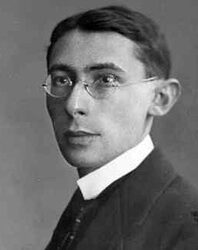
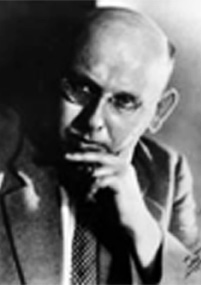
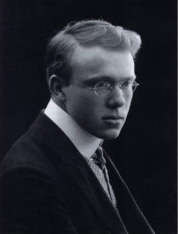
Pavel Haas was born into a wealthy and prominent Jewish family in the Moravian capital of Brno.  This was a city with a rich cultural life, and it was during Haas’ childhood that Leoš Janáček established himself as a leading figure, both regionally and nationally.  Haas became an important composer of theater and film music, composing music, for example, for Karel Ĉapek’s infamous RUR (Rossum’s Universal Robots).  During this period he worked several times with his brother, Hugo Haas, who became a successful actor in the United States after the war.  The war years severely limited Haas’ professional development, and in 1941 he was sent to Terezín.  Although at first he was too ill and depressed to compose, he later became part of the rich musical life of the camp, writing several works that are considered classics of that time.  He was deported to Auschwitz in mid-October 1944 and immediately killed.

Life

A compositional prodigy, Haas studied at the school of the Philharmonic in Brno until he was drafted into the Austrian army in 1917.  He remained in Brno during that time, and in 1919 he began the serious study of composition at the Brno conservatory, working with Jan Kunc and Vilém Petrželka.  Later (1920-22) he became a part of the master class of the conservatory led by Leoš Janáček.  As one of the only cultural figures in Moravia to have achieved international success, it is impossible to overestimate Janáček’s stature or his influence in Brno and Moravia more broadly.  Although Haas clearly went in his own direction, Leoš Janáček’s effect was profound.

Starting in his early 20’s, Haas was a prolific and versatile composer who drew on the leading trends of the time.  The 1930’s was a great age of Czech cinema, and one of its leading figures was Haas’ brother Hugo.  During this period Pavel Haas wrote several notable scores for both stage and film, and reached his maturity as a composer in the mid-1930’s with such works as the opera The Charlatan, String Quartets 2 and 3, and the Suite for Oboe.  A major work from this period, a large symphony, was left unfinished and completed only after Haas’ death.

When Czech society began to break down under the pressure of the Nazi presence, Haas, like other Jewish composers, took whatever steps he could to protect his interests.  In this case, this included divorcing his wife in order to shield her from anti-Semitic policies.  Haas was deported to Terezín in 1941.

Reports of Haas’ life in Terezín usually include the information that Haas was ill and depressed upon his arrival and only returned to some kind of creative productivity when the energetic and intrepid Gideon Klein put several sheets of blank music paper in front of him and urged him to return to his work.  While in Terezín, Haas wrote several works including, most notably, the Study for Strings, immortalized in a clip from the 1944 Nazi propaganda film created to show the camp as a kind of idyllic spa for Jews.  Here we see the composer sitting nervously and finally taking several stiff bows.  Conducted by Karel Ančerl in the film, this work was successfully revived after the war.  Among his greatest works, composed during his last year in Terezín, are the Four Songs on Chinese Poetry.  A mature composition, written on many different levels, the cycle was performed in a concert in June of 1944.

It was likely clear to any of the more highly placed prisoners that, as soon as the Red Cross visit and the propaganda film had been completed, there would be no reason to protect any of the long-term internees.  By the end of the summer things had begun to change, and huge transports started at the end of September 1944.  On October 16th, Haas was placed in a transport with other Terezín composers Klein, Krása, Ullmann, and Karel Ancerl.  According to Ančerl’s testimony, Haas, along with Ullmann and Krása, was immediately gassed.

Works

From his earliest period, Haas showed an equal affinity for abstract music and music based on text.  The most formative influence on his music was the compositional legacy of Leoš Janáček.  Janáček’s dramatic intensity played a role in Haas’ artistic development, but also his use of short motives and his use of Moravian musical elements.  Haas also had an affinity with Hebrew chant and incorporated these along with neoclassic and jazz idioms.

This integration of Janáček’s style with his own mature voice can be heard most notably in such works as the 1938 Suite for piano, in the String Quartet #3, with its synthesis of local and international musical elements, in the Suite for Oboe and Piano from 1939, and of course in the great dramatic work of his maturity, The Charlatan.  Here we have a compelling combination of surface and depth, immediate charm and subtlety.  These elements also seem to have been present in a powerful blend in Haas’ incomplete symphony, posthumously completed.  For example, in the final variations movement of the 3rd quartet we have Beethovenian depth, Janácek’s aphoristic approach, Moravian rhythms and references to Jewish folk tunes.

This deepening of Haas’ approach continued while the composer was in Terezín, reaching its apotheosis in the Four Songs on Chinese Poetry.  Here there is a kind of ideal, if agonizing and tragic, synthesis.  These songs of love and longing for home seem to capture the mood of Terezín as much as any other compositions.  Set as a series of interior monologues, and making periodic reference to such things as the Czech historical chorale “St. Wenceslaus,” the cycle offers us an affective world poised between life and death, between affirmation and complete despair.

Haas seems to have a kind of personal relationship with the “St. Wenceslaus” melody, a tune used literally hundreds of time by composers in the Czech Lands over the centuries.  It is present in the incomplete symphony, and used several times in the Suite for Oboe and Piano.  The songs from Chinese Poetry also refer to it, obliquely in an especially poignant way.

By Michael Beckerman

Works List

Stage and Theater Music

Sarlatán (The Charlatan) (tragi-comic op, 31934–7, Brno, 2 April 1938

7 scores of incidental theater music

3 film scores


Vocal

6 písní v lidovém tónu [6 Songs in Folk Tone], op.1, S, pf/orch, 1918–19 3 písneĕ [3 Songs], op.2 (J.S. Machar), S/T, pf, 1919–20

Cínské písneĕ [Chinese Songs], op.4 (Chinese poetry), Alto and Piano 1921

Fata Morgana, op.6 (R. Tagore), T, pf qnt, 1923

Vyvolená [The Chosen One], op.8 (J. Wolker), Tenor, flute horn, violin and piano 1927

Karneval [The Carnival], op.9 (D. Chalupa), male chorus, 1928–9

Ps xxix, op.12, Bariton, female chorus, organ, orchestra 1932

7 písní v lidovém tónu [7 Songs in Folk Tone], op.18 (F.L. Čelakovský), voice and piano, 1940

Al s’fod [Do not Lament] (D. Shimoni), male chorus, 1942

4 písneĕ na slova Čcínské poezie [4 Songs on Chinese Poetry] (trans. B. Mathesius), Baritone and piano, 1944


Orchestral

Zesmutnlé scherzo [Melancholy Scherzo], op.5, 1921

Suite from ‘The Charlatan’, op.14, 1936

Sym., 1941, inc. (2 movts)

Study for Strings, 1943

Chamber and Solo Instrumental Music

String Quartet no.1, op.3, 1920

String Quartet no.2, op.7, with jazz band ad lib, 1925

Wind Quintet, op.10, 1929

Suite for Piano, op.13, 1935

String Quartet no.3, op.15, 1938

Suite for Oboe and Piano, 1939

Bibliography

Karas, Joža.  Music in Terezín.  Pendragon Press.

Peduzzi, Lubomir. ‘Haasova “hobojová” suita’ [Haas’s ‘Oboe’ Suite], Hudební rozhledy, xii
(1959), 793–8

_____. ‘Vlastenecká symbolika posledních dĕl Pavla Haase’ [Patriotic symbols
in Haas’s final works], Sborník JAMU, iii (Brno, 1961), 75–93

_____.‘Složeno v Terezín’ [Composed in Terezín], Hudební rozhledy, xxi (1968),
152–3

_____. Pavel Haas: Život a dílo skladatele [Life and work of the composer] (Brno,
1993; Ger. trans., 1996)

_____. O hudbĕ v Terezínském ghettu: soubor kritických statí [Music in the Terezín
ghetto: a collection of critical studies] (Brno, 1999), 58–65, 79–84

Berthold Goldschmidt

Berthold Goldschmidt

1890-1987

Hans Gál (1890-1987) was a prolific composer, teacher and scholar throughout his long life. At the height of his powers and his popularity, he was forced to leave Germany and Austria, never again able to achieve the cultural significance he had enjoyed during the years of the Weimar Republic. Gál arrived in England just before the war, and his assimilation was postponed when he, like many other Jewish refugees, was imprisoned in several internment camps for enemy aliens. After the war he became a revered figure in Edinburgh’s musical life and continued composing well into his nineties.

Life

Gál was born near Vienna in 1890. Unlike many other composers of the time, he did not really become seriously interested in music until his early teens. Rather, he was a well-rounded child with a broad cultural background. This stood him well in his career, which represents an unusual synthesis of scholarship and creativity.

Attending the New Vienna Conservatory, Gál became a pupil of Richard Robert and also studied music history and theory. His serious efforts at composition began around this time. In 1912 his cantata Von ewiger Freude was completed and performed a year later at the Gesellschaft der Musikfreunde. In the years preceding the war, he wrote a series of works and had his initial successes. In 1915 he won the newly created “State Prize for Composition.”

He was drafted into the army in 1915 and spent time in Serbia and the Polish Carpathians. While he had many tasks to perform he kept up with his composition, sowing the seeds for his first important opera Der Arzt der Sobeide (Sobeide’s Doctor) set in 16th-century Granada. This work, drawing on Spanish musical idioms received rave reviews at the time and launched Gál’s successful career as an opera composer.

The 1920’s was the time of Gál’s rapid rise as a composer and teacher. Awarded the Rothschild Prize in 1919 he was appointed as a lecturer in Music Theory at the University of Vienna. He also worked at the Neue Wiener Buhne where he provided instrumental music for the theater. In 1924 his opera Die Heilige Ente (The Sacred Duck), with a Chinese setting and a libretto by Karl Michael von Levetzow was premiered and was a great success, performed in more than twenty theaters, remaining in the repertoire until 1933. His many contacts at the time with conductors George Szell and Erich Kleiber, and with composers Berg and Webern, went hand-in-hand with his growing popularity as a creative figure in the Weimar Republic. He won a prize for his first published symphony, and his Overture to a Puppet Play became an international hit.

It was during this period that he also began to work as a serious scholar. He was co-editor of the complete works of Brahms, along with Eusebius Mandyczewski, editing ten volumes, and he also edited numerous volumes in other series as well.

In 1929 Gál became Director of the Conservatory in Mainz, a sign of great distinction since he was chosen from more than 100 applicants and supported by such figures as Fritz Busch and Furtwängler. At this point he was a leading figure in German musical life, and his activities as a composer continued to thrive in the genres of chamber music, orchestral music and opera. It was during this period that he completed what was to be his last opera composed on European soil, Die Beiden Klaas (Rich Claus, Poor Claus).

Gál’s standing in the world of German music came to a complete and sudden end in March of 1933 when, shortly after the Nazis occupied Mainz, Gál was summarily fired from his position at the conservatory. Misunderstanding the nature and intentions of the Nazis, Gál tried for more than a year to protest this decision, eventually moving back to Austria. During this period several planned productions of Die Beiden Klaas were aborted because of the political climate, including a performance to be conducted by Bruno Walter at the Vienna State Opera. It was only premiered in England in 1990, on the occasion of what would have been the composer’s 100th birthday.

Gál’s return to Austria was no happy occasion. Political activity in Austria already forecasted the Anschluss of 1938. Gál, like many others, had to scramble to make ends meet, yet continued to compose and occupy himself as an editor. His most ambitious piece of the time was De profundis, a setting of Baroque poems. Composed at a time of despair and scant hope, it was, in the composer’s words dedicated to “the memory of this time, its misery and its victims.” Things, however, would not get better, and by 1938 the Gáls realized they would have to get out. Several family members who stayed behind were either killed or committed suicide.

Intending originally to come to the United States, Gál settled in England with his family. At first his luck was good: he met one of the great figures of English musical life, Sir Donald Tovey, who very much wanted him to become a part of the conservatory in Edinburgh. Shortly after this, though, Tovey had a heart attack, and Gál’s plans did not come to fruition. Gál remained in London and did not move to Edinburgh until war broke out.

In one of the less pleasant moves in the history of the Second World War in Britain, Winston Churchill, like Roosevelt in the United States, decided to imprison many so-called “enemy aliens.” This absurdly created a situation where actual Nazis were imprisoned side by side with Jewish refugees who were fleeing Nazism. Gál was arrested in March of 1940 and kept imprisoned, first in Huyton near Liverpool, and then on the Isle of Man until the fall. While the process was disorienting, unpleasant and sometimes frightening, many musicians and intellectuals were incarcerated, and they quickly set up lectures and concerts. Gál wrote a Huyton Suite for two violins and flute, the only instruments available, and later wrote music for a revue, What a Life based on camp experiences.

Although the moments after the war were filled with uncertainty, Gál finally did receive a position at the University of Edinburgh, and was awarded an honorary doctorate there in 1948. He had also been offered a position at the University of Vienna, but decided he could not uproot once again, though he went back in 1958 to receive the Austrian State Prize. Gál became an essential part of Edinburgh’s musical life, particular with his role in the creation and ongoing success of the Edinburgh Music Festival, under the initial direction of Rudolf Bing.

For the remaining forty years of his life, following the end of the war, Gál was productive as a teacher, scholar and as a composer. It was during this period that he wrote monographs on Brahms, Wagner, Schubert and Verdi. Although he no longer commanded the European stage, as he had during the 1920s, Gál’s compositional activity was unabated, and his music from this period is attractive, innovative and distinctive. Considering the composer’s identification with the music of his native Vienna, and his love for Brahms, Schubert and Johann Strauss, as well as his interest in Early Music, it is fitting that his last listed composition is a Moment Musical for treble recorder composed at age ninety-six the year before his death.

By Michael Beckerman

Works List

Operas

Der Arzt der Sobeide (Sobeide‘s Doctor), Op.4 (1917-1918).

Die Heilige Ente (The Sacred Duck), Op.15 (1920-1921).

Das Lied der Nacht (The Song of the Night), Op.23 (1924-5).

Die Beiden Klaas (Rich Claus, Poor Claus) Op. 42(1932-1933).

Orchestral

Serbische Weisen (Serbian Dances), Op.3 (1916).

Ouvertüre zu einem Puppenspiel (Overture to a puppet play), Op.20 (1923).

Divertimento, Op.22 (1924).

Requiem for Mignon, Op.26 (1922).

Symphony No. 1, Op.30(1927).

Ballet Suite ‘Scaramuccio’ Op.36 (1929).

Der Zauberspiegel (The Magic Mirror), Op.38 (1930).

Burlesque, Op.42b (1932-1933).

A Pickwickian Overture, Op.45 (1939-1944).

Serenade, Op.46 (1937).

Lilliburlero, Op.48 (1945?).

Symphony No. 2, Op.53 (1942-1943).

Caledonian Suite, Op.54 (1949).

Symphony No. 3, Op.62 (1951-1952).

Biedermeier Dances, Op.66 (1954).

Mäander (Meanders), Op.69 (1954-1955).

Lebenskreise (Life Cycles), Op.70 (1955).

Music for String Orchestra, Op.73 (1957).

Idyllikon, Op.70 (1958-1959).

Sinfonietta No. 1, Op.81 (1961).

Sinfonietta No. 2, Op.86 (1966).

Triptych, Op.100 (1970).

Symphony No. 4, Op. 105 (1974).

Capriccio (1973).

Hin und Her (1933).

Promenadenmusik (1926).

Vorspiel zu einer Feier (Prelude to a Pageant) (1965).

Brahms: Hungarian Dances nos. 8 and 9

Gluck: Symphony in G minor (1934).

Haydn: Overture to ‘Armida’ (1939).

Haydn: Symphony in B flat (1938).

Wolf: Corregidor Suite

Beethoven: Three Marches

Handel: Overture to ‘Bérénice’

Handel: Overture to ‘Faramondo’

Divertissement (1939).

Schubert: Two Marches Militaires

Concertos

Concerto for violin and orchestra, Op.39 (1932).

Concertino for piano and string orchestra, Op.43. (1934).

Concertino for violin and string orchestra, Op.52 (1939).

Concertino for organ and string orchestra, Op.55 (1948).

Concerto for piano and orchestra, Op.57 (1948).

Concerto for violoncello and orchestra, Op.67 (1944-1949).

Concertino for treble recorder (flute) and string quartet (string orchestra or piano), Op.82(1961).

Concertino for cello and string orchestra, Op.87 (1966).

Suite for viola/alto saxophone and orchestra (piano), Op.102a/b (1949-1950).

Chamber Music

Heurigen Variations for piano trio, Op.9 (1914).

Five intermezzi for string quartet, Op.10 (1914).

Four chamber pieces for mandolin, violin, viola and liuto, Op.10a (also for mandolin orchestra, op. 10b). (1937).

Quartet for violin, viola, cello and piano, Op.13 (1914?).

String Quartet I, Op.166 (1916).

Piano Trio, Op.18 (1923).

Two religious songs for soprano, organ and gamba/cello, Op.21 (1923).

Divertimento for wind octet, Op.22 (also for orchestra = Op. 22a). (1924).

String Quartet II, Op.35 (1929).

Serenade for string trio, Op.41 (1932).

Nachtmusik (Night Music) for soprano solo, male-voice choir, flute, cello and piano, Op.44 (1933).

Little Suite for two violins and violoncello (piano ad lib.), Op.49a (1947-1948).

Trio for piano, violin (flute, oboe) and violoncello, Op.49b.

Sonatina for 2 mandolins, Op.59a. (1952).

Suite for 3 mandolins, Op.59b (1952).

Improvisation, Variations and Finale on a Theme by Mozart for mandolin, violin, viola and liuto (also mandolin orchestra), Op.60 Also for string quartet = Op. 60b. (1934).

Biedermeier Dances for mandolin orchestra, Op.66 (or mandolin, violin, mandola, guitar, mandoloncello and bass mandolin = Op. 66b). (1954).

Suite for recorder and violin, Op.68a. (1954-1955).

Six two-part inventions for descant and treble recorder, Op.68b.

Divertimento for 2 treble recorders and guitar, Op.68c.

Quartettino for recorder quartet, Op.78.

Divertimento for mandolin and harp or piano (flute, viola and harp), Op.80. (1957).

Trio-Serenade for treble recorder (flute), violin and cello, Op.88 (1966).

Divertimento for bassoon and cello, Op.90(1) (1958).

Divertimento for violin and cello, Op.90(2) (1967).

Divertimento for violin and viola, Op.90(3) (1969).

Huyton Suite for flute and 2 violins, Op.92 (1940).

Serenade for clarinet, violin and cello, Op.93 (1935).

Trio for oboe, violin and viola, Op.94

String Quartet III String quartet, Op.95 (1969).

Sonata for 2 violins and piano, Op.96 (1941).

Trio for violin, clarinet and piano, Op.97 (1950).

Divertimento for 3 recorders, Op.98 (1970).

String Quartet IV String quartet, Op.99 (1970).

Trio for violin, viola d‘amore (viola) and cello, Op.104 (1971).

String quintet, Op.106 (1976-1977).

Quintet for clarinet and string quartet,Op.107 (1977).

Intrata Giocosa for 3 recorders, 2 violins and cello. (1958).

Lyrical Suite to Browning‘s ‘Pippa passes’, for soprano, flute and string quartet (flute, mandolin and string trio). (1934).

Scherzando for two violins and cello.

What a Life for middle voice(s), flute, clarinet, string quartet and piano. (1940).

Handel: Suite of Airs and Dances arr. for strings (various) and piano ad lib.. (1954).

Vocal Works

Von ewiger Freude (Of Eternal Joy) Cantata for four female voices and double female choir, with organ and two harps, Op.1 (1912).

Vom Bäumlein, das andere Blätter hat gewollt (The Tree that

Wanted Different Leaves) for alto solo, six-part female choir and small orchestra, Op.2 (1916).

Phantasien (Fantasias) for alto solo, female choir, clarinet, horn, harp (piano) and string quartet (string orchestra), Op.5 (1919).

Two songs for 4-part male-voice choir a cappella, Op.8 (1914).

Three songs for 3- and 4-part male-voice choir with piano (small orchestra), Op.11 (1910-1911).

Three songs for female choir with piano, Op.12 (1910-1913).

Kinderverse (Children‘s verses) for female choir a cappella, Op.14 (1921?).

Motette (Motet) for mixed choir a cappella, Op.19 (1924).

Two religious songs for soprano, organ and gamba/cello. Op.21 (1923).

Herbstlieder (Autumn Songs) for female choir a cappella, Op.25 (1918-1925).

Requiem for Mignon for baritone, 2 choirs, organ and orchestra, Op.26 (1922).

Epigrams for mixed choir a cappella, Op27. (1926).

Three songs for 3 female voices/female choir with piano, Op.31 (1928).

Five Serious Songs for male-voice choir a cappella, Op.32 (1928).

Five songs for middle voice and piano (+ harp), Op.33 (1917-1921).

Drei Porträtstudien (Three Portrait Studies) for male-voice choir with piano, Op.34 (1929).

Three Songs for mixed choir a cappella, Op.37 (1929/30).

Three Idylls to poems by Wilhelm Busch for 4-part male-voice choir with piano, Op.40 (1934).

Nachtmusik (Night Music) for soprano solo, male-voice choir, flute, cello and piano, Op.44 (1933).

Summer Idylls (Stille Lieder) Four songs for female choir a cappella, Op.47 (1935).

De Profundis Cantata to German barock poems, for four soloists, mixed choir and orchestra, Op.50 (1936-1937).

Four Madrigals for mixed choir (SATB) a cappella, Op.51 (No.1, 2, 3 also for female choir a cappella = Op.51a). (1939).

Four part-songs for mixed voices a cappella, Op.61 (1953?).

Two songs for male-voice choir a cappella, Op.63 (1954).

Lebenskreise (Life Cycles) Symphonic cantata to poems by Hölderlin and Goethe, for 4 soloists, mixed choir and orchestra, Op.70 (1955).

Satirikon Four aphorisms for 4 male voices a cappella, Op.72

Jugendlieder (Songs of Youth) Five songs for female voices a cappella,

Op.75 (1959).

A Clarion Call for double female choir a cappella, Op.76 (1959).

Of a Summer Day Lyrical suite for 3-part female choir with (mezzo)soprano solo and string orchestra, Op.77 (1951).

Spätlese Six songs for male-voice choir a cappella, Op.91 (1966/67).

Quodlibet: ‘Loreley‘ or ‘On the Rhein Steamer‘ for four voices (SATB) a cappella. (1928).

In neue Räume (Into New Rooms) for mixed choir, flute, oboe, two clarinets, bassoon, two horns and strings. (1965).

Lyrical Suite to Browning’s ‘Pippa passes’, for soprano, flute and string quartet (flute, mandolin and string trio). (1934).

Six Women’s Choruses

Six part-songs for mixed voices (SATB). (1939, 1966).

Lyric Poems for mixed voices and piano. (1942).

Three vocal quartets for mixed voices and piano. (1934).

Two Anthems (1) for mixed voices and organ ad lib; (2) for soprano, mixed voices and organ. (1936-1937).

Vom heiligen Ehstand (On the holy marriage state) for soprano and baritone solo with piano. (1928).

What a Life for middle voice(s), flute, clarinet, string quartet and piano. (1940).

Folksongs from the Volksliederbuch für die Jugend arr. by Hans Gál.

Four British folk-songs arr. for mixed choir (SATB) a cappella (English and German).

Handel: 6 Italian Arias arr. for soprano, violin and piano by Hans Gál.

Morgengruss, Lockruf der Mutter Provençale folk-songs arr. for female voices a cappella.

Schütz: Two Dialogues ed. and arr. for mixed voices and piano (organ) by Hans Gál.

Six folk-songs arr. for male chorus (TTBB) a cappella. (1930-1931).

Three German folk-songs arr. for male-voice choir (TTBB).

Three old songs arr. for male-voice choir (TTBB).

Zelter: Bundeslied arr. for 4-part male-voice choir.

Five Provençale folk-songs arr. for female choir (SSA) a cappella by Hans Gál.

Purcell: ‘No, resistance is but vain’ duet for soprano and alto with continuo (or string orchestra) arranged and edited by Hans Gál.

Bibliography

Books

Waldstein, W.: Hans Gál. Eine Studie. Wien: Elisabeth Lafite (Österreichischer Bundesverlag), 1965.


Exhibitions/Catalogues

100 Jahre Mainzer Conservatorium. Peter Cornelius Conservatorium, Mainz, 1982.

Musikalische Dokumentation: Hans Gál. Musiksammlung der Österreichischen Nationalbibliothek. Institut für Österreichische Musikdokumentation, 1987.

Hans Gál zum 100. Geburtstag. Zu einer Austellung im Mainzer Rathaus mit Dokumenten zu seinem Leben und Wirken in Mainz. (Centenary Exhibition). Kulturdezernat der Stadt Mainz, Mainz, 1990.

Haas, Michael and Patka, Marcus G.: Musik des Aufbruchs: Hans Gál und Egon Wellesz. Continental Britons. Mandelbaum Verlag, Vienna 2004. Exhibition at the Jewish Museum, Vienna, 25th Feb-2nd May, 2004. ISBN 3-85476-116-3.

Articles

Anderson, M.J.: ‘Hans Gál’. In British Music Society Journal IX, p.33-44, 1987.

Badura-Skoda, P.: ‘Zum Gedenken an Hans Gál’. In Österreichische Musikzeitschrift, Vol. 43 No.4, 1988, p.177.

Becker, Alexander: ‘Hans Gál’. Der österreichische Komponist Hans Gál im Fokus der Zupfmusik. Part I: Leben und Werk, in ZUPFMUSIKmagazin 4, 2002, p. 159-60. Part II: Das Zusammenwirken in Wien mit Vinzenz Hladky, in Concertino 2003/2, p. 76-78. Part III: Kammermusik mit Mandoline, in Concertino 2003/3. Part IV: Werke für Zupforchester, in Concertino 2004/1.

‘Bemerkenswerte Hans-Gál-Aufführungen’. In Das Podium, Mainzer Liedertafel und Damengesangverein. Mainz, 1958, p.2.

Beyer, J.: ‘In conversation with Dr. Hans Gál’. In Edinburgh Quartet Newsletter. Edinburgh: November, 1985.

de Souza, C.: ‘The Continentals – Second Phase’. In British Opera in Retrospect. The British Music Society, 1986. p.115-116.

‘Dr.Hans Gál OBE.’ In Recorder & Music VI, 11, p.325, 1980.

Fox Gál, E. & Fox, A.: ‘Hans Gál’. In Music & Musicians, August, 1985, p.12-13

Fox Gál, E.: ‘Hans Gál’. In Österreichische Musikzeitschrift, Vol. 43 No. 4, 1988, p.174-176.

Gail H.R.: ‘Das Schaffen Hans Gáls. Eine Skizze zur Gegenwartsmusik’. In Mainzer Journal 277, 28.November, 1932.

Green, P.: ‘Attention please for Dr. Hans Gál … ‘A Contemporary Romantic’’. In Clarinet & Saxophone Vol. XI, 4, p.22-23, 1986.

Green, P.: ‘Hans Gál 1890-1987’. In Clarinet & Saxophone Vol. XIII, 2, 1988, p.8.

Holler, K.-H.: ‘Hans Gál zu Ehren’. In Mitteilungen der Arbeitsgemeinschaft für mittelrheinische Musikgeschichte 25. Mainz, 1972.

Keim, A.M.: ‘‘Der Dom in meinen Zimmer über dem Kamin …”. Zum Tod des Komponisten und Dirigenten Hans Gál’. In Allgemeine Zeitung, Mainz: 14.Oktober, 1987.

Keim, A.M.: ‘Erinnerungen an Hans Gál’. In Mainz, 8, 1988, p.71-73.

Kroll, E.: ‘Vom Schaffen Gál‘s’. In Simrock Jahrbuch 2, p.168-175, 1929

Lang, I.: ‘Hundert Jahre Mainzer Konservatorium’. In Hundert Jahre Mainzer Konservatorium, p.22-32. Mainz, 1982.

Leighton K.: ‘Obituary’. In The Independent, London: 9.October, 1987.

Lewinski, W.-E.von: ‘Ein Komponist und Wissenschaftler. Hans Gál zum 75. Geburtstag’. Allgemeine Zeitung, Mainz: 4.August, 1965.

Lewinski, W.-E.von: ‘Gedenkblatt für Hans Gál. Zum 80.Geburtstag des Komponisten’. Allgemeine Zeitung, Mainz: 8.August, 1970.

Lewinski, W.-E.von: ‘Heiter und hintersinnig. ’Hommage à Hans Gál‘ zum 90.Geburtstag des Komponisten‘. Allgemeine Zeitung, Mainz: 23.September 1980.

Moncrieff, Margaret: ‘Hans Gál (1890-1987). A personal tribute and memoir’. In The British Music Society News, 97, March 2003, pp. 369-74. Also available on the web: http://www.musicweb.uk.net/classrev/2003/Mar03/Gál.htm

Nettl P.: ‘Hans Gál’. In Musikpädagogische Zeitschrift XVI (5), p.1-3, 1926

Nettl P.: ‘Hans Gál.In Neue Musikzeitung XXXXIII, p.91, 1921

‘Obituary’. In The Times, London: 7.October, 1987.

Oehl K.: ‘Ehrung für Hans Gál’. In Das Neue Mainz. Mainz: Municipal Press Office, January 1961.

Oliver, R. ‘Remembering three great musicians’. In Sound Waves 12. The Royal Borough of Kensington & Chelsea Libraries and Arts Service, Winter, 1987.

Oliver, R.: ‘Hans Gál at 95’. In Tempo 155, 1985. p.2-7.

Oliver, R.: ‘Hans Gál, b. 5 August 1890’. In Sound Waves II. The Royal Borough of Kensington & Chelsea Libraries and Arts Service, Juni, 1985

Oliver, R.: ‘Hans Gál. The Compleat Musician’. In Composer 38, 1971, p.5-9.

Petri, L.: ‘Hans Gál – dem 80jährigen’. In Das Neue Mainz. Mainz, August 1970, p.6.

Purser, J.: ‘Hans Gál – a personal appreciation’. In Stretto Vol. 7 No. 4, Winter, 1988, p.24-27.

Rickards, G.: ‘Three emigrés: Gál, Gerhard and Goldschmidt’. http://www.musicweb.uk.net/ggg.htm, 2001 (update 2003).

Schmidtgen O.: ‘Lebenskreise. Symphonische Kantate von Hans Gál’. In Das Podium, Mainzer Liedertafel und Damengesangverein. Mainz, 1956.

Schmidtgen, O.: ‘Hans Gál und sein Werk’. In Das Podium. Mainzer Liedertafel und Damengesangverein. Mainz: August 1960, p.5-7.

Schmidtgen, O.: ‘Hans Gál’. In Österreichische Musikzeitschrift p.1-2, 1957.

Schmidtgen, O.: ‘Hans Gáls neues Klavierwerk’. In Das Podium. Mainzer Liedertafel und Damengesangverein. Mainz: Januar/Februar 1961, p.1-2.

Schmidtgen, O.: ‘Vier Werke von Hans Gál’. In Das Podium. Mainzer Liedertafel und Damengesangverein. Mainz: November 1960.

Schneider, R.: ‘Vier Erstaufführungen von Hans Gál’. In Das Podium. Mainzer Liedertafel und Damengesangverein. Mainz: December 1960.

Schönzeler H.-H.: ‘Hans Gál. The man and his music’. In Music and Musicians International, Januar, 1988, p.22-23.

Seifert, W.: ‘Gespräch mit Hans Gál’. In Zeitschrift für Musikpädagogik 17, März, 1982, p.3-13.

Stefan, P.: ‘Hans Gál. Zur Stunde österreichischer Komponisten’. In Radio Wien 29, p.5, 1929 (Broadcast 21st April, 1933).

Weiskopf, H.: ‘Hans Gál’. In Rheinische Musik- und Theaterzeitung. Köln, 8. April 1930, p.106-108

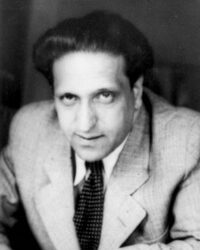
Hans Gal

Hans Gal

1890-1987

Hans Gál (1890-1987) was a prolific composer, teacher and scholar throughout his long life. At the height of his powers and his popularity, he was forced to leave Germany and Austria, never again able to achieve the cultural significance he had enjoyed during the years of the Weimar Republic. Gál arrived in England just before the war, and his assimilation was postponed when he, like many other Jewish refugees, was imprisoned in several internment camps for enemy aliens. After the war he became a revered figure in Edinburgh’s musical life and continued composing well into his nineties.

Life

Gál was born near Vienna in 1890. Unlike many other composers of the time, he did not really become seriously interested in music until his early teens. Rather, he was a well-rounded child with a broad cultural background. This stood him well in his career, which represents an unusual synthesis of scholarship and creativity.

Attending the New Vienna Conservatory, Gál became a pupil of Richard Robert and also studied music history and theory. His serious efforts at composition began around this time. In 1912 his cantata Von ewiger Freude was completed and performed a year later at the Gesellschaft der Musikfreunde. In the years preceding the war, he wrote a series of works and had his initial successes. In 1915 he won the newly created “State Prize for Composition.”

He was drafted into the army in 1915 and spent time in Serbia and the Polish Carpathians. While he had many tasks to perform he kept up with his composition, sowing the seeds for his first important opera Der Arzt der Sobeide (Sobeide’s Doctor) set in 16th-century Granada. This work, drawing on Spanish musical idioms received rave reviews at the time and launched Gál’s successful career as an opera composer.

The 1920’s was the time of Gál’s rapid rise as a composer and teacher. Awarded the Rothschild Prize in 1919 he was appointed as a lecturer in Music Theory at the University of Vienna. He also worked at the Neue Wiener Buhne where he provided instrumental music for the theater. In 1924 his opera Die Heilige Ente (The Sacred Duck), with a Chinese setting and a libretto by Karl Michael von Levetzow was premiered and was a great success, performed in more than twenty theaters, remaining in the repertoire until 1933. His many contacts at the time with conductors George Szell and Erich Kleiber, and with composers Berg and Webern, went hand-in-hand with his growing popularity as a creative figure in the Weimar Republic. He won a prize for his first published symphony, and his Overture to a Puppet Play became an international hit.

It was during this period that he also began to work as a serious scholar. He was co-editor of the complete works of Brahms, along with Eusebius Mandyczewski, editing ten volumes, and he also edited numerous volumes in other series as well.

In 1929 Gál became Director of the Conservatory in Mainz, a sign of great distinction since he was chosen from more than 100 applicants and supported by such figures as Fritz Busch and Furtwängler. At this point he was a leading figure in German musical life, and his activities as a composer continued to thrive in the genres of chamber music, orchestral music and opera. It was during this period that he completed what was to be his last opera composed on European soil, Die Beiden Klaas (Rich Claus, Poor Claus).

Gál’s standing in the world of German music came to a complete and sudden end in March of 1933 when, shortly after the Nazis occupied Mainz, Gál was summarily fired from his position at the conservatory. Misunderstanding the nature and intentions of the Nazis, Gál tried for more than a year to protest this decision, eventually moving back to Austria. During this period several planned productions of Die Beiden Klaas were aborted because of the political climate, including a performance to be conducted by Bruno Walter at the Vienna State Opera. It was only premiered in England in 1990, on the occasion of what would have been the composer’s 100th birthday.

Gál’s return to Austria was no happy occasion. Political activity in Austria already forecasted the Anschluss of 1938. Gál, like many others, had to scramble to make ends meet, yet continued to compose and occupy himself as an editor. His most ambitious piece of the time was De profundis, a setting of Baroque poems. Composed at a time of despair and scant hope, it was, in the composer’s words dedicated to “the memory of this time, its misery and its victims.” Things, however, would not get better, and by 1938 the Gáls realized they would have to get out. Several family members who stayed behind were either killed or committed suicide.

Intending originally to come to the United States, Gál settled in England with his family. At first his luck was good: he met one of the great figures of English musical life, Sir Donald Tovey, who very much wanted him to become a part of the conservatory in Edinburgh. Shortly after this, though, Tovey had a heart attack, and Gál’s plans did not come to fruition. Gál remained in London and did not move to Edinburgh until war broke out.

In one of the less pleasant moves in the history of the Second World War in Britain, Winston Churchill, like Roosevelt in the United States, decided to imprison many so-called “enemy aliens.” This absurdly created a situation where actual Nazis were imprisoned side by side with Jewish refugees who were fleeing Nazism. Gál was arrested in March of 1940 and kept imprisoned, first in Huyton near Liverpool, and then on the Isle of Man until the fall. While the process was disorienting, unpleasant and sometimes frightening, many musicians and intellectuals were incarcerated, and they quickly set up lectures and concerts. Gál wrote a Huyton Suite for two violins and flute, the only instruments available, and later wrote music for a revue, What a Life based on camp experiences.

Although the moments after the war were filled with uncertainty, Gál finally did receive a position at the University of Edinburgh, and was awarded an honorary doctorate there in 1948. He had also been offered a position at the University of Vienna, but decided he could not uproot once again, though he went back in 1958 to receive the Austrian State Prize. Gál became an essential part of Edinburgh’s musical life, particular with his role in the creation and ongoing success of the Edinburgh Music Festival, under the initial direction of Rudolf Bing.

For the remaining forty years of his life, following the end of the war, Gál was productive as a teacher, scholar and as a composer. It was during this period that he wrote monographs on Brahms, Wagner, Schubert and Verdi. Although he no longer commanded the European stage, as he had during the 1920s, Gál’s compositional activity was unabated, and his music from this period is attractive, innovative and distinctive. Considering the composer’s identification with the music of his native Vienna, and his love for Brahms, Schubert and Johann Strauss, as well as his interest in Early Music, it is fitting that his last listed composition is a Moment Musical for treble recorder composed at age ninety-six the year before his death.

By Michael Beckerman

Works List

Operas

Der Arzt der Sobeide (Sobeide‘s Doctor), Op.4 (1917-1918).

Die Heilige Ente (The Sacred Duck), Op.15 (1920-1921).

Das Lied der Nacht (The Song of the Night), Op.23 (1924-5).

Die Beiden Klaas (Rich Claus, Poor Claus) Op. 42(1932-1933).

Orchestral

Serbische Weisen (Serbian Dances), Op.3 (1916).

Ouvertüre zu einem Puppenspiel (Overture to a puppet play), Op.20 (1923).

Divertimento, Op.22 (1924).

Requiem for Mignon, Op.26 (1922).

Symphony No. 1, Op.30(1927).

Ballet Suite ‘Scaramuccio’ Op.36 (1929).

Der Zauberspiegel (The Magic Mirror), Op.38 (1930).

Burlesque, Op.42b (1932-1933).

A Pickwickian Overture, Op.45 (1939-1944).

Serenade, Op.46 (1937).

Lilliburlero, Op.48 (1945?).

Symphony No. 2, Op.53 (1942-1943).

Caledonian Suite, Op.54 (1949).

Symphony No. 3, Op.62 (1951-1952).

Biedermeier Dances, Op.66 (1954).

Mäander (Meanders), Op.69 (1954-1955).

Lebenskreise (Life Cycles), Op.70 (1955).

Music for String Orchestra, Op.73 (1957).

Idyllikon, Op.70 (1958-1959).

Sinfonietta No. 1, Op.81 (1961).

Sinfonietta No. 2, Op.86 (1966).

Triptych, Op.100 (1970).

Symphony No. 4, Op. 105 (1974).

Capriccio (1973).

Hin und Her (1933).

Promenadenmusik (1926).

Vorspiel zu einer Feier (Prelude to a Pageant) (1965).

Brahms: Hungarian Dances nos. 8 and 9

Gluck: Symphony in G minor (1934).

Haydn: Overture to ‘Armida’ (1939).

Haydn: Symphony in B flat (1938).

Wolf: Corregidor Suite

Beethoven: Three Marches

Handel: Overture to ‘Bérénice’

Handel: Overture to ‘Faramondo’

Divertissement (1939).

Schubert: Two Marches Militaires

Concertos

Concerto for violin and orchestra, Op.39 (1932).

Concertino for piano and string orchestra, Op.43. (1934).

Concertino for violin and string orchestra, Op.52 (1939).

Concertino for organ and string orchestra, Op.55 (1948).

Concerto for piano and orchestra, Op.57 (1948).

Concerto for violoncello and orchestra, Op.67 (1944-1949).

Concertino for treble recorder (flute) and string quartet (string orchestra or piano), Op.82(1961).

Concertino for cello and string orchestra, Op.87 (1966).

Suite for viola/alto saxophone and orchestra (piano), Op.102a/b (1949-1950).

Chamber Music

Heurigen Variations for piano trio, Op.9 (1914).

Five intermezzi for string quartet, Op.10 (1914).

Four chamber pieces for mandolin, violin, viola and liuto, Op.10a (also for mandolin orchestra, op. 10b). (1937).

Quartet for violin, viola, cello and piano, Op.13 (1914?).

String Quartet I, Op.166 (1916).

Piano Trio, Op.18 (1923).

Two religious songs for soprano, organ and gamba/cello, Op.21 (1923).

Divertimento for wind octet, Op.22 (also for orchestra = Op. 22a). (1924).

String Quartet II, Op.35 (1929).

Serenade for string trio, Op.41 (1932).

Nachtmusik (Night Music) for soprano solo, male-voice choir, flute, cello and piano, Op.44 (1933).

Little Suite for two violins and violoncello (piano ad lib.), Op.49a (1947-1948).

Trio for piano, violin (flute, oboe) and violoncello, Op.49b.

Sonatina for 2 mandolins, Op.59a. (1952).

Suite for 3 mandolins, Op.59b (1952).

Improvisation, Variations and Finale on a Theme by Mozart for mandolin, violin, viola and liuto (also mandolin orchestra), Op.60 Also for string quartet = Op. 60b. (1934).

Biedermeier Dances for mandolin orchestra, Op.66 (or mandolin, violin, mandola, guitar, mandoloncello and bass mandolin = Op. 66b). (1954).

Suite for recorder and violin, Op.68a. (1954-1955).

Six two-part inventions for descant and treble recorder, Op.68b.

Divertimento for 2 treble recorders and guitar, Op.68c.

Quartettino for recorder quartet, Op.78.

Divertimento for mandolin and harp or piano (flute, viola and harp), Op.80. (1957).

Trio-Serenade for treble recorder (flute), violin and cello, Op.88 (1966).

Divertimento for bassoon and cello, Op.90(1) (1958).

Divertimento for violin and cello, Op.90(2) (1967).

Divertimento for violin and viola, Op.90(3) (1969).

Huyton Suite for flute and 2 violins, Op.92 (1940).

Serenade for clarinet, violin and cello, Op.93 (1935).

Trio for oboe, violin and viola, Op.94

String Quartet III String quartet, Op.95 (1969).

Sonata for 2 violins and piano, Op.96 (1941).

Trio for violin, clarinet and piano, Op.97 (1950).

Divertimento for 3 recorders, Op.98 (1970).

String Quartet IV String quartet, Op.99 (1970).

Trio for violin, viola d‘amore (viola) and cello, Op.104 (1971).

String quintet, Op.106 (1976-1977).

Quintet for clarinet and string quartet,Op.107 (1977).

Intrata Giocosa for 3 recorders, 2 violins and cello. (1958).

Lyrical Suite to Browning‘s ‘Pippa passes’, for soprano, flute and string quartet (flute, mandolin and string trio). (1934).

Scherzando for two violins and cello.

What a Life for middle voice(s), flute, clarinet, string quartet and piano. (1940).

Handel: Suite of Airs and Dances arr. for strings (various) and piano ad lib.. (1954).

Vocal Works

Von ewiger Freude (Of Eternal Joy) Cantata for four female voices and double female choir, with organ and two harps, Op.1 (1912).

Vom Bäumlein, das andere Blätter hat gewollt (The Tree that

Wanted Different Leaves) for alto solo, six-part female choir and small orchestra, Op.2 (1916).

Phantasien (Fantasias) for alto solo, female choir, clarinet, horn, harp (piano) and string quartet (string orchestra), Op.5 (1919).

Two songs for 4-part male-voice choir a cappella, Op.8 (1914).

Three songs for 3- and 4-part male-voice choir with piano (small orchestra), Op.11 (1910-1911).

Three songs for female choir with piano, Op.12 (1910-1913).

Kinderverse (Children‘s verses) for female choir a cappella, Op.14 (1921?).

Motette (Motet) for mixed choir a cappella, Op.19 (1924).

Two religious songs for soprano, organ and gamba/cello. Op.21 (1923).

Herbstlieder (Autumn Songs) for female choir a cappella, Op.25 (1918-1925).

Requiem for Mignon for baritone, 2 choirs, organ and orchestra, Op.26 (1922).

Epigrams for mixed choir a cappella, Op27. (1926).

Three songs for 3 female voices/female choir with piano, Op.31 (1928).

Five Serious Songs for male-voice choir a cappella, Op.32 (1928).

Five songs for middle voice and piano (+ harp), Op.33 (1917-1921).

Drei Porträtstudien (Three Portrait Studies) for male-voice choir with piano, Op.34 (1929).

Three Songs for mixed choir a cappella, Op.37 (1929/30).

Three Idylls to poems by Wilhelm Busch for 4-part male-voice choir with piano, Op.40 (1934).

Nachtmusik (Night Music) for soprano solo, male-voice choir, flute, cello and piano, Op.44 (1933).

Summer Idylls (Stille Lieder) Four songs for female choir a cappella, Op.47 (1935).

De Profundis Cantata to German barock poems, for four soloists, mixed choir and orchestra, Op.50 (1936-1937).

Four Madrigals for mixed choir (SATB) a cappella, Op.51 (No.1, 2, 3 also for female choir a cappella = Op.51a). (1939).

Four part-songs for mixed voices a cappella, Op.61 (1953?).

Two songs for male-voice choir a cappella, Op.63 (1954).

Lebenskreise (Life Cycles) Symphonic cantata to poems by Hölderlin and Goethe, for 4 soloists, mixed choir and orchestra, Op.70 (1955).

Satirikon Four aphorisms for 4 male voices a cappella, Op.72

Jugendlieder (Songs of Youth) Five songs for female voices a cappella,

Op.75 (1959).

A Clarion Call for double female choir a cappella, Op.76 (1959).

Of a Summer Day Lyrical suite for 3-part female choir with (mezzo)soprano solo and string orchestra, Op.77 (1951).

Spätlese Six songs for male-voice choir a cappella, Op.91 (1966/67).

Quodlibet: ‘Loreley‘ or ‘On the Rhein Steamer‘ for four voices (SATB) a cappella. (1928).

In neue Räume (Into New Rooms) for mixed choir, flute, oboe, two clarinets, bassoon, two horns and strings. (1965).

Lyrical Suite to Browning’s ‘Pippa passes’, for soprano, flute and string quartet (flute, mandolin and string trio). (1934).

Six Women’s Choruses

Six part-songs for mixed voices (SATB). (1939, 1966).

Lyric Poems for mixed voices and piano. (1942).

Three vocal quartets for mixed voices and piano. (1934).

Two Anthems (1) for mixed voices and organ ad lib; (2) for soprano, mixed voices and organ. (1936-1937).

Vom heiligen Ehstand (On the holy marriage state) for soprano and baritone solo with piano. (1928).

What a Life for middle voice(s), flute, clarinet, string quartet and piano. (1940).

Folksongs from the Volksliederbuch für die Jugend arr. by Hans Gál.

Four British folk-songs arr. for mixed choir (SATB) a cappella (English and German).

Handel: 6 Italian Arias arr. for soprano, violin and piano by Hans Gál.

Morgengruss, Lockruf der Mutter Provençale folk-songs arr. for female voices a cappella.

Schütz: Two Dialogues ed. and arr. for mixed voices and piano (organ) by Hans Gál.

Six folk-songs arr. for male chorus (TTBB) a cappella. (1930-1931).

Three German folk-songs arr. for male-voice choir (TTBB).

Three old songs arr. for male-voice choir (TTBB).

Zelter: Bundeslied arr. for 4-part male-voice choir.

Five Provençale folk-songs arr. for female choir (SSA) a cappella by Hans Gál.

Purcell: ‘No, resistance is but vain’ duet for soprano and alto with continuo (or string orchestra) arranged and edited by Hans Gál.

Bibliography

Books

Waldstein, W.: Hans Gál. Eine Studie. Wien: Elisabeth Lafite (Österreichischer Bundesverlag), 1965.


Exhibitions/Catalogues

100 Jahre Mainzer Conservatorium. Peter Cornelius Conservatorium, Mainz, 1982.

Musikalische Dokumentation: Hans Gál. Musiksammlung der Österreichischen Nationalbibliothek. Institut für Österreichische Musikdokumentation, 1987.

Hans Gál zum 100. Geburtstag. Zu einer Austellung im Mainzer Rathaus mit Dokumenten zu seinem Leben und Wirken in Mainz. (Centenary Exhibition). Kulturdezernat der Stadt Mainz, Mainz, 1990.

Haas, Michael and Patka, Marcus G.: Musik des Aufbruchs: Hans Gál und Egon Wellesz. Continental Britons. Mandelbaum Verlag, Vienna 2004. Exhibition at the Jewish Museum, Vienna, 25th Feb-2nd May, 2004. ISBN 3-85476-116-3.

Articles

Anderson, M.J.: ‘Hans Gál’. In British Music Society Journal IX, p.33-44, 1987.

Badura-Skoda, P.: ‘Zum Gedenken an Hans Gál’. In Österreichische Musikzeitschrift, Vol. 43 No.4, 1988, p.177.

Becker, Alexander: ‘Hans Gál’. Der österreichische Komponist Hans Gál im Fokus der Zupfmusik. Part I: Leben und Werk, in ZUPFMUSIKmagazin 4, 2002, p. 159-60. Part II: Das Zusammenwirken in Wien mit Vinzenz Hladky, in Concertino 2003/2, p. 76-78. Part III: Kammermusik mit Mandoline, in Concertino 2003/3. Part IV: Werke für Zupforchester, in Concertino 2004/1.

‘Bemerkenswerte Hans-Gál-Aufführungen’. In Das Podium, Mainzer Liedertafel und Damengesangverein. Mainz, 1958, p.2.

Beyer, J.: ‘In conversation with Dr. Hans Gál’. In Edinburgh Quartet Newsletter. Edinburgh: November, 1985.

de Souza, C.: ‘The Continentals – Second Phase’. In British Opera in Retrospect. The British Music Society, 1986. p.115-116.

‘Dr.Hans Gál OBE.’ In Recorder & Music VI, 11, p.325, 1980.

Fox Gál, E. & Fox, A.: ‘Hans Gál’. In Music & Musicians, August, 1985, p.12-13

Fox Gál, E.: ‘Hans Gál’. In Österreichische Musikzeitschrift, Vol. 43 No. 4, 1988, p.174-176.

Gail H.R.: ‘Das Schaffen Hans Gáls. Eine Skizze zur Gegenwartsmusik’. In Mainzer Journal 277, 28.November, 1932.

Green, P.: ‘Attention please for Dr. Hans Gál … ‘A Contemporary Romantic’’. In Clarinet & Saxophone Vol. XI, 4, p.22-23, 1986.

Green, P.: ‘Hans Gál 1890-1987’. In Clarinet & Saxophone Vol. XIII, 2, 1988, p.8.

Holler, K.-H.: ‘Hans Gál zu Ehren’. In Mitteilungen der Arbeitsgemeinschaft für mittelrheinische Musikgeschichte 25. Mainz, 1972.

Keim, A.M.: ‘‘Der Dom in meinen Zimmer über dem Kamin …”. Zum Tod des Komponisten und Dirigenten Hans Gál’. In Allgemeine Zeitung, Mainz: 14.Oktober, 1987.

Keim, A.M.: ‘Erinnerungen an Hans Gál’. In Mainz, 8, 1988, p.71-73.

Kroll, E.: ‘Vom Schaffen Gál‘s’. In Simrock Jahrbuch 2, p.168-175, 1929

Lang, I.: ‘Hundert Jahre Mainzer Konservatorium’. In Hundert Jahre Mainzer Konservatorium, p.22-32. Mainz, 1982.

Leighton K.: ‘Obituary’. In The Independent, London: 9.October, 1987.

Lewinski, W.-E.von: ‘Ein Komponist und Wissenschaftler. Hans Gál zum 75. Geburtstag’. Allgemeine Zeitung, Mainz: 4.August, 1965.

Lewinski, W.-E.von: ‘Gedenkblatt für Hans Gál. Zum 80.Geburtstag des Komponisten’. Allgemeine Zeitung, Mainz: 8.August, 1970.

Lewinski, W.-E.von: ‘Heiter und hintersinnig. ’Hommage à Hans Gál‘ zum 90.Geburtstag des Komponisten‘. Allgemeine Zeitung, Mainz: 23.September 1980.

Moncrieff, Margaret: ‘Hans Gál (1890-1987). A personal tribute and memoir’. In The British Music Society News, 97, March 2003, pp. 369-74. Also available on the web: http://www.musicweb.uk.net/classrev/2003/Mar03/Gál.htm

Nettl P.: ‘Hans Gál’. In Musikpädagogische Zeitschrift XVI (5), p.1-3, 1926

Nettl P.: ‘Hans Gál.In Neue Musikzeitung XXXXIII, p.91, 1921

‘Obituary’. In The Times, London: 7.October, 1987.

Oehl K.: ‘Ehrung für Hans Gál’. In Das Neue Mainz. Mainz: Municipal Press Office, January 1961.

Oliver, R. ‘Remembering three great musicians’. In Sound Waves 12. The Royal Borough of Kensington & Chelsea Libraries and Arts Service, Winter, 1987.

Oliver, R.: ‘Hans Gál at 95’. In Tempo 155, 1985. p.2-7.

Oliver, R.: ‘Hans Gál, b. 5 August 1890’. In Sound Waves II. The Royal Borough of Kensington & Chelsea Libraries and Arts Service, Juni, 1985

Oliver, R.: ‘Hans Gál. The Compleat Musician’. In Composer 38, 1971, p.5-9.

Petri, L.: ‘Hans Gál – dem 80jährigen’. In Das Neue Mainz. Mainz, August 1970, p.6.

Purser, J.: ‘Hans Gál – a personal appreciation’. In Stretto Vol. 7 No. 4, Winter, 1988, p.24-27.

Rickards, G.: ‘Three emigrés: Gál, Gerhard and Goldschmidt’. http://www.musicweb.uk.net/ggg.htm, 2001 (update 2003).

Schmidtgen O.: ‘Lebenskreise. Symphonische Kantate von Hans Gál’. In Das Podium, Mainzer Liedertafel und Damengesangverein. Mainz, 1956.

Schmidtgen, O.: ‘Hans Gál und sein Werk’. In Das Podium. Mainzer Liedertafel und Damengesangverein. Mainz: August 1960, p.5-7.

Schmidtgen, O.: ‘Hans Gál’. In Österreichische Musikzeitschrift p.1-2, 1957.

Schmidtgen, O.: ‘Hans Gáls neues Klavierwerk’. In Das Podium. Mainzer Liedertafel und Damengesangverein. Mainz: Januar/Februar 1961, p.1-2.

Schmidtgen, O.: ‘Vier Werke von Hans Gál’. In Das Podium. Mainzer Liedertafel und Damengesangverein. Mainz: November 1960.

Schneider, R.: ‘Vier Erstaufführungen von Hans Gál’. In Das Podium. Mainzer Liedertafel und Damengesangverein. Mainz: December 1960.

Schönzeler H.-H.: ‘Hans Gál. The man and his music’. In Music and Musicians International, Januar, 1988, p.22-23.

Seifert, W.: ‘Gespräch mit Hans Gál’. In Zeitschrift für Musikpädagogik 17, März, 1982, p.3-13.

Stefan, P.: ‘Hans Gál. Zur Stunde österreichischer Komponisten’. In Radio Wien 29, p.5, 1929 (Broadcast 21st April, 1933).

Weiskopf, H.: ‘Hans Gál’. In Rheinische Musik- und Theaterzeitung. Köln, 8. April 1930, p.106-108
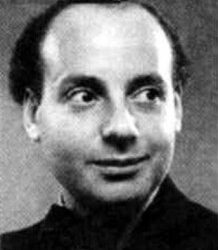
Veniamin Fleishman

Veniamin Fleishman

1913-1941

Veniamin Fleishman [Вениамин Иосифович Флейшман] (1913-1941) was a Russian composer and a student of Dmitri Shostakovich. After Fleishman was killed during the Siege of Leningrad, Shostakovich completed his opera, Rothschild’s Violin, considered by many to be one of the finest works of its time.

Life

The composer Veniamin Yosivovich Fleishman (also spelled Fleischman, Fleischmann, and Fleyshman) was born in Bezhetsk, a town situated near Moscow in the Tver region, on July 20, 1913. In 1941, during the Siege of Leningrad, he voluntarily joined the city’s civilian defenses, called the People’s Volunteer Brigade or Home Guard, and died on September 14 of the same year in Krasnoye Village, a Leningrad suburb in the district of Luga. He left behind a wife, Lyudmila, who relocated to Kirov after the war with their young daughter, Olga.

As described by Solomon Volkov, Fleishman died in battle:

With two other composition students, Fleishman fired on enemy tanks from a pillbox that was finally surrounded and blown up. The home guard consisted of hastily selected, ill-trained, and poorly armed workers, students and intellectuals of Leningrad. Zhdanov used them during the siege as cannon fodder; almost none survived (490).

In the following excerpt from Testimony, Dmitry Dmitryevich Shostakovich (1906-1975) confirms this fate of the civilian brigades:

He [Fleishman] went into the People’s Volunteer Guard. They were all candidates for corpsehood. They were barely trained and poorly armed, and thrown into the most dangerous areas. A soldier could still entertain hopes of survival, but a volunteer guardsman, no. The guard of the Kuibyshev District, which was the one Fleishman joined, perished almost completely (225).

As a child, Fleishman studied violin, and later worked as a school teacher after completing his studies. He moved to Leningrad in 1935, where he began studying composition with Mikhail Yudin at the Mussorgsky Music College; in 1937, he entered Shostakovich’s first composition class at the Leningrad Conservatory. This group of students included Orest Alexandrovich Yevlakhov (1912-1973), Georgiy Vasilyevich Sviridov (1915-1998), Yuriy Abramovich Levitin (1912-1993), and Galina Ivanovna Ustvolskaya (1919-2006). Although the only one of Fleishman’s compositions to survive is his opera Rothschild’s Violin, he reportedly composed a variety of works, including piano preludes, songs, and romance cycles based on texts by Johann Wolfgang von Goethe (1749-1832) and Mikhail Yuryevich Lermontov (1814-1841).

Rothschild’s Violin and Shostakovich

As soon as Shostakovich suggested to Fleishman that he compose an opera after “Rothschild’s Violin” (also translated as “Rothschild’s Fiddle”), a short story by Anton Pavlovich Chekhov (1860-1904), Fleishman set to work on it in 1939. According to a number of sources (a select list includes Laurel Fay, Allan Ho and Dmitry Feofanov, Ronald Weitzman, and A. Livshits), Fleishman reshaped the story into the opera’s libretto himself. Elena Silina, who wrote the booklet essay accompanying the Avie Records release of the opera, however, contends that the libretto was written by Alexander Preis, the librettist for Shostakovich’s 1934 opera Lady Macbeth of Mtsensk. Her contention remains unique. Fleishman worked on the opera until 1941, and was able to orchestrate some of the piano score before he died.

In October 1941, Shostakovich and his family were evacuated from Leningrad to Moscow and then to Kuibyshev. While in Kuibyshev, Shostakovich learned that Fleishman, who had been one of his favorite students, had disappeared in combat and that the opera’s manuscript was still in Leningrad. Fleishman’s wife, Lyudmila, had left the score at the Leningrad Composers’ Union. In May 1942, Shostakovich wrote to his student Yevlakhov:

Dear friend, if the opera is still at the Leningrad Composers’ Union, please take care of it, and still better make a copy of it and if possible send it to me in Kuibyshev when the occasion arises. I like the opera very much and am worried it may get lost (130).

Shostakovich received the piano score and partial orchestration from another former student, Boris Lazerevich Klyuzner (1909-1975), an army captain, who while stationed near Leningrad, was able to retrieve the score and deliver it to Shostakovich in 1943.

This original piano score has never been located (Shostakovich Reconsidered, 131). Moreover, Shostakovich may not have used Fleishman’s original manuscript to complete the orchestration, but a piano score written in both Fleishman’s hand and that of a copyist. These issues confound the task of determining how much of the opera was initially completed by Fleishman, and how much ultimately was polished and orchestrated by Shostakovich. Still, in the preface to his orchestration, signed Moscow, February 5, 1944, Shostakovich maintained that

Fleishman worked on the score of Rothschild’s Violin from 1939 to the summer of 1941, when the war broke out. By that time the piano score of the opera and the bigger part of the full score were completed…At the end of 1943 the manuscript was delivered to me. All I had to do was to complete the orchestration and copy the author’s pencil score.

Shostakovich’s notes in the orchestra score are more specific: “From the start to 17, m. 7, the orchestration is my own. From 18, mm. 1 to 91, I have copied V.I. Fleishman’s score. From 92, m. 1, to the end, the orchestration is my own.” In Testimony, Volkov writes that Fleishman “allegedly finished the reduction. But the only thing available to researchers is the score, written from beginning to end in Shostakovich’s characteristic nervous handwriting. Shostakovich maintained that he had merely orchestrated the work of his late student” (xiii). Later in the book, though, Shostakovich admits not only to having orchestrated the opera, but to completing it as well. He concedes that Fleishman “sketched out the opera but then he volunteered for the army” and was killed (225). Indeed, Ho and Feofanov, citing a March 1995 interview with Yakubov, emphasize that the purportedly untouched sections of the opera were likely edited by Shostakovich, who “completed some portions of the vocal score and the orchestral episode at the end [which is lacking in the piano score]” (Shostakovich Reconsidered, 129). In Dmitry Shostakovich: The Composer as Jew, Timothy Jackson supports these claims, concisely labeling Rothschild’s Violin as an opera “ostensibly composed by the Jewish composer Veniamin Fleishman and edited and orchestrated by Shostakovich” (604).

Elena Silina provides further detail, specifying that Fleishman sketched the concluding violin theme, which Shostakovich developed into eight symphonic variations (from rehearsal number 124 to the end). Shostakovich apparently also modified Fleishman’s orchestration, adding a harp and expanding the brass and percussion sections. As further proof of the senior composer’s editing, Silina, like Weitzman, offers that “Shostakovich’s orchestration at the end of the opera bears many of the typical hallmarks of his symphonic finales…particularly his Fifth Symphony and Lady Macbeth of Mtsensk; both were written in the mid-1930s, not long before Fleishman began work on Rothschild’s Violin” (liner notes, 5). She concedes, however, that these stylistic overlaps also may have been the result of the two composers’ similar personalities, as manifested in their mutual admiration for Chekhov. In Testimony, Shostakovich admits that “if I were suddenly expected to write a dissertation on an author, I would choose Chekhov, that’s how close an affinity I feel for him” (178). Shostakovich also reveals that “I love Chekhov…I like everything he wrote,” and that Fleishman, too, “had a fine rapport with Chekhov” (225). Another overlap is evidenced by both composers’ attraction to Jewish music and culture. Chekhov’s story may have prompted Shostakovich to suggest it as an opera subject, as well as attracted Fleishman, because of its nuanced treatment of the relationship between Christians and Jews. Fleishman was himself Jewish, and infused the opera with klezmer elements and melodic figuration typical of Jewish music.

These traditional elements are apparent in the opera’s opening and central dance episodes, where the action takes place at a Jewish wedding. In Testimony, Shostakovich admits that

Jewish folk music has made a most powerful impression on me…it’s multifaceted, it can appear to be happy while it is tragic…This quality of Jewish folk music is close to my ideas of what music should be. There should always be two layers in music. Jews were tormented for so long that they learned to hide their despair. They express despair in dance music (Testimony, 156).

In working on the opera, Shostakovich likely added to his understanding and admiration of the Jewish idiom. As such, it is not farfetched to link Shostakovich’s interest in Jewish music with Rothschild’s Violin. Indeed, Silina, like Joachim Braun, writes that “Shostakovich discovered Jewish culture for himself only after completing Rothschild’s Violin” (liner notes, 6).

Timothy Jackson, however, takes issue with this timeline, contending that while Fleishman “seems to have played a crucial part in sensitizing Shostakovich to Jews and Jewish plight” (606), Shostakovich’s identification with Jews may have occurred as early as 1936— year when “Muddle Instead of Music,” the editorial in Pravda attributed to Joseph Stalin, attacked Lady Macbeth of Mtsensk. Jackson promotes the idea that this identification was an autobiographical gesture, a symbol of Shostakovich’s destiny— of alienation, fear and persecution under Stalin and the Soviet system—tied to the universal fate of the Jewish people: “It meant being an outcast and doing what was necessary to survive while inwardly attempting to remain true to himself” (607). As a result, Fleishman’s “Jewishness” may have been of paramount interest to Shostakovich, and may have influenced Shostakovich’s first use of Jewish quotation in 1937, in the Largo of the Symphony No. 5. Jackson signifies this influence by noting that 1937 was the very year when Fleishman became Shostakovich’s student (608). Still, in keeping with Jackson’s timeline of Shostakovich’s interest in and use of the Jewish idiom, the power of influence was mutual, as the suggestion to compose an opera based on Chekhov’s story originated with Shostakovich.

Following the opera, Shostakovich used Jewish quotations in a number of works, including the Symphony No. 7, Op. 60 (1938-1941), inspired by the Psalms of David, the Piano Trio, Op. 67 (1944), the Violin Concerto No. 1, Op. 77 (1947-48), the song cycle From Jewish Folk Poetry, Op. 79 (1948), the Quartet No. 4, Op. 83 (1949), the Quartet No. 8, Op. 110 (1960), and the Symphony No. 13, “Babi Yar,” Op. 113 (1962).

Rothschild’s Violin: notes on the story and libretto

Shostakovich proclaimed that, for Chekhov,

all people are the same. He presented people and the reader had to decide for himself what was bad and what was good. Chekhov remained unprejudiced. Everything inside me churns when I read “Rothschild’s Violin.” Who’s right, who’s wrong? Who made life nothing but steady losses? (Testimony, 225)

The issue of losses is central to both story and opera, and is repeatedly lamented by the main protagonist Yakov Matveievich Ivanov, nicknamed Bronza. In each of his prolonged monologues and arias, Bronza bemoans his continued losses: as a coffin maker in a town where people die infrequently, as a laborer who cannot work on holidays, Sundays, and Mondays (because this is a bad day to work), and as a violinist in the town’s Jewish orchestra, where he seldom plays, especially after having insulted the flautist Rothschild. In the story, he is exasperated with his fate, and is “never in a good humor, because he always had to endure the most terrible losses” (98). In the libretto, after Bronza’s wife, Marfa, announces to him that she is dying, she begins to recall their young daughter, who died fifty years earlier. He dismisses what he (mistakenly) believes to be her overactive imagination, and immediately proceeds to catalogue his added losses: “tomorrow is St. John Damscene, then St. Nicholas the Miracle Worker, then it’s Sunday and then Monday. Four days of forced rest and I am sure Marfa is going to die on one of them.” At the same time, he shows a degree of nostalgia and regret as he meditates over the irrevocable passage of time: “I haven’t had time to live with my old wife, to talk, to care for her. I’ve spent fifty years with her and I’ve never looked after her, I’ve never cuddled her.” Instead, he has frightened and scolded her, although, as written in the story, never beaten her.

When she dies in the story, Bronza arranges for her funeral and builds her casket. Before she is buried, his last words are not directed to her but to his handiwork: “That’s a fine job!” (102). Yet his apparent callousness turns quickly into distress as he walks home from the cemetery. He again remembers his mistreatment of Marfa, how

he had never once thought about her at all or noticed her more than if she had been a dog or a cat. And yet she had lit the stove every day, and had cooked and baked and fetched water and chopped wood, and when he had come home drunk from a wedding she had hung his fiddle reverently on a nail each time, and had silently put him to bed with a timid, anxious look on her face (102).

Marfa is not the only target of Bronza’s rage. For no overt reason, he “little by little began to conceive a feeling of hatred and contempt for all Jews, and especially for Rothschild. He quarreled with him and abused him in ugly language, and once even tried to beat him” (98). This characterization is missing from the libretto, perhaps because it is too obviously anti-Semitic, given Fleishman’s softened treatment of Bronza’s antipathies. Fleishman, however, retained the episode where Bronza, in anguish as he walks from the cemetery, encounters Rothschild, who has been sent by Shakess, the village orchestra’s leader, to summon Bronza to work. Bronza rages at Rothschild, and the latter runs away, chased by dogs— of which bites him— by children shouting “Jew, Jew!” It is only after this scene, in which Bronza as a bystander witnesses his own potential brutality, that he comes to understand the consequences of his prejudice. He realizes that his losses were not determined by an indiscriminate fate, but were no more than missed opportunities, ones that possibly he could have capitalized upon had he not been so angry and self-pitying. Finally, he is left only with questions:

Why did people always do exactly what they ought not to do? Why had Yakov scolded and growled and clenched his fists and hurt his wife’s feelings all his life? Why, oh why, had he frightened and insulted that Jew just now? Why did people in general always interfere with one another? What losses resulted from this!…If it were not for envy and anger they would get great profit from one another (104).

What immediately follows in the story is resignation and death. Bronza’s ultimate regret is that he will leave behind the one object that sustained him in life, his violin: “He was not sorry then that he was going to die, but when he reached home, and saw his fiddle, his heart ached…He would not be able to take his fiddle with him into the grave…Everything in the world had been lost, and would always be lost for ever” (104). Bronza expresses his monumental grief by playing a sorrowful melody. Rothschild reappears to summon Bronza once again, but this time Bronza is kind to him. In fact, through music, Bronza communicates an understanding of their shared suffering, an empathetic eulogy of reconciliation between Christian and Jew. In response, Rothschild can only weep and murmur, “Okh – okh!” (105). Once their commonality is thus established, Bronza, in both story and libretto, bequeaths his violin to Rothschild, who abandons his flute and continues to play Bronza’s melody to great acclaim in the town. Giving away his violin is Bronza’s most meaningful act, what transforms his indulgent self-pity into compassion and generosity. Forgiveness for those actions that hurt both Marfa and Rothschild becomes possible, and Bronza can die knowing that his life did not pass without some profit. In this way, the violin is a symbol of redemption: through it, Bronza transcends violence and selfishness, and Rothschild rises from indignity and humiliation.

This is Bronza’s legacy, and much like Rothschild the Jew sustained it, Shostakovich the Russian memorialized Fleishman. Music and memory must be communicated, so that all struggles against death and annihilation are never forgotten. In Shostakovich’s words, “too many of our people died and were buried in places unknown to anyone, not even their relatives. It happened to many of my friends. Where do you put the tombstones…? Only music can do that for them…that’s why I dedicate my music to them all” (Testimony, 156).

Performances of Rothschild’s Violin

The opera’s premiere was a concert performance by the soloists and members of the Moscow Philharmonic at the Moscow Composer’s Union on June 20, 1960. This was followed by a radio broadcast by the same ensemble in February 1962. The first staged performance was in Leningrad in April 1968, inaugurating Volkov’s Experimental Studio of Chamber Opera. Maxim Shostakovich conducted. Despite extremely positive reviews, “the official administrators of culture accused all of us of Zionism…and it meant an irreversible closing of the production. This was a defeat for Shostakovich as well as for me [Volkov]…But the opera was never staged again…neither Fleishman nor his work was to be resurrected” (Testimony, xiii-xiv).

Outside of Russia, the Berlin Konzerthaus produced the opera in 2003. In the UK, the Jewish Music Heritage Trust, Thameside Opera, “semi–staged” the work in November 1997. The first full staging, however, took place in May 2007 by the Second Movement Ensemble at Covent Garden Film Studios. The Juilliard Opera Center organized the New York premiere in February 1990.

By Daniel Beliavsky

Works List

Rothschild’ Violin

Bibliography

Braun, Joachim. The Double Meaning of Jewish Elements in Dimitri Shostakovich’s Music. The Musical Quarterly, Vol. 71, No. 1, 1985, pp. 68-80.

Chekhov, Anton. Anton Chekhov’ Short Stories: Texts of the Stories, Backgrounds, Criticism. Ed. Ralph E. Matlaw. (Rothschild’s Fiddle translated by Constance Garnett.) W.W. Norton & Company, 1979, pp. 98-106.

Fay, Laurel E. Shostakovich, A Life. Oxford University Press, 2000.

Fleishman, Veniamin. Rothchild’s Violin. G. Schirmer, Inc., 1941.

Grove Music Online article: Skripka Rotshil’da, Grove Music Online ed. L. Macy. <

// Popup window code
function newPopup(url) {
popupWindow=window.open(
url,’popUpWindow’,’height=700, width=800,left=10,top=10,resizable=yes,scrollbars=yes,toolbar=yes,menubar=no,location=no,directories=no,status=yes’)
}

http://www.grovemusic.com
>.

Ho, Allan B. and Dmitry Feofanov, eds. Biographical Dictionary of Russian/ Composers. Greenwood Press, 1989.

Ho, Allan B. and Dmitry Feofanov. Shostakovich Reconsidered. Toccata Press, 1998.

Jackson, Timothy. Dmitry Shostakovich: The Composer as Jew. In Shostakovich Reconsidered, pp. 597-638.

Volkov, Solomon. Shostakovich and Stalin: The Extraordinary Relationship between the Great Composer and the Brutal Dictator. Trans. Antonina W. Bouis. Alfred A. Knopf, 2004.

Volkov, Solomon. St. Petersburg: A Cultural History. Trans. Antonina W. Bouis. The Free Press, 1995.

Volkov, Solomon. Testimony: The Memoirs of Dmitry Shostakovich. Trans. Antonina W. Bouis. Second Limelight Edition, 1989.

Weitzman, Ronald. Fleischmann, Shostakovich, and Chekhov’s ‘’s Fiddle’. Tempo, New Series, No. 206, Power, Politics, Religion…And Music. September 1998, pp. 7– 11. Cambridge University Press.

Discography

Recordings

Rothschild’ Violin. USSR Ministry of Culture Symphony Orchestra, Gennadi Rozhdestvensky conductor. Melodiya Records, 1983. A10-00019.

// Popup window code
function newPopup(url) {
popupWindow=window.open(
url,’popUpWindow’,’height=700, width=800,left=10,top=10,resizable=yes,scrollbars=yes,toolbar=yes,menubar=no,location=no,directories=no,status=yes’)
}

Fleishman: Rothschild’ Violin and Shostakovich: From Jewish Folk PoetryPerformed by the Rotterdam Philharmonic Orchestra, Gennadi Rozhdestvensky conductor. RCA Victor Red Seal, 1996. 09026 68434-2.

Fleishman/Shostakovich: Rothschild’s Violin and Shostakovich: The GamblersPerformed by the Royal Liverpool Philharmonic Orchestra, Vasily Petrenko conductor. Avie Records, 2007. AV2121.

Film

Le Violon de Rothschild. Written and directed by Edgardo Cozarinsky, France, 1996.

Hanns Eisler

Hanns Eisler

1898-1962

The reputation of Hanns Eisler (1898-1962) in his native Germany is remarkably different from his reputation in the United States, where he lived from 1937 until 1948.  After his American sojourn Eisler settled in East Berlin, where he was promptly elected to the German Academy of Arts and for twelve years served as an esteemed professor of composition at the Hochschule für Musik.  After his death, the school was renamed the Eisler Conservatory in his honor, and in 1994 the reunified Germany officially supported both the founding of an International Hanns Eisler Society and the launch of a critical edition of Eisler’s collected works.

In contrast, Eisler in the United States remains known primarily as a once-upon-a-time modernist who withdrew from serious critical consideration when in the mid-1920s he boldly espoused the idea that music is useless if it is directed only toward sophisticated ears; he is known as well for composing scores for a handful of largely mediocre Hollywood films and for having co-authored, with Theodor Adorno, a densely theoretical book on film music. The most enduring aspect of Eisler’s fame in the United States, however, has to do not with music but with politics. Eisler was suspected of being an “enemy of the American people” and thus subjected to six years of intense scrutiny by the Federal Bureau of Investigation; although no incriminating evidence was found, Eisler in 1947 nevertheless was subjected to prolonged and harsh public questioning by the House Un-American Activities Committee, and his exit from the United States was spurred by an official order for deportation.

American attitudes toward Eisler’s music are changing for the positive, but only slowly. As British musicologist David Blake wrote in his entries on Eisler for both the 1980 and the 2000 editions of The New Grove Dictionary of Music and Musicians, probably “no composer has suffered more from the post-1945 cultural cold war.”

Early Career

Eisler was born in Leipzig but grew up in Vienna, where his father, an Austrian Jew who had earned his doctorate in philosophy in Leipzig, eked out a living as an editor and translator. Both of his parents were amateur musicians, and from early childhood Eisler immersed himself in music. It would not be until 1918, however—after he spent two years of World War I in a Hungarian regiment—that he had any formal lessons in composition.

None of the works composed while Eisler was a schoolboy survives, but the output apparently included a piano sonata, numerous songs, incidental music for Hauptmann’s play Hanneles Himmelfahrt, and a symphonic poem based on the writings of Jens Peter Jacobsen. Sketches for an oratorio titled Gegen den Krieg were made and lost during Eisler’s service at the front; the extant wartime compositions are limited to songs for piano and voice featuring poems by Christian Morgenstern and translations by Alfred Klabund of Chinese poems. Written under enemy fire, the settings of the Chinese texts are emotionally uninhibited responses to the horrors of war. The Morgenstern settings— a half-dozen Galgenlieder (“Gallows Songs”) and a pair collectively titled Die Mausefalle (“The Mousetrap”)— were composed while Eisler recuperated from injuries first in a field hospital and then in a convalescent facility near Vienna, and they are indicative of the wry direction Eisler’s music would take over the next decade.

After his discharge from the army in November 1918 Eisler studied composition with Karl Weigl at the New Vienna Conservatory and supported himself with proofreading work at the Universal Editions publishing house. During his first few months as a civilian Eisler composed prolifically, producing dozens of songs— most of them romantic, even sentimental, in nature— with texts by such poets as Morgenstern, Trakl, Rilke, Tagore, and Eichendorff. Study with Weigl served primarily to clarify procedure for a young composer hitherto self-taught in composition and harmony. Eisler’s formative musical education began in the late summer of 1919, when he was accepted for private instruction, without fee, by Arnold Schoenberg.

Rather than instruction in the creation of atonal or serial music, Eisler’s study with Schoenberg focused on exercises in eighteenth-century counterpoint and harmonic analyses of the music of Johannes Brahms. But Eisler breathed deeply the modernist air of Schoenberg and his circle: he was given a low-level administrative job with the prestigious Verein für Musikalische Privataufführungen (Society for Private Musical Performance) that Schoenberg had founded in 1918, and he frequently accompanied his teacher on music-related trips outside Vienna. As might be expected, Eisler in the early 1920s composed music that very much shows the influence of his mentor. But quite unlike the consistently sober music of Schoenberg, however, Eisler’s first published works— the Op. 1 Piano Sonata, the Op. 2 set of six songs with texts by Japanese poets, the Op. 3 Piano Pieces, and the Op. 4 Divertimento for wind quintet— feature many moments of levity. Although based on the ordered unfolding of twelve-note series, the harmonies in their progressions often allude to traditional syntax, and the music’s rhythmic propulsion typically draws from the vernacular rhythms of jazz and other popular genres.

A self-taught Expressionist who vented Angst with humor and later a well-trained serialist who referenced tradition in order to temper a rigorous new methodology, Eisler almost from the start was a composer who valued connection with his immediate audience over an imagined seat in some futuristic pantheon. But however ‘light’ his music might have seemed during his years under Schoenberg’s tutelage, it lightened far more when in the autumn of 1925 Eisler accepted a teaching position at the Klindworth-Scharwenka Conservatory in Berlin. The stylistic shift was prompted by political ideology.

Almost by definition, the Schoenbergian aesthetic was elitist: to actually hear relationships between one form or another of a twelve-tone series demanded phenomenal listening skills, but simply to appreciate why some composers might find it necessary to create music in the serial vein required an understanding of the long history of nineteenth-century European art music and its connection with economically fueled societal issues. That Eisler was anti-elitist at heart is evidenced by his involvement, while still in Vienna, with various ‘workers’ singing societies. But after moving to Berlin, where his brother and sister had for several years been active communists, Eisler became a zealot. In 1926 he applied for membership in the German Communist party; that he was denied membership, as is documented by the FBI files, had mostly to do with the fact that he failed to pay his dues on time. Also as is documented by the FBI files, Eisler in 1926 began to write articles on music for the Communist periodical Die Rote Fahne. And he fairly threw himself into the creation of anthems, marching songs, and pieces for unaccompanied men’s chorus that were not just overtly supportive of the proletariat in their texts but also self-consciously ‘accessible’ in their musical content.

Not surprisingly, this led to a break with Schoenberg. Schoenberg, who moved to Berlin in January 1926 to teach at the Prussian Academy of Arts, accused Eisler of being disloyal. Eisler in turn accused Schoenberg of being esoteric and, more damningly, bourgeois. In a bitterly rejective letter to his once-revered teacher, Eisler wrote: “Modern music bores me, it doesn’t interest me, some of it I even hate and despise. Actually, I want nothing to do with what is ‘modern.’ … Also, I understand nothing (except superficialities) of twelve-note technique and twelve-note music.”

Eisler, of course, understood a great deal about twelve-note music, and despite his bravado he was not about to abandon either his serial skills or his awareness of the melodic/harmonic possibilities that the serial method afforded. This led to a dilemma. On the one hand, Eisler had good reason to believe in his potential as a serious composer; on the other hand, Eisler was in the throes of rebellion against the very system that allowed him his burgeoning success.

Early in his retreat from the world of ‘elitist’ music, Eisler composed two works that demonstrate the ambivalence he must have been feeling. One of these, based on bitterly sarcastic excerpts from his own diaries, is the Op. 9 Tagebuch des Hanns Eisler, for three female voices, tenor, violin, and piano (1926); the other, based only in part on the more or less grim newspaper clippings suggested by the title, is a set of ten songs that make up the Op. 11 Zeitungausschnitte (1925-27). Neither piece makes use of serial techniques, but the Tagebuch craftily juxtaposes a quotation from the “Internationale” with references to Schoenberg’s 1923 Op. 9 Chamber Symphony and harmonically vertiginous episodes based on whole-tone scales, and the Zeitungausschnitte throughout is decidedly brittle and nonlyrical. A notebook kept by Eisler in 1928 teems with comments and musical sketches that suggest that Eisler, however bold his public statements and activities, was in fact torn between aesthetic and political allegiances.

Eisler’s Tagebuch and Zeitungausschnitte received their premieres in 1927, the one in Baden-Baden at a festival of contemporary music organized by Paul Hindemith, the other on a concert sponsored by the Berlin chapter of the International Society for New Music. At least for a while, these would be the last of Eisler’s efforts to participate in what Eisler acridly described as “the bourgeois concert business.” Over the next half-dozen years Eisler concentrated almost entirely on projects that in one way or another furthered the socialist cause. Along with vocal pieces that fall more or less into the category of ‘Kampflieder’ (“songs for the struggle”), these include scores for a handful of silent films and—triggered by meetings with director Erwin Piscator in 1928 and, significantly, writer Bertolt Brecht in 1930—suites of incidental music for a large number of politically flavored theatrical productions.

The exile that Eisler experienced between 1926 and 1933 was self-imposed and based not just on a strident political attitude but also on ideological reaction to prevailing trends in contemporary music. The exile that began in January 1933 was of an entirely different sort. Eisler happened to be in Vienna, supervising the music for a production of Brecht’s play Die Mutter, on the day that Germany’s president assigned to Adolph Hitler the title Chancellor of the Reich. Well aware that his life was likely now in danger, the Jewish and outspokenly anti-fascist Eisler wisely chose not to return to Berlin.

Eisler in Exile

Before Hitler’s rise to power, Eisler had twice—in 1930 and 1931—briefly visited the Soviet Union. After Hitler’s installation as Chancellor, Eisler moved not east but, for the most part, west. Not until January 1938 would Eisler ‘settle in’ to a teaching position at the New School for Social Research and what he hoped would be permanent residence in the United States. Before that his odyssey took him to Prague, Paris, Amsterdam, and London (1933); to Copenhagen, Paris, and London (1934); to Strasbourg, London, Moscow, Prague, and—on two occasions—New York (1935); to London, Barcelona, Amsterdam, Brussels, and Copenhagen (1936); and to Madrid, Copenhagen, and Prague (1937).

Even under the duress of traveling almost constantly and without a passport, Eisler managed to compose. His output from these years includes film scores and, as one might expect, music overtly supportive of the proletariat cause. But it also includes concert works that suggest Eisler, now a refugee, was experiencing a change of heart regarding musical techniques that just a few years earlier he had vociferously eschewed.

The Op. 29 Kleine Sinfonie and the Op. 30 Suite No. 4 for Orchestra that Eisler completed just before exiting Germany certainly show the hand of a serial composer. More self-consciously serialist, as is evidenced by the explanatory essay that accompanies it, is Eisler’s 1934 Prelude and Fugue on B-A-C-H, Op. 46, for string trio. The Op. 50 Deutsche Sinfonie—started in 1935 and completed in 1939—is composed entirely in what Blake has described as “Eisler’s distinctively tonal type of serialism.” Likewise for all nine of the Chamber Cantatas for voice and various accompanying ensembles that Eisler produced in 1937 and, from the same year, the Two Sonnets set to texts by Brecht; the serial writing in the Sonnets is especially rigorous, yet it is serial writing that—as German biographer-critic Jürgen Schebera observes—nevertheless “through its ‘Eislerian’ handling of materials speaks an utterly clear musical message.”

Eisler’s rapprochement with serialism was hardly limited to his years of travel. It may be that the first major work Eisler composed upon his move to New York, the 1938 String Quartet (Op. 75), is fundamentally a melodic piece, but its pitch sequences are nonetheless intricately serial. Also intricate in their deployment of serial lines are the 1938 Five Orchestral Pieces, the 1940 Chamber Symphony (Op. 69), and the 1941 quintet titled Fourteen Ways of Describing Rain (Op. 70). Indeed, the quintet stands out as the most strictly organized piece in the entire Eisler catalog, and perhaps this has something to do with the fact that it was conceived as a birthday tribute to Schoenberg.

The Five Orchestral Pieces, the Chamber Symphony, and the Op. 70 quintet are works intended for the arguably ‘elitist’ concert hall, yet all of them stem from impulses connected with the ‘populist’ venue of the cinema. Like the fairly light Scherzo for violin and orchestra, the tautly serial Five Orchestral Pieces derive from music Eisler composed for a 1938 Joris Ivens documentary film on China titled The 400 Million. The 1940 Chamber Symphony is based on materials that would surface later that year in the score for the short documentary film White Flood, and the 1941 quintet is based on a set of variations originally designed to accompany a showing of Ivens’s 1929 silent film Regen (“Rain”).

Even in his scores for commercial Hollywood films Eisler occasionally used serial techniques. And even in his most serious concert works Eisler managed to fill serialist prescriptions in ways that are likely to strike most listeners as comprehensible both aurally and emotionally. Regardless of its genre, the music from Eisler’s years of exile often demonstrates what German critic Martin Hufner in 1998 described as “serialism with a human face.”

Back in Germany

Eisler left the United States in March 1948 and traveled to London, Vienna, and Prague before settling in East Berlin. One of his first compositional activities was the setting to music of Johannes Becher’s poem “Auferstanden aus Ruinen,” and the result was promptly selected as the national anthem for the newly established German Democratic Republic. Eisler sustained his collaboration with Brecht and other playwrights, between 1948 and 1961 writing music for seventeen theatrical productions; similarly, he continued to compose music for both feature films and documentaries, and to compose—prolifically—songs and anthems for non-professional choruses.

Even though this public-outreach music is relatively conservative in idiom, in intent it is no less ‘serious’ than the music that Eisler, comfortably positioned in post-war East Germany, wrote for the concert hall. At the same time, and despite its sophisticated use of serial technique, Eisler’s later concert music—which includes a Rhapsody for soprano and orchestra based on a section of Goethe’s Faust (1949), the cantatas Mitte des Jahrhunderts (1950) and Die Teppichweber von Kujan-Bulak (1957), and dozens of songs fitted with both piano and orchestral accompaniment—is no less ‘accessible’ than his music designed for the ears, and hearts, of the general public.

Eisler’s production of abstract (i.e., purely instrumental) music was concentrated first in the period immediately following his studies with Schoenberg and then, after his political ‘enlightenment’ in the strife-filled late 1920’s, in the eleven years during which he struggled unsuccessfully to make a home in the United States. But in essence even the most abstract of Eisler’s compositions are not far removed from his deliberately populist output. Using whatever musical techniques seemed best to serve the purposes at hand, Eisler throughout his long career strove to compose music that was genuinely ‘communicative.’

Bibliography

Bick, Sally. “Political Ironies: Hanns Eisler in Hollywood and behind the Iron Curtain,” Acta musicologica 75, no. 1 (2003):  65–84.

Blake, David. “Eisler, Hanns,” in The New Grove Dictionary of Music and Musicians, edited by Stanley Sadie, vol. VI, 89–94. London: Macmillan, 1980.

————. “Eisler, Hanns,” in The New Grove Dictionary of Music and Musicians, second edition, edited by Stanley Sadie, vol. VIII, 37–42. London: Macmillan, 2001.

————, ed. Hanns Eisler: A Miscellany. Sydney and New York: Harwood Academic Publishers, 1995.

Culbert, David. “Hanns Eisler (1898–1962): The Politically Engaged Composer,” Historical Journal of Film, Radio, & Television 18, no. 4 (Oct 1998): 493–502.

Eisler, Hanns. Hanns Eisler: Musik und Politik Schriften: 1924–1948. Leipzig: Deutscher Verlag für Musik, 1983.

Gorbman, Claudia. “Hanns Eisler in Hollywood,” Screen 32 (Fall 1991): 272–85.

Grabs, Manfred, ed. Hanns Eisler: A Rebel in Music: Selected Writings. London: Kahn & Averill, 1978.

Hinton, Stephen. “Hanns Eisler and the Ideology of Modern Music,” in New Music, Aesthetics and Ideology / Neue Musik, Asthetik und Ideologie, 79–85. Wilhelmshaven, Germany: Noetzel 1995.

Knepler, Georg. “Hanns Eisler and Interventive Thought,” Journal of Musicological Research 17, nos. 3–4 (1998): 239–60.

Schebera, Jürgen. Hanns Eisler: Eine Biographie in Texten, Bildern und Dokumenten. Mainz: Schott, 1998.

Wierzbicki, James. “Hanns Eisler and the FBI,” Music & Politics 2, no. 2 (2008).

Walter Braunfels

Walter Braunfels

b Frankfurt, 19 Dec 1882; d Cologne, 19 March 1954

Braunfels, Walter (b Frankfurt, 19 Dec 1882; d Cologne, 19 March 1954) was an important composer in Germany in the 1920’s and 30’s until his music was banned as “degenerate” and he was branded a half–Jew.  Most famous as a composer of opera and oratorio, he also wrote several significant orchestral and chamber pieces. Largely thought of as a neo–Romantic composer in the tradition of Berlioz, Strauss, Wagner and Mahler, he considered his work to have a strong connection to antiquity, evident in his thematic and literary choices for pieces such as the opera Die Vögel, based on Aristophanes’ “The Birds.”

Braunfels had a successful career as a pianist and composer throughout the 1920’s and his success lasted until his dismissal from his post at the Hochschule für Musik in Cologne in 1933. He was expelled for having written what the Third Reich considered to be Entartete Musik as well as for being half–Jewish. He withdrew from public life and entered into what has been termed internal exile, first in Bad Godesburg and then on Lake Constance. Braunfels continued to compose during the war years, but upon return to the stage and academic life after the war he was unable to reclaim the success he had enjoyed in the 20s and early 30s. After his death in 1954, he was largely forgotten for several decades. However, there has been a revival of his works in recent years, and his operas in particular have received critical acclaim along with his string quartets and orchestral works.

Early Life

The Braunfels family was from Frankfurt am Main. Walter Braunfels was the youngest of four children; his father was a jurist and a ‘man of letters’ and his mother was a musician and the great–niece of the composer Louis Spohr. When he was only three years old his father died. He was brought up in an intensely musical environment, his mother had played with Liszt, and his older sister was a pupil of Clara Schumann at the Hochschen Conservatory in Frankfurt.

At the age of 12, he was accepted as a student of James Kwast at the Hochschen Conservatory. Through his teacher, he became devoted to the music of the conservative and nationalistic anti–modernist composer Hans Pfitzner, who was Kwast’s son–in–law.  As a result he joined the Hans Pfitzner Society founded by the German writer Thomas Mann along with Pfitzner himself. Pfitzner was also a great supporter of Braunfels; their mutual respect and support is documented through their correspondence.

In 1901 Braunfels moved to Kiel to take up legal and economic studies at the university, highlighting a split between a love for music and a desire to have a more practical vocation. He kept up his mostly autodidactic studies of piano and composition in this period, and was keen on improvising.  He gave several house concerts (documented in his letters to his mother), where he improvised on themes provided by the audience.

In 1902 he moved to Munich where a dynamic artistic scene was in its heyday. The creative environment featured studies with conductor Felix Mottl, who acted as his music coach and conducting teacher, and allowed him to sit in on rehearsals of Wagner’s Ring and Tristan und Isolde.  His contacts with Mottl, in addition to hearing performances of the symphonies of Mahler and the music of Strauss, were some of the most formative moments for Braunfels. As a result, he decided to pursue music full time.

In the winter of 1902 he enrolled in a course of piano studies in Vienna with the famous pianist and pedagogue Theodor Leschetizky. Following in the footsteps of pianists such as Arthur Schnabel and Ignaz Paderewski, Braunfels threw himself into Leschetizky’s rigorous method that required him to re–learn much of his technique. The great teacher’s motto was, “In an emergency, if you do not know how to use one hundred different sound colors in 10 bars of music, you are not an artist.”  During this period Braunfels also studied theory with Karl Nawratil, the theory teacher of Arnold Schoenberg.  The following year he began his composition studies with Ludwig Thuille.

In 1905 Walter Braunfels began to visit the house of Adolph von Hildebrand, where he met his youngest daughter Betal, who was, at that time, the fiancée of Wilhelm Furtwängler.  She became a piano student of Braunfels shortly thereafter. They fell in love, and four years later, in 1909, they were married.


Prinzessin Brambilla and Die Vögel

In 1909, Braunfels completed Prinzessin Brambilla. This opera, based on material from the Commedia dell’arte, was admired by Busoni and was intended as a comic opera that ‘thumbed its nose’ at Wagner.

In 1913, Braunfels started writing one of his most famous works, Die Vögel, a work based upon the play of the same title (‘The Birds’) by Aristophanes. In 1915 he enlisted in the army and served at the front. In 1917, reflecting on his experiences in the war and inspired by Bruckner’s religious devotion as well as that of his father–in–law, Adolph von Hildebrand, Braunfels converted to Catholicism.  The second act of
Die Vögel
 seems to reflect this, showing a more obviously Christian tone, and ending with a religious hymn.


Between World Wars

The post–war period between 1920 and 1933 was the time of Braunfels’s greatest success. His most important works from this period are the opera Die Vögel, and the orchestral work Phantastischen Erscheinungen eines Themas von Berlioz.  The orchestral variations were performed in New York under Bruno Walter in 1920 as well as in Zurich, Frankfurt and Leipzig (under Wilhelm Furtwängler). Furtwängler conducted the Don Juan Variations in 1924, and the premiere of the opera Don Gil von den grünen Hosen, was performed, all in the period between 1920 and 1925.

In 1925, Braunfels was appointed founding director of the Hochschule für Musik in Cologne.  Two further large scale works, the opera Galathea, and the Adventskantate were premiered in 1927 and 1930 respectively.  In 1933 Braunfels was dismissed from all official offices and denounced as a composer of Entartete Musik and also for being half–Jewish.  He retired from public life and remained in internal exile until the end of the war.


The War Years

Braunfels continued to compose during his internal exile, turning to religious and spiritual themes. His Adventskantate from 1933 and his composition Verkündigung, from 1933–35, based on the play ‘L’Annonce fait a Marie,’ by Paul Claudels, are rooted in Christian themes and texts, and are seemingly an attempt to counter the banality and evil of the Third Reich by adapting a high moral tone. These works were poorly received after the war, as they were considered to be deeply out of sync with emerging post–war music. Verkündigung was finally performed in Cologne in 1948 shortly after Braunfels was reinstated as a Professor Emeritus at the Hochschule für Musik.

In February of 1937, Braunfels met with Bruno Walter in Amsterdam to discuss mounting a production of his opera, Der Traum ein Leben, which Walter agreed to perform in Vienna, but due to the annexing of Austria in 1938, the performance never came off. To add insult to injury the Reichsmusikkammer banned Braunfels from all public music engagements.

From 1943–1945 Braunfels turned his focus to chamber music,  writing two String Quartets (opp. 60 and 61) and a String Quintet (op. 63). These works have been compared to the late quartets of Beethoven, and it is likely that he drew much inspiration from the works of the great composer who had also written his works in the kind of internal exile that deafness had imposed upon him.


Post War (1948–1954)

Walter Braunfels returned to public life in 1948, returning to his post as the director of the Hochschule für Musik in Cologne and also returning to the stage as a pianist. His works were performed once again, but their critical reception made this a bittersweet experience. His successes from the 1920’s were never duplicated, and the works from his internal exile from 1933–1945 were hardly staged.

After his death in 1954 his work was largely forgotten and was to remain in oblivion until two new productions of his opera Die Vögel were staged in the early 1990’s followed by a recording with the Cologne Symphony Orchestra, conducted by Dennis Russell Davies, in 1992 (EMI Classics).

Walter Braunfels’s reputation as a composer is still in flux. While there is emerging interest in his compositions, there is very little material about him available in English. The only major study of his life and music was written by Ute Jung and published in 1980.  While recent releases of his music on labels such as Decca and EMI have led to a resurgence of interest, there are still many biographical questions that remain unanswered, in particular with regard his internal exile during the war.

Works List

Op. 1 1902/04 6 songs from poems by K. Wolfskehl,
W. Wenghöfer, St. George

Op. 2 Approx. 1903 Songs in Folk Style (Volkston)

Op. 3 Approx. 1905 “Falada”, fairytale opera by K.Wolfskehl

Op. 4 Approx. 1905 6 songs from Hölderlin, Hebbel, Hessel, Goethe, Der Knaben Wunderhorn (“The Youth’s Magic Horn”)

Op. 5 1907 Bagatelles, for piano, 2 exercises

Op. 6 1906 “Der goldene Topf” (“The Golden Pot”), opera fragment from E.T.A. Hoffmann’s fairytales

Op. 7 1904–10 Fragmente eines “Federspiels” (“Fragments of aFeather Games”), on verses from Des Knaben Wunderhorn for voice and piano

Op. 8 1906 Hexensabbat (Witches Sabbath) for piano and orchestra

Op. 9 1905 Scherzo for 2 pianos

Op. 10 1906–08 Exercises for piano

Op. 11 1909 Music for the play “Was ihr wollt”
(“What you want”)

Op. 12 1906–08 “Prinzessin Brambilla” (Princess Brambilla),from E.T.A. Hoffmann

Op. 12b 1906–08 New version

Op. 13 1910 Echoes of Beethoven music, for middle range voice and piano

Op. 14 1909 Music to Shakespeare’s Macbeth

Op. 15 1908–09 Symphonic Variations on an old French children’s song

Op. 16 1912 “Lyrischer Kreis” (“Lyric Cycle”), 7 piano pieces

Op. 17 1909 “Offenbarung Johannis” (“The Revelation of John”) for tenor–Solo, double choir plus large orchestra

Op. 18 1910 Ariels Gesang (Ariel’s song) from Shakespeare’s Tempest, for small orchestra

Op. 19 1914 Drei Chinesische Gesänge (Three Chinese songs), for high vocals and orchestra

Op. 20 1910 “Serenade” in Eb for a small orchestra
Op. 21 1911 Piano concert A–major

Op. 22 1911 Carnevals–Ouverture (Carnival–Overture) to Princess Brambilla for large orchestra

Op. 23 1910–12 “Ulenspiegel”, opera based on a novel by de Coster

Op. 24 1913 (?) Small piano piece for 4 Hands

Op. 25 1914–17 “Phantastische Erscheinungen eines Themas von Berlioz”
(“Fantastic Appearances of a Theme from Berlioz”) for a large orchestra

Op. 26 1915 “Auf ein Soldatengrab” (“At a Soldier’s Grave”)
from Hermann Hesse for baritone and orchestra

Op. 27 1916–18 Zwei Gesänge (Two songs) from Hölderlin for bass and orchestra

Op. 28 1914–19 Die Ammenuhr (Nurse’s Clock) for boys choir and orchestra

Op. 29 1916–17 Drei Goethe–Lieder (Three Goethe–songs)

Op. 30 1913–19 “Die Vögel”, (“The Birds”) from Aristophanes

Op. 31 1918–20 Preludes and interludes for piano

Op. 32 1920–21 Te Deum

Op. 33 1921 14 Preludes for piano

Op. 34 1922–24 “Don–Juan–Variations” for large orchestra

Op. 35 1921–23 “Don Gil von den grünen Hosen” (“Don Gil of the green Trousers”)
an opera based on the work of T. de Molina

Op. 35b Suite from Op. 35

Op. 36 1922–25 “Präludium und Fuge” (“Prelude and Fugue”) for large orchestra

Op. 37 1923–26 “Große Messe” (“Large Mass”) for solo–quartet, boys choir, mixed choir, organ, large orchestra

Op. 37b Added to Op.37 an Introitus and Graduale known as the small mass.

Op. 38 1927 Concert for organ, boys choir, strings plus 4 brass players

Op. 39 1927/28 “Der gläserne Berg” (“The Glass Mountain”) (Christmas fairytale) lyrics by Elsner–örtel

Op. 39b “Orchestersuite” (“Orchestra Suite”) to op.39

Op. 40 1924–29 “Galathea”, opera by Sylvia Baltus

Op. 41 1924–25 Two male choirs. (One of these works is missing)

Op. 42 Divertimento for radio–orchestra

Op. 43 Two Christmas fairytales for school orchestra

Op. 44 1932 Two songs on texts by Hans Carossa

Op. 45 1932/33 “Adventskantate” (“Advent Cantata”) for baritone–solo, choir and orchestra

Op. 46 1919–46 Variations for 2 pianos

Op. 47 1932/33 “Schottische Phantasie” (“Scottish Fantasy”) for solo–viola and orchestra

Op. 48 1933–36 “Orchestersuite” (“Orchestra Suite”) E–minor

Op. 49 Cello–Concerto (Manuscript not completed)

Op. 50 1933–35 “Verkündigung” “Annunciation,” a mystery from Paul Claudel

Op. 51 1934–37 “Der Traum ein Leben” (Life is a dream) on text by Grillparzer: U.–Edition (available from 1.1.2002)

Op. 52 1934–37 “Weihnachtskantate” (“Christmas Cantata”) for soprano plus solo baritone, choir and orchestra

Op. 53 1935–36 “Die Gott minnende Seele” (“God of the Loving Soul.”)
to Mechthild v. Magdeburg

Op. 54 1936–43 “Passionskantate” (“Passion Cantata”), for solo baritone, choir and orchestra

Op. 54b 1938 “Kleine Kette” (“Small Chain”) for Michael, 6 piano pieces

Op. 55 (=op.54b?)

Op. 56 1938–44 Osterkantate (“Easter Cantata”) for soprano, baritone, choir and orchestra

Op. 57 1939–43 “Scenen aus dem Leben der heiligen Johanna”
(“Scenes from the life of St. Joan”), opera based on the composer’s libretto

Op. 58 1918–42 Romantische Gesänge (Romantic songs) for soprano and orchestra

Op. 59 1944 “Der Tod der Kleopatra” (“The Death of Cleopatra”) scene for soprano and orchestra.

Op. 60 1944 String quartet A–minor (Nr,1)

Op. 61 1944 String quartet F–major (Nr.2)

Op. 62 1944/45 “Von der Liebe süß und bittrer Frucht” (“From the Life of Sweet and Bitter Fruit”) Japanese songs for soprano and orchestra

Op. 63 1944/45 String quintet F# –minor

Op. 64 1946 Concert piece for piano and orchestra C#–minor

Op. 65 1952 “Trauer, Tanz– und Werbelieder” (Sad, Dancing, and Recruiting songs) for coloratura – soprano, chamber choir, chamber orchestra and cembalo

Op. 66 ???

Op. 67 1946/47 String quartet E–minor

Op. 68 1947 Music for violin, viola, 2 horns and string orchestra

Op. 69 1948 “Symphonia brevis” (“Symphony brevis”) for orchestra

Op. 70 1950/51 “Hebridentänze” (“Hebrides Dance”) for piano and orchestra

Op. 71 1951/52 “Der Zauberlehrling” (“The Magic Apprentice”) dance ballade for television

Op. 72 1938/54 Das Spiel von der Auferstehung des Herrn (“Play of the Ressurection of the Lord”). From the Alsfelder Passionspiel (Alsfields’ Passion Play), arranged by Hans Reinhart


Bibliography

Anderson, Martin. “Degeneration, Regeneration (‘Entartete Musik’)”, Tempo, New Series, No. 210, (Oct., 1999), pp. 52–56.

Braunfels, M: “Braunfels, Walter”, Rheinische Musiker, i, ed. K. G. Fellerer (Cologne,
1960), 24–8

Jung, Ute.  Walter Braunfels (1882–1954) (Regensburg, 1980)

Kapp, J. ‘Walter Braunfels’, Blätter der Staatsoper Berlin, iv/4 (1921), 8–10.

Levi, Erik. “Walter Braunfels,” New Grove Dictionary of Music and Musicians.

Reich, W. “Prinzessin Brambilla – ein musikalisches Phantasiestücke in Callots Manier”, Die Tribune, xxiii/12 (1953–4), 133–7

Sachs, Joel.  “Some Aspects of Musical Politics in Pre–Nazi Germany”, Perspectives of New Music, Vol. 9, No. 1 (Autumn–Winter, 1970), pp. 74–95.  http://www.jstor.org/stable/832195

Schnackenburg, H. “Walter Braunfels zum seinem 50. Geburtstag am 19 Dezember 1932”, Musikblätter des Anbruch, xiv (1932), 195–7


Links

http://www.jmi.org.uk/suppressedmusic/newsletter/reviews/opera_braunfels.html

http://www.walterbraunfels.de/

http://en.wikipedia.org/wiki/Walter_Braunfels

http://www.classicstoday.com/review.asp?ReviewNum=8451


For short biography, list of works and discography:

http://www.classical-composers.org/comp/braunfels


Discography


For short biography, list of works and discography:

http://www.classical–composers.org/comp/braunfels