Music Restored 2026–27 Season

Music Restored 2026–27 Season

Performances play a key role in the mission of Music Restored: The Ziering-Conlon Center for Exiled and Suppressed Composers. By inviting students and professional performing artists to add these works to their repertoires, they are introducing the world to the incredible musical works created by composers whose careers and lives were tragically altered or cut short by the Nazi regime.  

Here, we highlight Music Restored performances for the 2026–-27 season. Mark your calendars! 
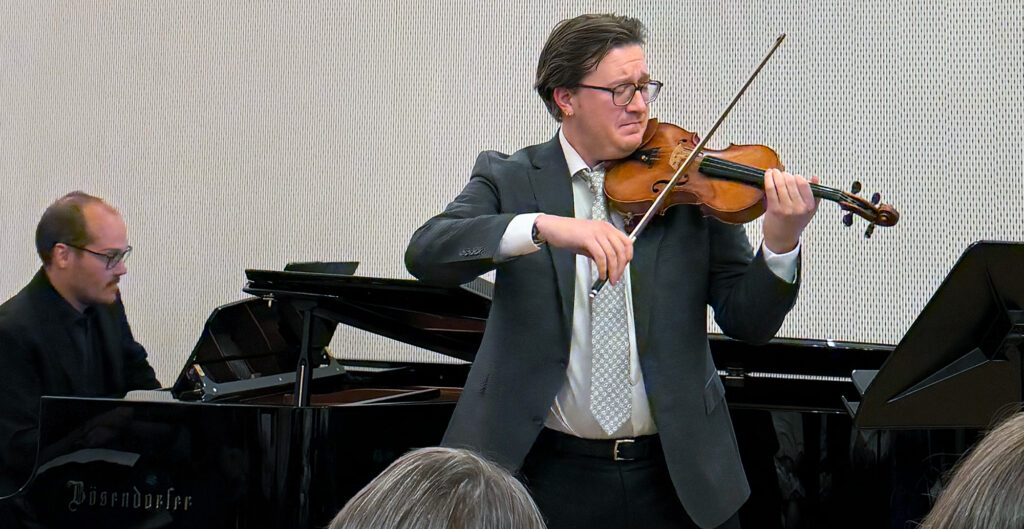
 

Adam Millstein Recital with David Hausknecht 
Bösendorfer Salon, Musikverein Vienna  

In September, Program Director and violinist Adam Millstein joined David Hausknecht for a sold-out performance at the legendary Bösendorfer Salon in Vienna. Programming for the evening included Korngold, Mozart, Schulhoff, Arlen, and Smetana.
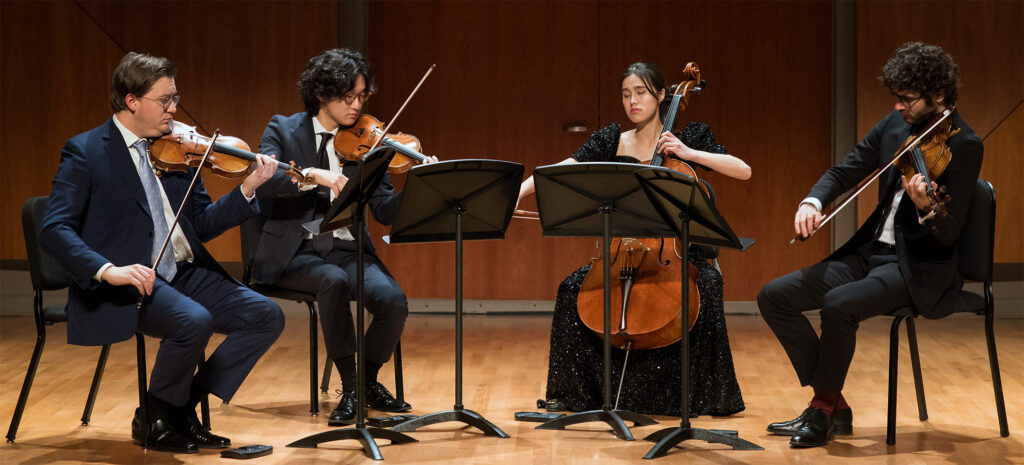

Voices of Vienna
Villa Aurora: Remembering the Exiles
October 28, 2026 @ 7:30 pm 

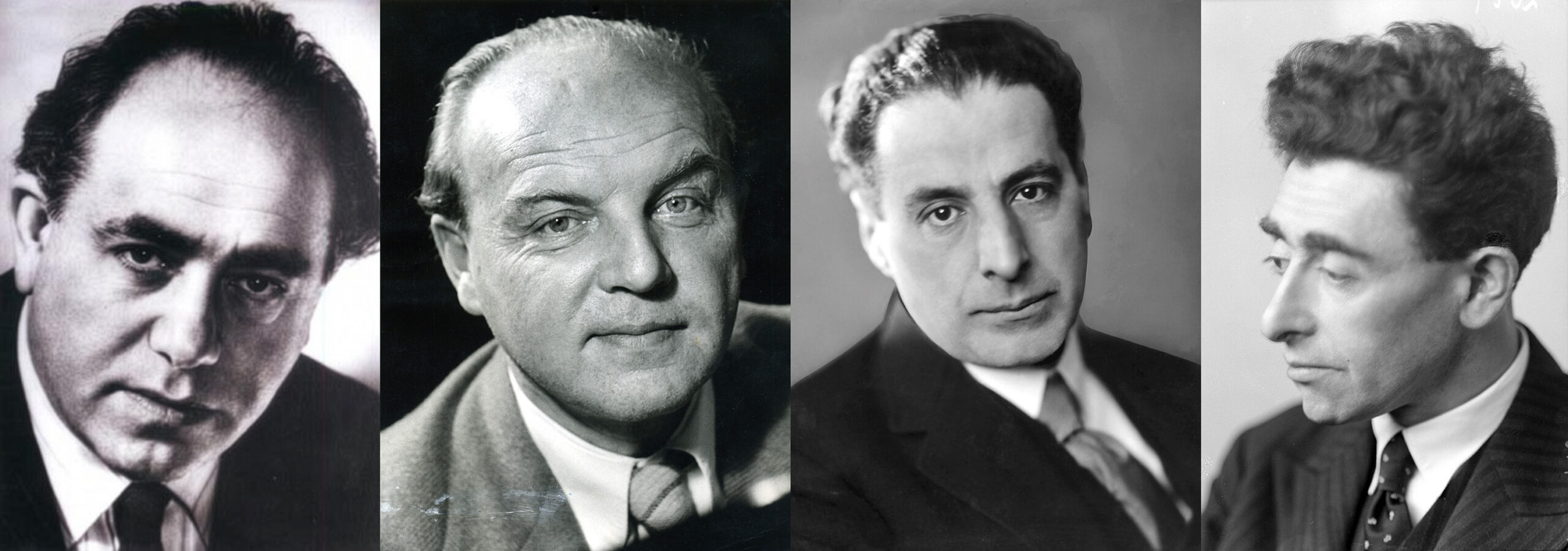
An esteemed panel leads a discussion of exiled Austrian composers—Kauder, Zeisl, Toch, and Krenek—who found new homes and creative outlets in the United States. Colburn Conservatory of Music students join Millstein and pianist Dominic Cheli in performing excerpts of these composers’ works, including a rarely heard string quartet by Kauder. 

Panelists: Joy Calico, Chair, Department of Musicology, University of California, Los Angeles Herb Alpert School of Music; Barbara von Bechtolsheim, Executive Director, Hugo Kauder Society; and Music Restored’s Millstein. 

View Details 


Max Kade Institute For Austrian-German-Swiss Studies, University of Southern California, Dornsife
October 29, 2026 @ 7 pm
Los Angeles, California 

Von Bechtolsheim and Millstein offer engaging insights on artists who the Nazis labeled as “degenerate,” but who also made an impact on 20th-century music, including on American film and television scores. Colburn Conservatory of Music students perform along with Millstein and Cheli. 


Voices of Vienna
Thayer Hall at Colburn
October 30, 2026 @ 7 pm
6 pm, Pre-concert Discussion  

Voices of Vienna concludes with a full repertoire performed by Millstein, Cheli, and Conservatory of Music students. Come early for a pre-concert discussion with The New Yorker’s Alex Ross, who will join von Bechtolsheim and Millstein.  

Music Restored: The Ziering-Conlon Center for Exiled and Suppressed Composers is made possible through the generous support of Marilyn Ziering, alongside the many donors who are inspired by this incredibly important work at Colburn School.  

This concert is made possible by Erica Clark in recognition of the extraordinary Music Restored initiative, and the equally extraordinary musicians who bring it to life. 
View Details


Echoes of Exile
April 22, 2027
Thayer Hall

6:30 pm 

Pre-concert discussion with Music Restored’s Artistic Director James Conlon and Program Director Adam Millstein 

7 pm Concert 

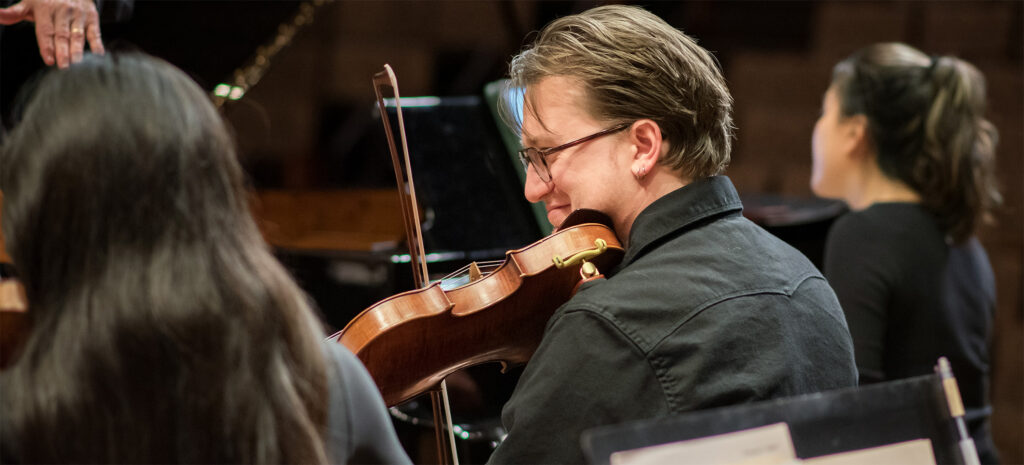
Colburn students offer an entrancing performance of works by Polish composers Fitelberg and Weinberg along with an intriguing performance of Ullmann’s String Quartet No. 3.  

View Details  


The Royal Conservatory, The Glenn Gould School Presents:
Music Restored and ARC Ensemble
April 26, 2027
Mazzoleni Concert Hall, @ 7 pm 

In 2024, the ARC Ensemble, a chamber music ensemble also committed to illuminating music suppressed and marginalized by repressive regimes, joined Music Restored for a performance in Colburn’s Thayer Hall. 

In 2027, Music Restored’s Adam Millstein and Colburn students collaborate with the ensemble for a performance at The Royal Conservatory. 
View Details


Photo Credit: Bonnie Perkinson

The Royal Conservatory Presents:
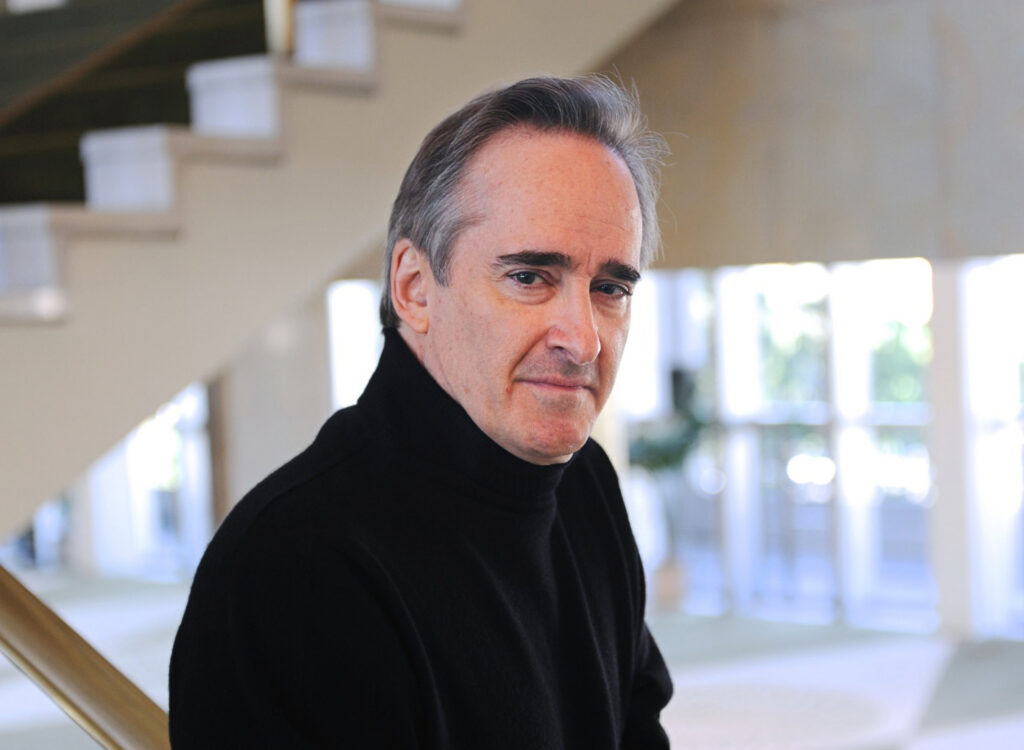
James Conlon Conducts the Royal Conservatory Orchestra
Mira Kardan, Cello
April 30, 2027
Koerner Hall, @ 8 pm 

Colburn alumna Mira Kardan will be featured this evening as Music Restored’s Artistic Director James Conlon conducts the Royal Conservatory Orchestra 

View Details   


Visit MusicRestored.org for more information on these and other upcoming videos, releases, and events.  
 

How My Trip to Poland Reaffirms the Mission of Music Restored

How My Trip to Poland Reaffirms the Mission of Music Restored

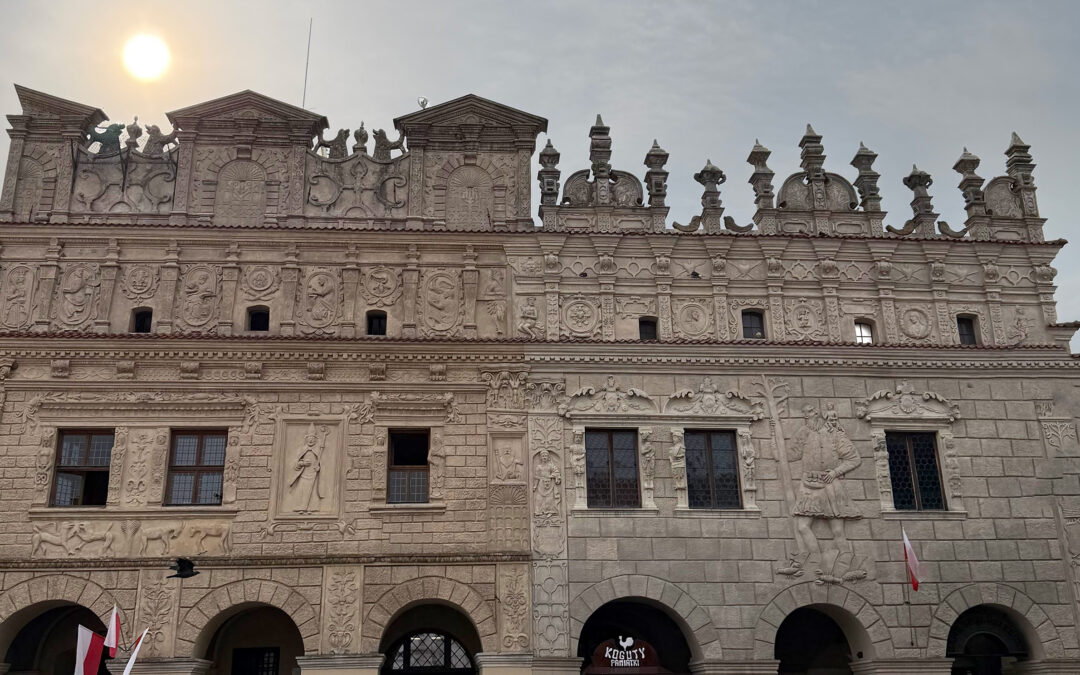
Kazimierz Dolny, Poland


From performing works by Music Restored composers to finding inspiration for a scholarly journal, a trip to Poland this summer made a profound impression on Program Director Adam Millstein and his dedication to Music Restored: The Ziering-Conlon Center for Exiled and Suppressed Composers. 


For eight days this summer, I had a life-changing experience visiting Poland. I was invited by Irina Prinzessin zu Sayn-Wittgenstein-Berleburg, a tirelessly dedicated supporter of the arts and member of Colburn’s Global Council, to perform as a guest artist in her IMAGINE Culture Without Borders Festival in Kazimierz Dolny. Whenever I have the agency to curate concert programming, my goal is always to introduce works of composers featured in Music Restored: The Ziering-Conlon Center for Exiled and Suppressed Composers. For this occasion, I proposed compositions by Schulhoff, Korngold, and Milhaud, which were greeted with great enthusiasm. Also, I was elated to learn the amazing musicians I’d be collaborating with were presenting music by Weinberg, Tansman, and Ben-Haim, three more composers who were all exiled to different corners of the world due to the oppressive policies of the Nazi regime. 

I was excited to visit Poland for the first time for multiple reasons. I was thrilled to have the opportunity to represent Music Restored to musicians and audiences in Europe. Additionally, I knew Warsaw was the birthplace of Mieczsyław Weinberg. Prior to his exile following the Nazi invasion of Poland in 1939, Weinberg spent his formative years in Warsaw, the capital city that boomed with musical life before the war. From a young age, he was exposed to traditional Jewish music by his father, Shmuel, a Moldovan emigre musician who was the head of a traveling Jewish musical theatre group. The young Weinberg absorbed this folkloric musical style that influenced many of his works later in life. 

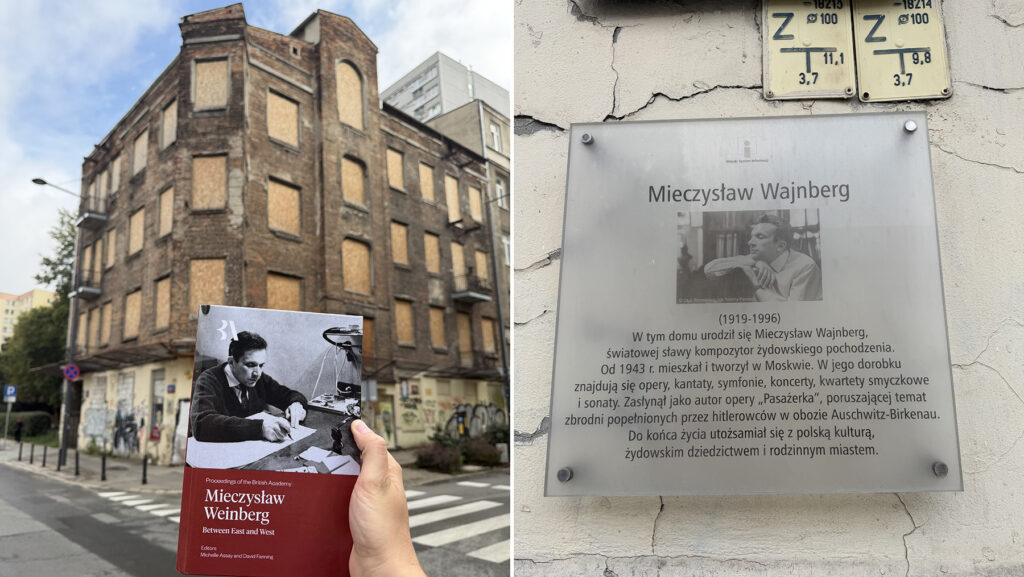
Also, not long before this trip, I had been asked to write my first scholarly review of a new book, Mieczysław Weinberg: Between East and West for the Journal of Musicological Research, published by the British Academy. This collection of fascinating essays spans subjects that cover the composer’s aesthetic interests and provides deep analyses of lesser-known epochs of his life. The timing of this trip, in conjunction with my intensive study of this book and scholarly review writing, felt like something greater than pure coincidence. I was profoundly moved by writing about this composer, whose music I deeply love, in his place of birth.

For the festival, I had the great fortune to collaborate extensively with violinist Karolina Mikołajczyk and accordionist Iwo Jedynecki, who drove me to Kazimierz-Dolny, and with whom I became fast friends. The festival audiences were beyond enthusiastic and I was able to collaborate with other fantastic musicians including Bishara Haroni, a member of Duo Amal, an Israeli–Palestinian piano duo.

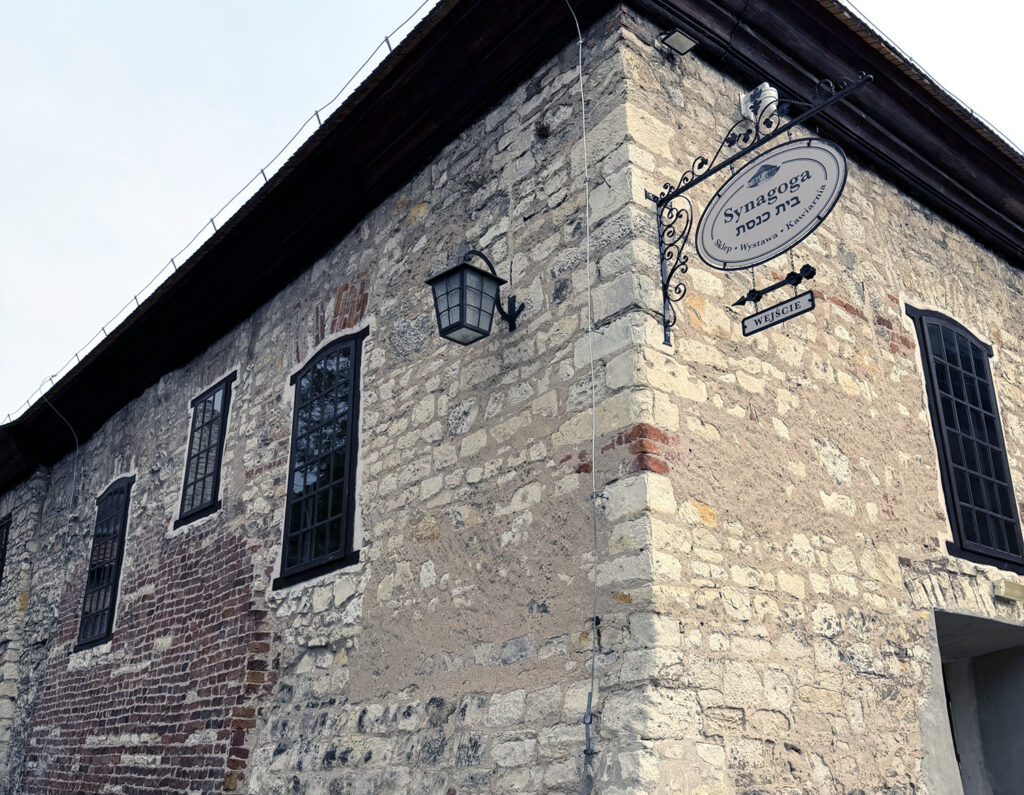
Surviving synagogue in Kazimierz Dolny, Poland
The town of Kazimierz Dolny is gorgeous. It consists of beautifully preserved Renaissance-era buildings and churches. Out of all of the historic sites in town, one struck me to my core, the old synagogue right off of the town’s square—many synagogues across Europe were destroyed by the Third Reich. However, the synagogue in Kazimierz was not spared from the blatant disrespect of the occupying forces. This sacred space was turned into a horse stable and centuries old Jewish gravestones were ripped from the cemetery to pave the road for members of the National Socialist party to tread upon, as explained by commemorative plaques. Today, the synagogue houses a small museum. 

Prior to World War II, Poland was home to one of the largest Jewish populations in Europe that subsequently suffered unfathomable losses during the Holocaust. The Jews in Kazimierz consisted of an estimated 1,400–1,800 people, approximately half the population of the town, and were forced into a ghetto by the Nazis. Those who survived those conditions were then sent to the Bełźec concentration camp where they were murdered immediately upon arrival. It is likely that fewer than 20 Kazimierz Jews survived the war. To read about horrific history such as this in books is one thing, but to experience these places in the flesh is indescribably powerful. 

Following our final concert in Kazimierz, Mikołajczyk and Jedynecki, drove me back to Warsaw with a stop at the prison in Lublin where we performed for approximately 30 inmates who are members of a special program run by a local Catholic university that offers courses to incarcerated individuals. We were joined by the wonderful Polish soprano Ewa Leszczyńska and performed works by Weill, Szymanowski, Chopin, Piazzola, and Korngold. I was nearly brought to tears by this performance. As much as I am reticent to use cliches, I could feel through every inch of my being the powerful potential of music to speak to audiences everywhere—music truly is an international language. After leaving the prison, we silently reflected on the experience as we drove to Warsaw.

I found talk of the war to be understandably ubiquitous in Poland. This was particularly evident when I arrived in the capital, nicknamed “The Phoenix City,” following the Warsaw Uprising when the Nazis destroyed 85–90% of the city. From the rubble, the Polish people rebuilt Warsaw, even recreating the Old City brick by brick utilizing pre-war photos, paintings, and other visual references. 

It was within this environment that I finished my article on Weinberg. I also was able to meet with brilliant Polish scholars who have contributed significantly to the study of composers suppressed by both the Nazis and totalitarian communist regimes. 


Birthplace of Mieczysław Weinberg in the former Jewish Ghetto of Warsaw

I learned that of the few remaining pre-war homes that survived, Weinberg’s birthplace miraculously stands intact. On my first morning in the city, I made a pilgrimage to visit the remains of the humble multi-story brick tenement in the Warsaw Ghetto. A small plaque adorns the abandoned building that recognizes the composer, and a few blocks away, a street recently was named in honor of Weinberg. 

As I stood outside of his home, I was overcome with emotion. I put my hands on the bricks and quietly prayed. Here stands the home from where the teenage Weinberg had to flee his family—the family he would never see again—the city he called home, the city he returned to just once in his life only to be shunned by the Polish musical intelligentsia who frowned upon his compositional style. I left Poland with a deeper understanding of the composer.  

Upon reflection of those eight days, I’m filled with tremendous gratitude. I was grateful to make music and also experience the profundity of these places that were imbued with a confusing mixture of unfathomable historic tragedy, thriving contemporary life, and the eternal echoes of a determination to rebuild a city once reduced to rubble. I left Poland with a deeper understanding of the composer Weinberg and an immediate desire to visit again.

I’m also left further convinced of the importance of the Music Restored mission to bring the music and legacies of these unjustly suppressed composers to their rightful place in the canon of art music. It takes patience, resilience, and tireless advocacy from musicians around the world to complete this mission. I am fully convinced our efforts at Music Restored: The Ziering-Conlon Center for Exiled and Suppressed Composers can sincerely create a positive impact in the musical world by correcting this historic and artistic injustice.


Music Restored Presents Voices of Vienna in Collaboration with Villa Aurora and Max Kade Institute

Music Restored Presents Voices of Vienna in Collaboration with Villa Aurora and Max Kade Institute

Partnering with academic and artistic institutions such as USC’s Max Kade Institute and Villa Aurora for programs like this month’s Voices of Vienna, empowers Music Restored: The Ziering-Conlon Center for Exiled and Suppressed Composers to reach larger audiences, engage experts, and enhance efforts to lift the voices of composers whose work was nearly lost to history. 

Declared “degenerate” by the Nazi party as it gained political momentum during the 1930s and 1940s, many artists sought safety by fleeing their home countries. For some, that journey took them to multiple locations while trying to stay ahead of the encroaching Nazi forces. Hugo Kauder, Eric Zeisl, Ernst Toch, and Ernst Krenek, four composers who had called Vienna, Austria, home and were enjoying success with their artistic endeavors, eventually landed in the United States as exiles. Reestablishing themselves wasn’t easy, and as time passed, their works could have been lost to history. Music Restored: The Ziering-Conlon Center for Exiled and Suppressed Composers, however, remains committed to breathing new life into the legacies of these and other composers whose careers and lives were drastically changed or silenced by the Third Reich. 

In 2013, Colburn joined Music Restored’s Artistic Director James Conlon in his mission to introduce musicians, students, and audiences to the composers whose names and works were very nearly eliminated from the classical music canon. With the support of Los Angeles philanthropist Marilyn Ziering, the Ziering-Conlon Initiative for Recovered Voices was established and modeled in large part on Los Angeles Opera’s groundbreaking Recovered Voices project. This newly formed collaboration with Colburn contributed to creating additional resources and generating greater awareness through multiple channels: original video series, recordings, lectures, and more. 

In 2025, the organization adopted the name, Music Restored: The Ziering-Conlon Center for Exiled and Suppressed Composers, in recognition of its expanded presence with additional performances, a new website that includes and builds upon the OREL Foundation—founded by Conlon and Michael Beckerman, current dean of the University of California, Los Angeles Herb Alpert School of Music, which became one of the world’s most valued websites on music suppressed by the Nazis—and new associations with other organizations committed to preserving and promoting the arts, literature, and other creative works by individuals who were affected during this period in history.  

“Once upon a time, it seemed so critical to resurrect and present such works that we hardly had time for either deep analyses of the compositions themselves or the development of multiple interpretive strands around them. Today’s festivals and concerts presented by Music Restored give us another opportunity to discover these works…and puzzle out as we did earlier, what they mean for our time,“ says Beckerman. 

For the 2026–27 season, Music Restored has scheduled performances at Colburn and the Royal Conservatory of Music in Toronto, but first, it hosts Voices of Vienna. The three-day program, October 28–30, features events with Villa Aurora: Remembering the Exiles and the Max Kade Institute for Austrian-German-Swiss Studies at the University of Southern California, Dornsife, in addition to a performance at Colburn’s Thayer Hall. 

“I’m excited about Music Restored collaborating with these organizations that also have been diligently striving to study and shine a light on the contributions of composers, artists, writers, and others whose lives and careers were drastically affected by the Nazi policies of the 20th century,” says Adam Millstein, program director for Music Restored. “Voices of Vienna highlights four composers—Kauder, Zeisl, Toch, and Krenek—who began their careers in Vienna, but the conditions in Europe during the ’30s and ’40s forced them into exile. This program delves into their stories and brings their works to life.”

Villa Aurora: Remembering the Exiles 
Villa Aurora Artist Residence, Pacific Palisades, California
October 28, 2026, 7:30 pm  

Almost two years ago, an unprecedented wildfire ripped through the Pacific Palisades community in Southern California. Villa Aurora, a Spanish Colonial Revival-style house—purchased in 1943, by German exiles Lion and Marta Feuchtwanger who regularly hosted salons for other German-speaking emigres, including Thomas and Heinrich Mann, Hanns Eisler, and Toch—serves as an artist residence for writers, filmmakers, visual artists, and composers was spared with minimal damage. Still, the Friends of Villa Aurora, a German-based nonprofit, closed the residence for restoration. This summer, Villa Aurora once again opened its doors, and this month, it will host a Music Restored panel discussion and performance as part of its Remembering The Exiles program that honors European artists and intellectuals who found a new home in Southern California.  

Joy Calico, chair of the Department of Musicology at the University of California, Los Angeles Herb Alpert School of Music, and Barbara von Bechtolsheim, executive director of the Hugo Kauder Society, along with Millstein will share their extensive knowledge of the time period, the artists, and why their music remains relevant in the 21st century.  


Max Kade Institute for Austrian-German-Swiss Studies
University of Southern California, Dornsife
October 29, 2026, 7 pm  

Located near the University of Southern California campus in Los Angeles, the Max Kade Institute for Austrian-German-Swiss Studies is part of USC Dornsife College of Letters, Arts, and Sciences. The institute often presents lectures, conferences, and performances, with a main focus on exile studies as well as contemporary German and European affairs. Once again, von Bechtolsheim and Millstein will lead discussions on the composers, intermingled with performances of excerpts from several of their compositions. 


Thayer Hall at Colburn
October 30, 2026, 6 pm Pre-concert discussion; 7 pm Concert 

Voices of Vienna concludes with a performance of the full repertoire in Colburn’s Thayer Hall. Before the musicians take the stage, Millstein, von Bechtolsheim, and Alex Ross, writer for The New Yorker, will hold a pre-concert discussion with audience members about the composers, the evening’s musical selections, and Music Restored’s ongoing efforts to highlight exiled and suppressed artists. 

Music Restored: The Ziering-Conlon Center for Exiled and Suppressed Composers is made possible through the generous support of Marilyn Ziering, alongside the many donors who are inspired by this incredibly important work at Colburn School.  

This concert is made possible by Erica Clark in recognition of the extraordinary Music Restored initiative, and the equally extraordinary musicians who bring it to life. 


Unique Perspectives and Unique Opportunities 

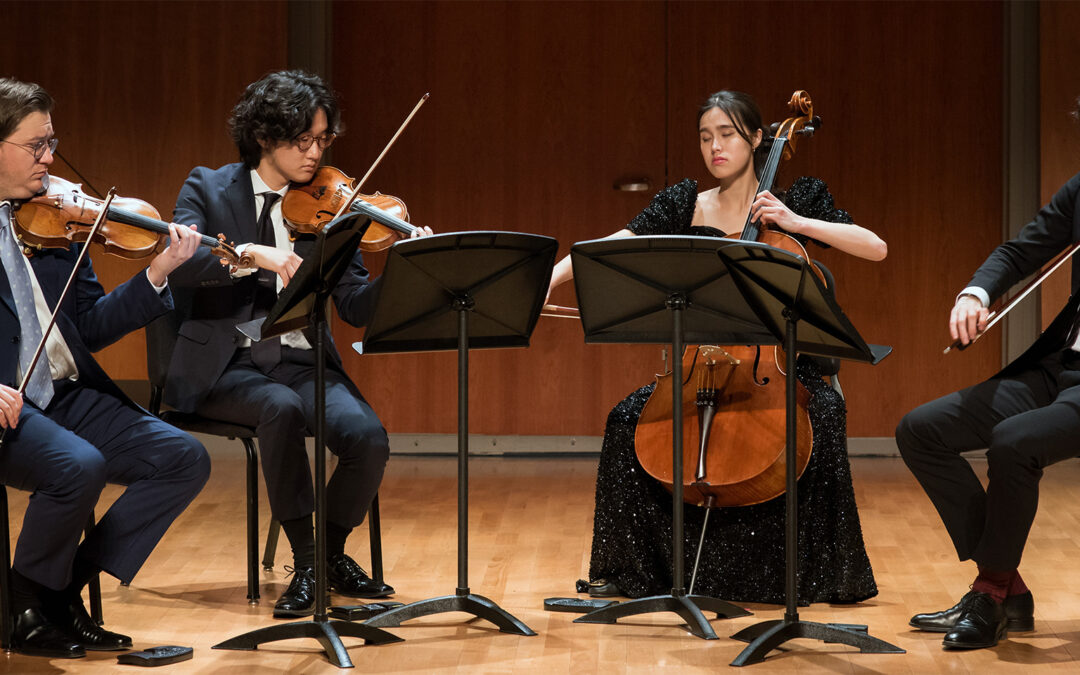
Each Voices of Vienna event features performances by Millstein, pianist and Colburn School faculty member Dominic Cheli, and Colburn Conservatory of Music students. This summer, the Conservatory’s Chamber Music Honors string quartet was selected to perform for Music Restored and were provided with a list of composers to be highlighted. They then had the artistic freedom to choose which musical work to perform, and opted for Kauder’s String Quartet No. 2 in G Major. Not only new to them, but the composition very likely is new to most everyone. In their research, the students only found one recording to listen to as a reference. 

“I’ve been wanting to integrate Music Restored into the Chamber Music program at Colburn, and this is the first time we’ve been able to get it off the ground,” says Jonathan Brown, Colburn chamber music and viola faculty member and quartet coach. “I deliberately did not want to choose the piece for them, and I was thrilled they chose a piece that was not on my list of favorites, and wasn’t even on my radar at all. 

“I think it’s a particular challenge for a quartet, especially a young quartet, to present a piece that almost 99.9% of the audience has never heard,” he adds. “Because Kauder’s language is unfamiliar to many audience members, it’s especially important the quartet be very clear in its presentation of the piece.” 

“I think it’s astonishing how such well-written pieces have never come to see the light of day, especially because of how they were silenced,” says quartet member Michael Oliveira (violin). “I’m really glad we’re able to put this piece on the map for more people to enjoy. 

“There is so much amazing music during this period [of the 20th century] and really good composers that don’t get played as often, so I think it’s important to have this music played more and more, as well as learning the history behind the composers’ lives, the pieces, and where and when they were composed,” says Oliveira. 

Both he and Brown are excited the quartet will be performing before multiple audiences in different settings.  

“Well, my first reaction is I’m jealous, because I would like to play in those places,” admits Brown. “I think it’s fantastic they will perform at Colburn and in an academic setting and at Villa Aurora, which was such an important center for Europeans, especially German and Austrian emigres. But more than that, I’m thrilled the students will perform the quartet three times back-to-back because they’ll get a taste of what it is actually like to be performing professionally as a string quartet.” 

“Playing at Villa Aurora is definitely going to be one of the most special [experiences] because of its history and connecting with people like Barbara von Bechtolsheim who is an expert on Hugo Kauder,” says Oliveira. “But I believe we will be able to do the piece and composer justice.” 

Click here to find out more details on Voices of Vienna. 

March Performance: Exploring Czech Masterworks

March Performance: Exploring Czech Masterworks

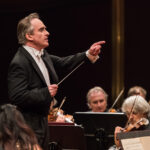
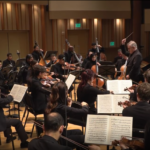
Wrapping up this year’s Czech Celebration at the Colburn School, Maestro James Conlon will conduct Music Restored: Exploring Czech Masterworks, a performance by the Music Restored Ensemble on Saturday, March 7 at 7 pm in Zipper Hall.  

Prior to the concert, Conlon will be joined by Michael Beckerman, recently appointed Dean of the UCLA Herb Alpert School of Music who has been recognized for his scholarship on Czech and Eastern European music, and Music Restored Program Director Adam Millstein, for a pre-concert discussion about the evening’s featured composers.  

The musical selection for the event has been characterized as a love letter to Bohemian melodies. It begins with Dvořák’s Nocturne in B Major, followed by another intriguing work by Vítězslava Kaprálová. The evening concludes with an orchestral tour de force by Bohuslav Martinů.  

Go to the Colburn Calendar for more information on the concert or to purchase tickets.  

Expanding Outreach to Various Audiences

Expanding Outreach to Various Audiences

Photo credit: O’Neil Arnold

Although many of the events for Music Restored: The Ziering-Conlon Center for Exiled and Suppressed Composers take place on the Colburn School campus or around Los Angeles, throughout its history, Artistic Director James Conlon has been sharing the music of suppressed composers through lectures and performances around the world so the memory and knowledge of them and their work will live on with the next generations across the globe. 

Program Director Adam Millstein also brings the message of Music Restored to other communities and students. This year, he and pianist Dominic Cheli were artists in residences for String Theory. Founded in 2009 by pianist Gloria Chien, String Theory presents a chamber music series at the Hunter Museum of American Art in Chattanooga, Tennessee. Millstein and Cheli dedicated three days to teaching master classes and performing concerts to nearly 1,000 students. 

“We played music by well-established composers like Mozart blended with Music Restored composers like Schulhoff and Korngold. It was inspiring to see the excitement from so many of the students of all ages! In between all of our pieces, we engaged with the students giving them history lessons and fielding questions,” said Cheli.  

They also were interviewed about the Music Restored initiative for a local classical radio station. 

“Work like this is so important for the mission of Music Restored because it exposes the next generation to this music and mission,” added Cheli. 

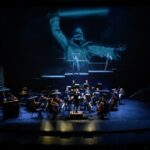
Also, last year, Music Restored and Millstein had the opportunity to collaborate with the Louisville Orchestra in Kentucky along with Tomer Zvulun, general and artistic director of the Atlanta Opera, in reviving Der Kaiser von Atlantis oder Die Tod-Verweigerung  (The Emperor of Atlantis or The Disobedience of Death) in conjunction with the release of Death Strikes: The Emperor of Atlantis, a graphic novel adaption of the opera. This rendition premiered in January 2025. 

Viktor Ullmann wrote the opera as an adaption on a libretto by Peter Kien while both men were imprisoned in Theresienstadt—the concentration camp now known as Terezín—in the Czech Republic. According to historical reports, prisoners were permitted a limited cultural life, including concerts, stage plays, and literary readings, which were then used by the Reich as propaganda. In this recent interpretation, a futuristic Atlantis never sank; rather it’s become a techno-totalitarian superpower under Emperor Overall, who declares war on everybody. 

Not only did the live performance incorporate scenes from the graphic novel projected onto a screen, the production included a photo of a violinist Paul Kling, who served as Louisville Orchestra’s concertmaster in the 1950s, but who also played in rehearsals of Der Kaiser  a decade earlier as a prisoner in Theresienstadt. 

“[The opera was] very dedicated to the graphic novel and the graphic novel was very dedicated to the original vision,” said Millstein. “It looks back toward the 20th century but also forward to the 21st century.” 

Millstein hopes Music Restored will be able to stage the opera again in the future. 

Music Restored Joins Colburn’s Czech Celebration

Music Restored Joins Colburn’s Czech Celebration

Throughout the 2025–26 season, the Colburn School has been highlighting the rich musical heritage of Czechia with a Czech Celebration. From recitals by our prestigious faculty performers to guest conductors to the Colburn Orchestra, audiences have enjoyed the artistic offerings by favorite Czech composers Dvořák, Martinů, and Smetana. Since artists in the Czech Republic also suffered under Nazi policies, it seemed ideal for Music Restored: The Ziering-Conlon Center for Exiled and Suppressed Composers to join the School’s celebration and showcase Bohemian composers this season. 

In November, Music Restored Program Director and violinist Adam Millstein paired with pianist Dominic Cheli to perform works by Smetana and Martinů. They also played pieces by two lesser-known composers whose lives were impacted by the Nazi regime: Vítĕzslava Kaprálová and Erwin Schulhoff. 


Kaprálová, a mentee and lover of Martinů, was on the threshold of a successful career as a composer and conductor when she died from an unknown illness in 1940 at the age of 25 while in exile in France. During her all-too-short lifetime, Kaprálová crafted nearly 50 compositions brimming with humor, energy, and warmth. 

Schulhoff was a prolific and multi-faceted figure in the 20th-century Czech music world whose works were banned at one point. Given the tumultuous political environment in Europe at the time, Schulhoff secured Soviet citizenship for him and his family, but before they could leave the Czech Republic, he was arrested and eventually deported to a concentration camp where he died of tuberculosis a year later. 

Schulhoff and his music already have been the subject of the Colburn-produced series Schulhoff and More, which includes a presentation by Conlon and several performances.  

“Martinů was prolific in his writing and a cutting-edge modernist. His controversial thoughts on Smetana landed him in significant hot water during the post-war years in Czechoslovakia. Kaprálová was a remarkably talented conductor. She was influenced by her beloved teacher, but wrote with a distinct musical voice creating powerful works in her short life,” said Millstein. “As a violinist, I am thrilled to perform the Czech composers featured this season. They represent different musical trends that are all beyond satisfying to play.”